
23 October 2026, 14:38
Loading...
Gas heat pumps save costs in Czechia. How?
oEnergetice.cz
15 November 2024, 08:41

Over the past four years, the number of heat pumps installed in Czechia has surged. Since 2010, around 270,000 have been supplied to the domestic market. Half of them were added in just the past two years. The vast majority, however, are powered by electricity. Yet heat pump technology can also use gas, and gas-powered heat pumps offer a number of advantages. Alexandr Lužný, head of innovation at GasNet, the largest Czech gas distributor, explains where these heat pumps are suitable.
Heat pumps use heat from their surroundings for heating. But exactly how do they work?
The principle is fairly simple. A heat pump really does take heat from its surroundings. This makes it an exceptionally energy-efficient system. What is more, heat drawn from the air, water or ground is a renewable energy source.
The pump obtains heat through compression. It uses the temperature difference between the heat source (air, water or a ground borehole) and a liquid refrigerant that absorbs this heat. A compressor pressurises the refrigerant, heating it to a high temperature. The heat is then transferred through a heat exchanger to the system in the building, where it heats the air or the water in a hot-water tank or heating element.
A heat pump begins its cycle in the evaporator, where the liquid refrigerant absorbs heat from the surrounding environment. This heat causes the refrigerant to evaporate and become a gas. The gaseous refrigerant is then compressed, which raises its temperature.
The high-temperature, high-pressure gaseous refrigerant is then fed into the condenser, where it transfers its heat to the building’s heating system and condenses back into liquid form. After condensation, the refrigerant passes through an expansion valve, where its pressure and temperature drop. The cycle then repeats.
A heat pump can heat a building while also providing domestic hot water.
So what is the difference between an electric and a gas heat pump?
It is how the compressor is powered. Heat pumps are nothing new. The technology dates back to the mid-19th century, when the compressor was powered by a water wheel. It does not really matter what powers the compression.
An electric heat pump uses electricity to power the compressor. In a gas heat pump, the compressor is powered by gas.
In addition to compressor heat pumps, there are also absorption heat pumps. They use a different principle. They are powered by heat supplied by a burner, which burns gas to heat a pressure vessel.
Source: GasNet
What are the main advantages of gas?
One advantage is the reliable supply of gas to power the compressor. Gas heat pumps also tend to be less sensitive to drops in outdoor temperature, because some of the heat they produce comes from cooling the engine and exhaust gases. This makes them an effective solution even in colder climates.
They also have low energy requirements. In a gas heat pump, a primary energy source is burned to power the compressor. Its overall efficiency stems from the absence of significant losses during energy production and distribution.
In addition, thanks to their robust design and technology, gas heat pumps have low operating costs and do not require extensive maintenance. There is also a difference in purchase costs: a gas heat pump can be up to a third cheaper.
Who is a gas heat pump ideal for?
They are particularly suitable for office buildings, shopping centres, care homes, hospitals, schools and industrial premises—in short, large buildings. They are a good source of heat where, for example, there is an unused gas connection that was built to serve higher consumption. This may be the case at brownfield sites, where a developer has decided to build a residential or commercial project. Industry often used large volumes of gas, while no comparable electricity consumption existed, and these sites do not have a sufficiently powerful electricity connection.
A gas heat pump can deliver a high temperature differential, making it more suitable for existing older buildings. In addition to heating, a heat pump can also do the opposite: it can cool spaces. Gas heat pumps can therefore also be used, for example, in industrial halls storing temperature-sensitive goods such as chocolate, cosmetics or pharmaceutical products.
Energy specialists who design energy supply and management systems for buildings should certainly keep gas heat pump technology in mind. In many cases, it can do the job better than other forms of heating.
Gas heat pumps are also a technology that meets the requirements of the new European directive on the energy performance of buildings. They do not have to be powered solely by natural gas: the technology can also use renewable, zero-emission gases such as biomethane and hydrogen. As a gas distributor, we have been preparing for the arrival of these gases for a long time.
How do gas heat pumps perform?
In winter, a gas heat pump delivers exceptionally high heat output, even at very low outdoor temperatures, when electric heat pumps are significantly less efficient. Its efficiency remains more or less constant down to outdoor temperatures of -20 °C. If needed, a gas heat pump can be combined with an additional heat source, such as a gas boiler or district heating.
Gas heat pump output starts at around 35 kW. The pump’s efficiency is measured by the COP (Coefficient of Performance). For gas heat pumps, this figure is very high, reaching up to 1.5 COP. This means they generate up to 1.5 units of heat for every 1 unit of gas consumed.
Source: GasNet
When should you consider a gas heat pump instead of a gas boiler?
Gas boilers still have their place in heating houses and apartments. For example, a heat pump is not an ideal heat source for an apartment in an older building in a city’s historic centre, where a boiler is indispensable. Because of their higher output, heat pumps are better suited to larger buildings.
A gas heat pump, however, offers a two-in-one solution: it can both heat and cool. There is no need to install two separate units, and it can provide thermal comfort not only in winter but also during hot summers. Gas heat pumps also offer lower operating costs than conventional gas boilers. While servicing a heat pump is certainly more demanding than servicing a boiler, a heat pump can save up to 37% on gas consumption compared with a boiler.
Does GasNet, as a gas distributor, have direct experience with these systems?
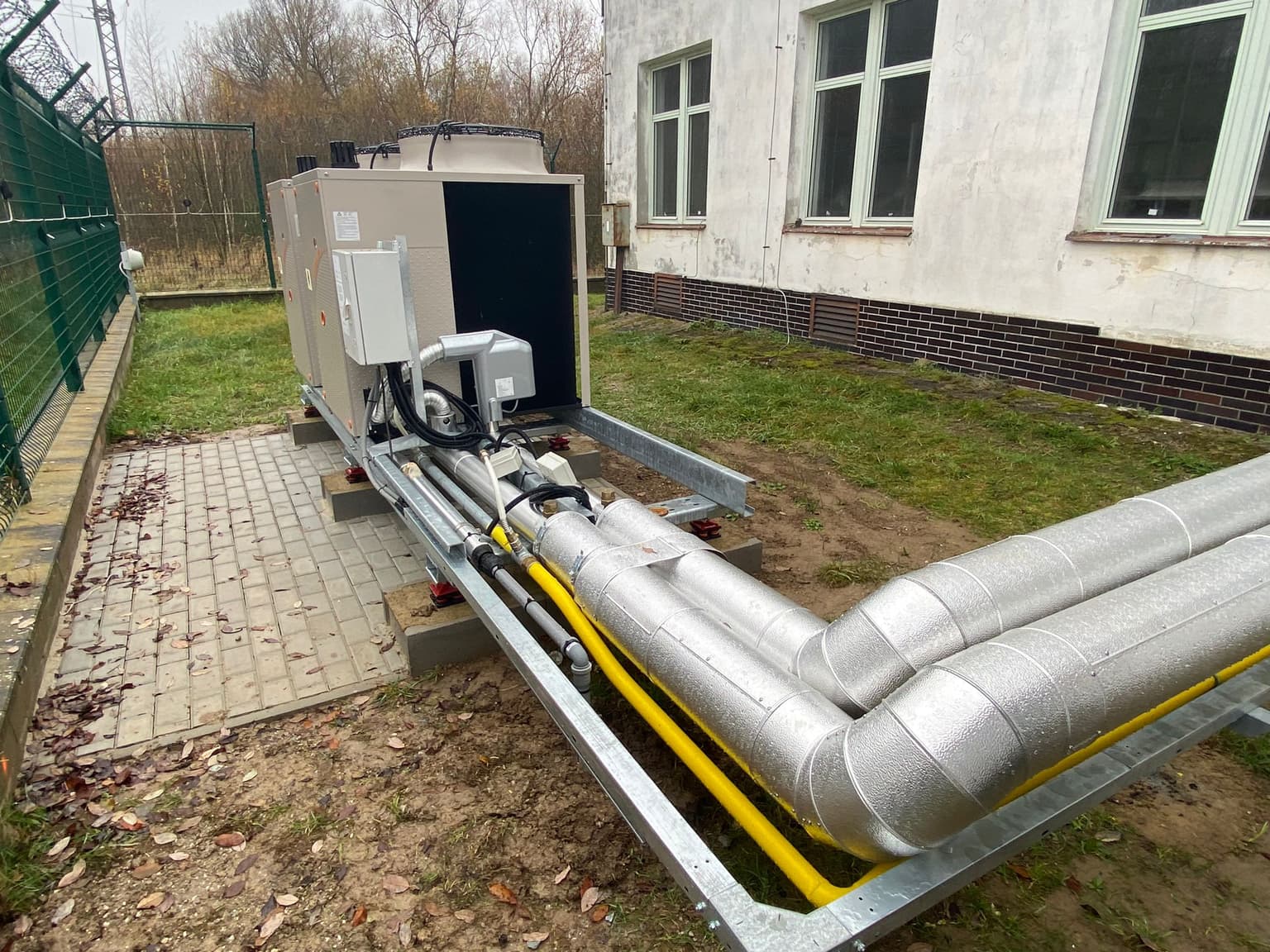
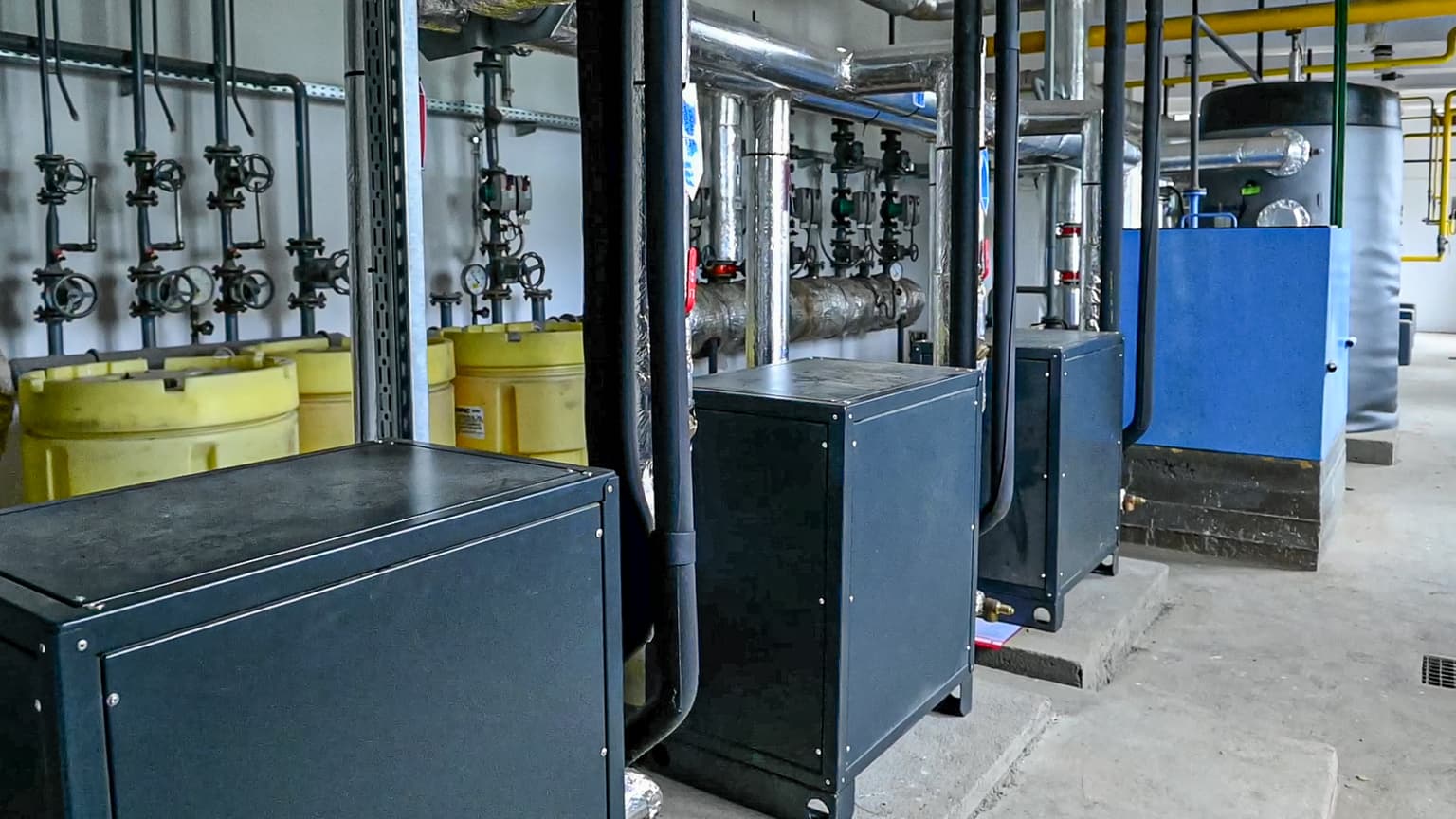
We use them to preheat gas as part of our technology for regulating pressure in gas distribution pipelines. We have heat pumps, for example, at the Dobříň transfer and pressure-regulating station and at the Nepřevázka and Kolová pressure-regulating stations. For us, the main benefit is the reduction in gas consumption.
We therefore plan to install gas heat pumps at more pressure-regulating stations, and this year alone we are installing another 10. This has enabled us to reduce gas costs by 30%. After further optimisation, we expect to achieve savings of up to 40% on gas costs.
A heat pump is a very clean source of heat. It does not generate heat; it takes it from its surroundings, and that heat is fully renewable.
Translation disclaimer
This article is a machine translation of the Czech original and has not yet been fully reviewed. In case of any doubt, please refer to the Czech version.
Sdílejte článek prostřednictvím:
You might also like


23 October 2026, 11:01


23 October 2026, 06:34