9 October 2026, 06:22
Loading...
Czech industry calls for fast subsidies for green hydrogen production
Ekonews.cz
14 May 2024, 18:03
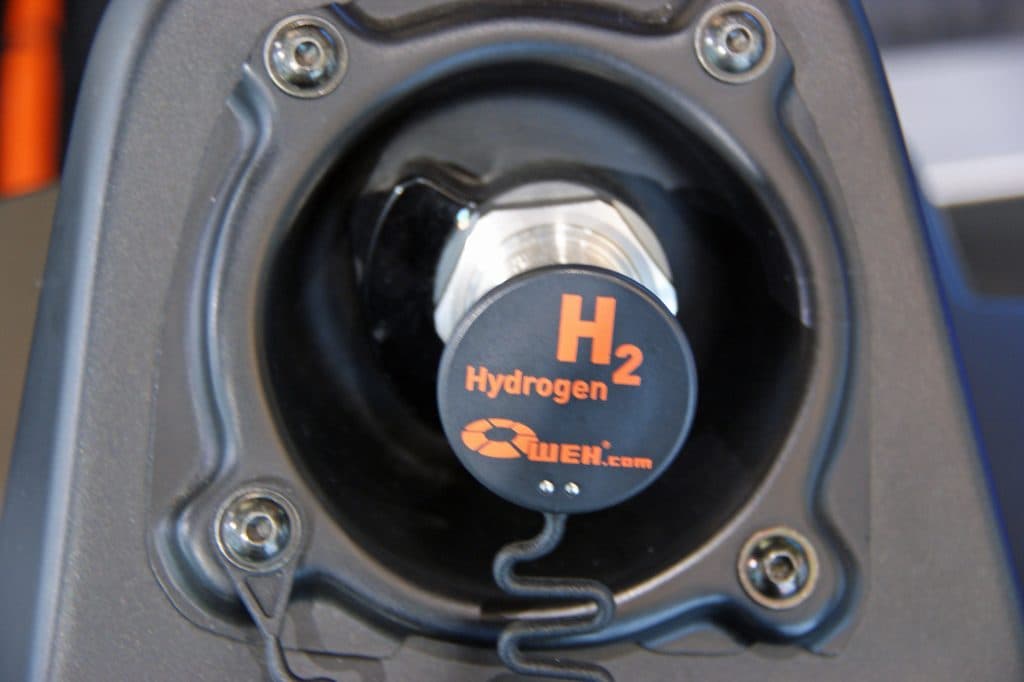
The European Union’s hydrogen strategy envisages a boom in green hydrogen (produced from renewable sources) in the coming years, and subsidies are earmarked for it. However, companies in Czechia complain that these are difficult to access and that the state is moving slowly.
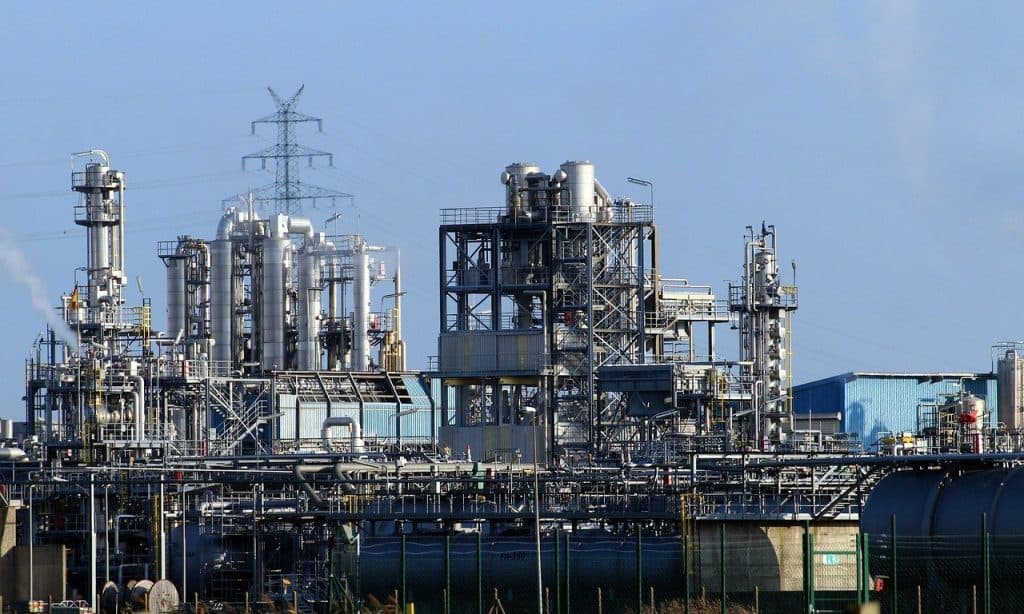
Orlen Unipetrol plans to build a giant photovoltaic plant and electrolyser near Litvínov. However, because green (more precisely renewable) hydrogen produced from renewable sources is currently not competitive with grey hydrogen made from fossil fuels, it has sought subsidies.
But according to Tereza Nislerová, Orlen Unipetrol’s director for European funds, these are very difficult to obtain. Orlen Unipetrol succeeded only in securing a subsidy of CZK 500 million from the Modernisation Fund. Under Important Projects of Common European Interest (IPCEI), it is possible to apply for subsidies covering up to 50 percent, but the company was unsuccessful there. Likewise, the project near Litvínov was not included among the strategic projects eligible for support from the Just Transition Operational Programme (which is to provide around CZK 40 billion in support to coal regions).
“I think this is because we are unable to prepare and process hydrogen IPCEIs effectively in Czechia. We were at the Ministry of Industry and Trade (MPO) at a very advanced stage of the approval process, when the project had already been notified to the European Commission, and then it petered out on the MPO’s side,” said Tereza Nislerová.
According to Marian Piecha, director general of the EU Funds Section at the Ministry of Industry and Trade, the reason for the unsuccessful application lies somewhere between the MPO, the European Commission (which, he says, stated halfway through the process that it did not want to support infrastructure projects but primarily research and development), and Orlen itself.
According to Piecha, the MPO will seek to persuade the new European Commission (after the elections) to change its mind and also allow the use of grey hydrogen. According to Marian Piecha, this could kick-start infrastructure because there is enough of this hydrogen, and then “only” the contents of the pipelines would be replaced.
Industry representatives and the hydrogen association are nevertheless sceptical that the EU rules can still be changed.
In this context, Marian Piecha of the MPO said they want to conduct a test in autumn, when they open a call for hydrogen electrolysers. “I am cautious in this regard; it will be an experiment to see whether it is even possible to launch a subsidy scheme for electrolysers under the European Commission’s state-aid rules,” the MPO representative said.
The “hydrogen window” will close
Industry, on the other hand, is calling for Czechia to make use as quickly as possible of the open subsidy window for renewable sources and therefore also for hydrogen.
“We do not have the luxury of waiting. European legislation and delegated acts define very strict rules for renewable hydrogen. We have an open time window until 2028, so let us use it, because it can help us kick-start production and hopefully demand for hydrogen under more bearable conditions,” said Veronika Vohlídková of the Czech Hydrogen Technology Platform (HYTEP). Once this window closes, it will make hydrogen production even more expensive.
Tereza Nilsnerová of Orlen Unipetrol agrees. “The regulation in force, which was discussed for years, requires us to have around fifteen hydrogen filling stations in our territory by 2030,” she says, adding that rules also exist on where electrolysers can be supported. “So what are we waiting for?” she asks.
Veronika Vohlídková of HYTEP added that, under the hydrogen strategy, Czechia should reach 300 to 400 MW of electrolysers by 2030. “Until 2028, we can use renewable sources older than three years to power electrolysers,” she says, adding that this will no longer be possible afterwards and older photovoltaic plants and wind farms will not be usable.
However, the aforementioned Czech hydrogen strategy will now be updated. “We are discussing how to make the hydrogen strategy realistic and provide it with resources,” Piecha said.
Petr Holub, director general of the Climate Protection Section at the Ministry of the Environment, clarified that the proposal is only now going into interministerial consultation and that priorities need to be considered.
In the future, the cost of hydrogen from renewable sources should decline. Electrolyser prices are falling and, where renewable electricity is cheap, renewable hydrogen should be competitive by 2030, according to estimates.
Renewable hydrogen is a priority in the EU because it can both store energy and help decarbonise parts of industry where CO2 emissions are difficult to reduce and where hydrogen can replace fossil fuels (for example, in the steel and petrochemical industries).
For now, however, mainly grey hydrogen is produced, in Czechia largely as a by-product of the petrochemical industry. Total global hydrogen production amounted to 95 million tonnes in 2022. Low-emission hydrogen accounted for less than one million tonnes. According to the Global Hydrogen Review, production is expected to exceed 150 million tonnes by 2030.
The European Commission adopted its Hydrogen Strategy in 2020, describing the individual stages of hydrogen development through to 2050, from installing electrolysers and producing renewable hydrogen, through hydrogen imports to its use in balancing the electricity system.
According to the strategy, total investment in renewable hydrogen in Europe could reach up to EUR 470 billion by 2050.
Hydrogen as one part of the overall strategy
Ondřej Ptáček, director of Public Sector & ESG Strategy Advisory at consultancy PwC, notes that hydrogen is only a small part of the Green Deal and the transition to low-carbon energy, and will remain a small part of the overall decarbonisation pathway after 2030.
“However, by 2030 we must achieve certain shares of hydrogen, and for that we need renewable energy sources. From a geographical perspective, we are not in the best position, which is why a functional Czech hydrogen strategy must also include a plan for its imports. How we will transfer it from other countries for industrial purposes,” the PwC expert says.
Three different strategic documents in the energy sector are currently being developed. These are the draft National Energy and Climate Plan, an update of the Climate Protection Policy and the Czech Energy Strategy. “By June, we want to submit the package of three policy documents to the government for approval,” Petr Holub summarised.
They envisage a fivefold increase in the capacity of both photovoltaic and wind power plants by 2030, with both sources supplemented by storage equal to 15 percent of their capacity. This will be in both batteries and hydrogen.
Priorities must also be considered, because funds for supporting hydrogen are not unlimited. “We must identify strategic directions and support them with public funds. In hydrogen, I think that means production. The question is how much there will be; there will not be such a surplus of clean electricity here that it would pay to put it into hydrogen. Processes in industry that can use hydrogen will need support,” Petr Holub said.
This is also how the process should proceed, according to PwC expert Ondřej Ptáček. By 2030, CZK 115 billion needs to be invested just to meet hydrogen targets. However, industry needs certainty about the priorities.
“We are still discussing where to direct European funds, but that is merely an instrument at the end of the process. What we lack is the setting of priorities, so that companies have certainty,” he noted, adding that Germany is taking this approach and achieving faster results.This article’s partner is the Alliance for an Emission-Free Future.
Republished from EkoNews.cz, a website focused on business and sustainability.
Translation disclaimer
This article is a machine translation of the Czech original and has not yet been fully reviewed. In case of any doubt, please refer to the Czech version.
Sdílejte článek prostřednictvím:
You might also like

8 October 2026, 10:05