
17 October 2026, 13:09
Loading...
GASCADE opens the door to the hydrogen era: first filling of the Flow pipeline begins
Veronika Jurcová
15 March 2025, 13:04
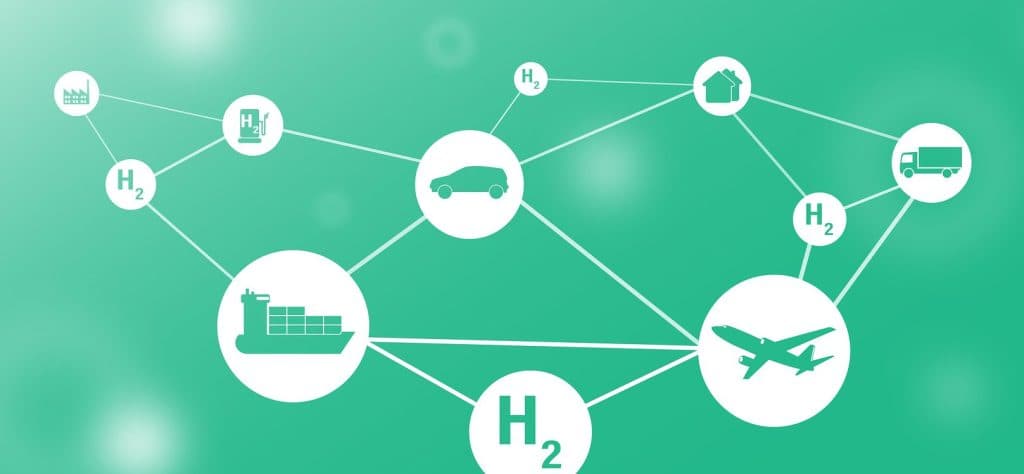
GASCADE Gastransport GmbH has successfully started the first filling of a pipeline as part of the Flow – making H2 happen programme. The hydrogen pipeline will enable hydrogen produced from renewable energy in the north to be transported to industrial regions in southern Germany, GASCADE reports in a press release.
The Flow – making hydrogen happen project aims to build a high-capacity hydrogen transport network, which is scheduled to begin operation in 2025. With a planned capacity of up to 20 GW, it will enable the efficient transport of energy produced from renewable sources in northern Mecklenburg-Western Pomerania to southern Germany, where demand for hydrogen is highest.
Northern Germany is an ideal location for green hydrogen production, as it has extensive wind farms both onshore and offshore. The project builds on the renewable hydrogen production facility being built by HH2E in Lubmin, on Germany’s Baltic coast in the northeast of the country. The hydrogen produced will be transported through existing gas pipelines, which will be gradually adapted for hydrogen transport, and will supply industrial regions such as Hesse and Baden-Württemberg.
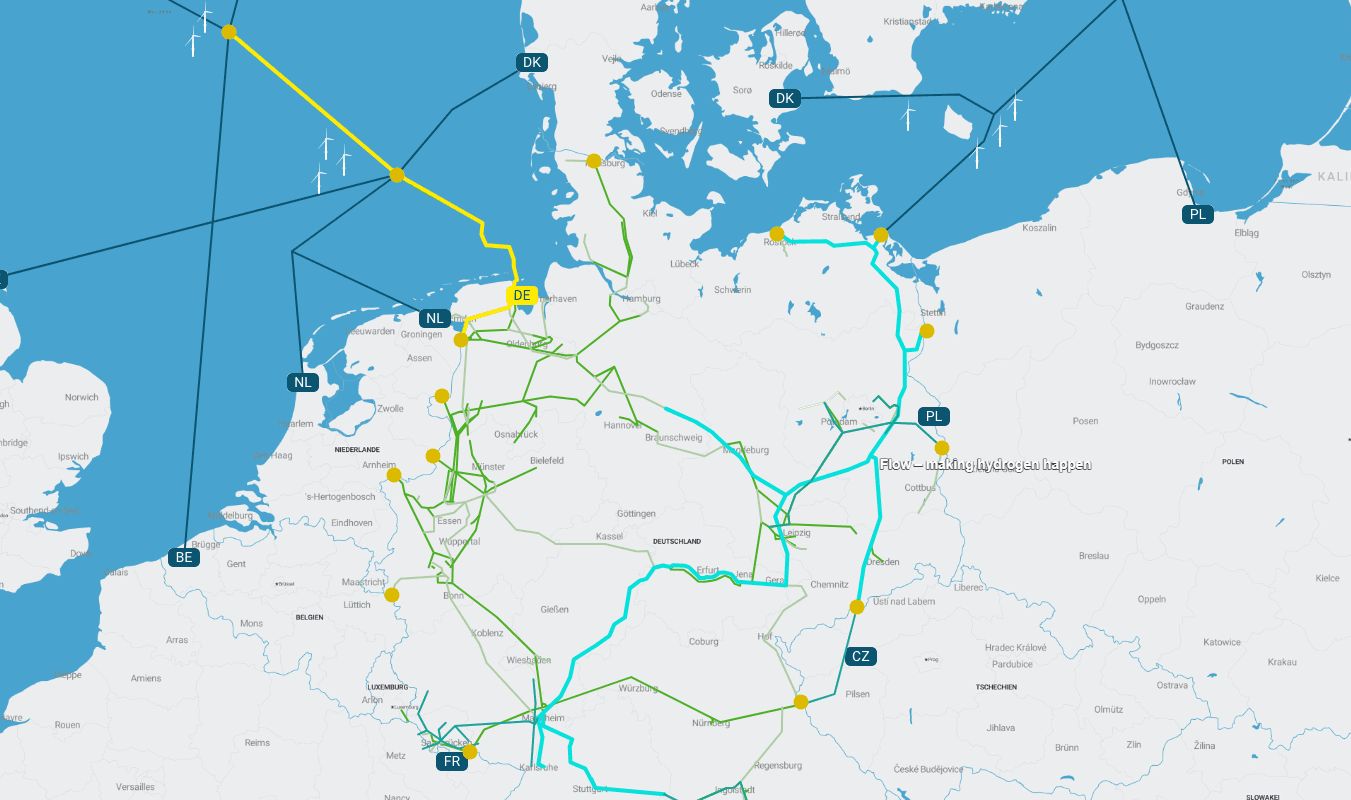
Source: GASCADE: hydrogen transport projects
By the end of 2025, approximately 400 km of pipeline with a diameter of 1.4 metres will be converted, creating a key north-south hydrogen trunk line. This groundbreaking project not only prepares infrastructure for the future transport of hydrogen, but also underscores GASCADE’s strategic role in the energy transition and the shift to sustainable solutions.
“With this conversion, GASCADE is not only demonstrating its technical expertise and innovative know-how, but also sending a strong signal for the hydrogen economy. We are proud to be starting the commissioning of Germany’s first large-scale hydrogen pipelines. This provides planning certainty for the growth of the value chain market worldwide,” says CEO Christoph von dem Bussche.
The project’s European dimension and connection to Czechia
In addition to supplying the domestic market, the project also envisages connections to neighbouring countries such as the Czech Republic, Poland, Austria and France. This is a key step in developing European hydrogen infrastructure, enabling the efficient use of renewable energy surpluses and making a significant contribution to decarbonising industry not only in Germany, but across Europe. It will also support the development of an integrated European hydrogen market.
Given its strategic importance to the European Union, the project has been granted Project of Common Interest (PCI) status. ONTRAS Gastransport GmbH and terranets bw GmbH are participating in its implementation, working with GASCADE to rapidly and efficiently establish hydrogen transport infrastructure.
The connecting Czech project, the Czech-German Hydrogen Interconnector (CGHI), has also been granted PCI status. It connects northern Germany, the Baltic Sea, the Czech Republic and southern Germany. Its aim is to link areas with high green hydrogen production potential, particularly northern Germany and the Baltic states, with industrial regions expected to have high hydrogen demand (southern Germany and northern Bohemia). Launched by GASCADE, NET4GAS and OGE in 2022, the project is 772 km long, has a planned capacity of 144 GWh/day and aims to begin operation by 2030.
CGHI directly builds on Flow, using existing gas pipelines adapted for hydrogen transport, and connects the Czech Republic to the wider European hydrogen network. Together, these projects will form a future strategic corridor for transporting hydrogen from northern to southern Europe.
Translation disclaimer
This article is a machine translation of the Czech original and has not yet been fully reviewed. In case of any doubt, please refer to the Czech version.
Sdílejte článek prostřednictvím:
You might also like




16 October 2026, 10:16