29 October 2026, 16:16
Loading...
Industry association: Czechia must step up hydrogen use or face billions in fines

oEnergetice.cz, ČTK
20 February 2024, 13:36
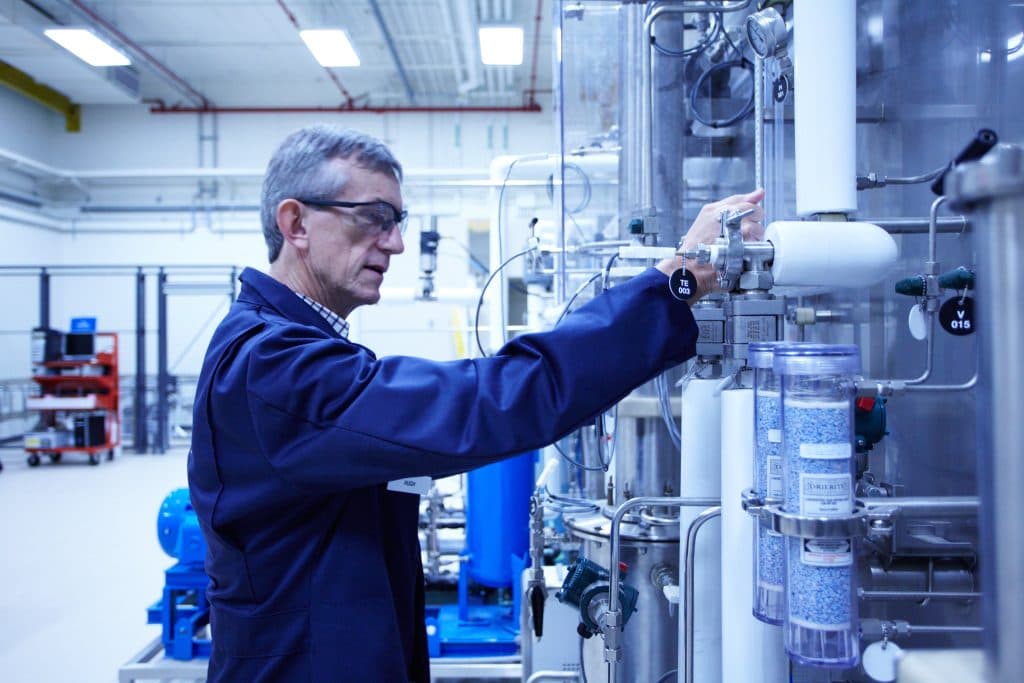
The Czech Republic needs to focus more consistently on using hydrogen in industry and transport, the Confederation of Industry of the Czech Republic said. It warned that without the development of a hydrogen economy, domestic companies could face billions in fines after 2030 for failing to comply with European directives, as well as higher emissions allowance costs. The Confederation also expects an impact on gross domestic product, employment and the inflow of new investment. This follows from a study by PwC for the Confederation of Industry of the Czech Republic.
In the coming years, the EU’s strategic plans envisage hydrogen as an important alternative fuel in transport, while it is also expected to play a role in decarbonising industry as a whole. According to the Confederation, EU rules call for hydrogen refuelling stations to be installed along major routes and at urban hubs after 2030, and for a significant increase in the share of so-called green hydrogen in industry and transport. It is produced using renewable energy sources.
Czechia has had its own hydrogen strategy since 2021, but according to the Confederation it has not been implemented to any great extent in practice. For example, hydrogen is not yet used at all in the energy or district heating sectors.
„Hydrogen represents an opportunity for our economy. Initially, it will primarily serve to meet binding European targets, but as the hydrogen economy develops and costs fall, its use will become much broader,“ said Jan Rafaj, president of the Confederation of Industry of the Czech Republic.
He stressed the need to produce green hydrogen domestically.
According to the Confederation, the main reasons why hydrogen is not yet widely used in Czechia are its higher cost and the lack of infrastructure. There are currently four hydrogen refuelling stations in the Czech Republic, and pipelines to transport hydrogen into the country from abroad are also lacking.
The study therefore finds that Czechia is not well prepared for the development of a hydrogen economy. According to Tomasz Wiatrak, CEO of Orlen Unipetrol, greater cooperation between the state and industry will be needed, along with further efforts to secure electricity from renewable energy sources. „Without cheap and readily available electricity from renewable sources, renewable hydrogen will not be readily available either,“ he noted. Wiatrak also said that revenue from emissions allowances should be redirected towards hydrogen production and operating support for hydrogen and electricity from renewable sources.
Translation disclaimer
This article is a machine translation of the Czech original and has not yet been fully reviewed. In case of any doubt, please refer to the Czech version.
Sdílejte článek prostřednictvím:
You might also like
29 October 2026, 11:22
29 October 2026, 10:12