
8 November 2026, 13:59
Loading...
Study: German hydrogen plan could become significantly more expensive

Zuzana Vrbová
20 September 2023, 10:55
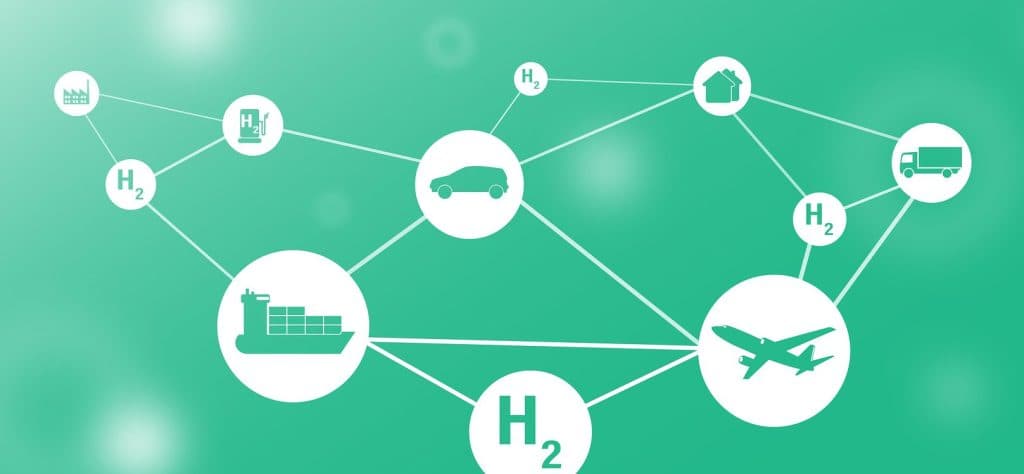
According to a new study, Germany will not be able to cover all its demand for hydrogen via pipelines. Instead, it will have to rely on more expensive shipping.
Germany wants to import up to 1.3 million tonnes of hydrogen annually by 2030, equivalent to 45 TWh. But according to the think tank Agora Energiewende, it will not be able to deliver this volume via pipelines, and costs could rise by as much as 7 billion euros as a result, the Euractiv website reported.
According to the new study by the German think tank, transporting renewable hydrogen by pipeline is the cheapest option, with estimated transport costs of less than EUR 1 per kilogram. If all 45 TWh of hydrogen were transported this way, transport costs alone would amount to 1.2 billion euros by 2030.
But if hydrogen is transported over longer distances by ship, as is the case with LNG, costs would rise to around 2 to 5 euros per kilogram of hydrogen. According to Agora, Germany’s import costs could therefore rise to 2.5 to 7 billion euros by 2030—and that would cover transport costs alone.
The think tank also points out that technologies for shipping hydrogen are still far from mature. They are therefore unlikely to be competitive in the short term. Germany is planning to build new terminals for hydrogen imports. For example, the LNG terminal in Wilhelmshaven is expected to be converted into a terminal for importing synthetic hydrogen as early as 2027.
Ammonia imports could be more advantageous
The Agora Energiewende study says derivatives such as green ammonia are a particularly advantageous option at a price below 1.5 euros per kilogram of hydrogen. This applies only, however, if these materials can be processed directly without costly conversion—for example, to produce fertilizers or steel.
The think tank also points out that the German government has not adequately assessed the costs of importing and transporting hydrogen. German authorities are currently counting on three hydrogen pipelines to supply the country’s energy-intensive industry. One is an onshore pipeline from Denmark that could import up to 20 TWh, but construction has not yet begun. Norway also wants to become a hydrogen supplier, and a feasibility study for the project is currently being prepared. The H2Med pipeline is also under consideration. The project was originally conceived as a natural gas pipeline running from the Mediterranean. The final agreement provides for the construction of a hydrogen pipeline that could also be connected to Germany.
Translation disclaimer
This article is a machine translation of the Czech original and has not yet been fully reviewed. In case of any doubt, please refer to the Czech version.
Sdílejte článek prostřednictvím:
You might also like

8 November 2026, 08:10
7 November 2026, 17:23

7 November 2026, 13:37