
23 October 2026, 14:38
Loading...
Britain will need gas-fired power plants as backup for renewables in 2030

David Vobořil
20 November 2024, 10:38
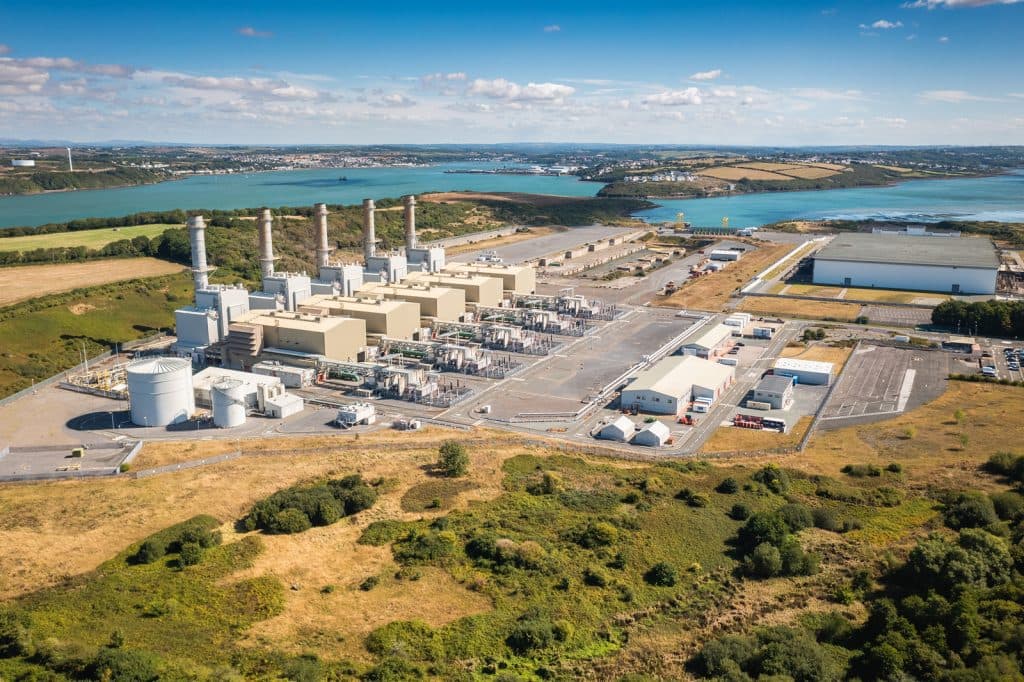
According to official models published last week by the UK's National Energy System Operator (NESO), the UK will need gas-fired power plants in 2030 as backup for renewable energy sources. NESO's modelling is part of a major study assessing how the new government can deliver on its flagship pledge to ensure emissions-free electricity generation by 2030. The report says urgent action is needed to meet the government's clean energy target.
Gas-fired power plants currently supply around a third of Britain's energy consumption. According to NESO's forecast, this share is expected to fall to less than 5% in 2030. However, the UK will need the same installed capacity of gas-fired power plants in 2030 as it has today, as a strategic reserve for days when the wind is not blowing, the National Energy System Operator (NESO) said.
This is likely to be provided mainly by existing power plants in 2030, which could in future be fitted with carbon capture technology or replaced by hydrogen-fired plants.
Gas-fired power plants currently receive payments under the Capacity Market for being available to supply electricity to the grid. According to forecasts published last week by the UK's Office for Budget Responsibility, these payments are expected to rise from around £1 billion this year to around £4 billion in 2029-30.
The report says urgent action is needed to accelerate the development of new wind farms, solar panels and transmission lines to meet the government's goals for decarbonising the UK's energy sector. Flexibility on the demand side must also be increased.
“We will have to do more to sell people on the benefits and advantages that flexibility brings,” said one government official, noting that the country and energy companies will need to launch an information campaign to promote more flexible energy use.
Low-carbon sources such as wind, solar and nuclear power generated 51% of Britain's electricity in 2023. To meet the targets, installed offshore wind capacity would need to increase from 15 GW to 43-50 GW by 2030, onshore wind capacity from 14 GW to 27 GW, and solar power capacity would need to triple from 15 GW to 47 GW.
According to NESO's projections, the UK will have up to 4.1 GW of installed nuclear capacity in operation in 2030, partly thanks to the continued operation of the Sizewell B plant and the extension of the life of at least one other existing nuclear power plant.
The report says transforming the UK's energy sector to achieve emissions-free generation in 2030 will require annual investment of more than £40 billion, as well as the construction of more than 4300 km of subsea cables and nearly 1000 km of onshore lines.
“How costs feed through into prices and ultimately into bills will depend on policy design. … Given the significant reliance on policy decisions, we are not attempting to estimate the actual electricity bill,” the NESO report says.
In response, UK Energy Secretary Ed Miliband said the report was “compelling evidence that the government's mission to make the country a clean energy superpower is the right choice for the country”. He added that the government was “committed to delivering the significant planning and grid reforms we need”.
Translation disclaimer
This article is a machine translation of the Czech original and has not yet been fully reviewed. In case of any doubt, please refer to the Czech version.
Sdílejte článek prostřednictvím:
You might also like


23 October 2026, 11:01


23 October 2026, 06:34