
23 October 2026, 14:38
Loading...
European Commission in Greenland: What mineral wealth does the island hold?

Libor Láník
18 September 2024, 07:07
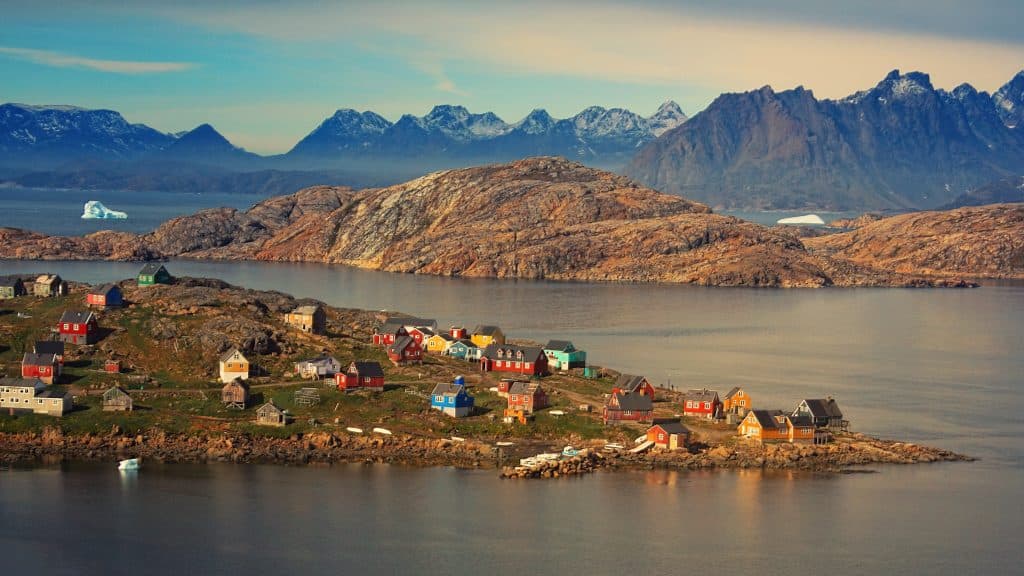
The European Commission’s visit to Greenland confirms Europe’s interest in developing critical mineral mining in this frozen region of the Northern Hemisphere. For now, Greenland can still be described as a relatively untouched territory. But that may soon change, given growing demand and the interest of countries and investors. Euractiv reported on the visit.
Greenland, the world’s largest island, with an area of more than 2 million square kilometres, is home to around 58 thousand people. The island is effectively part of Denmark, through which it is associated with the European Union. Greenland’s self-government has extensive powers; the most significant for the energy sector was the 2010 decision to give it authority over mineral resources.
Historically, Greenland has repeatedly attracted the interest of world powers. One notable example is the interest shown by the administration of US President Harry Truman, which wanted to buy the island in 1946 for 100 million dollars in gold and rights to part of Alaska’s oil. Although unsuccessful, this move was driven not by energy interests but by the emerging Cold War.
The same cannot be said of a relatively recent second attempt, initiated by then-President Donald Trump. “Strategically, it’s interesting. It’s basically a big real estate deal,” Trump said at the time in connection with his new offer. The result? The Danish prime minister called the US idea absurd, and the proposal was dismissed.
Unlike Truman’s, Trump’s attempt could be described as energy-driven. While Truman was primarily interested in the land where the United States could deploy its missiles, Trump saw the true value of what lies beneath it—a value that China and the European Commission are now also pursuing.
Turning to current developments, European Commissioner for International Partnerships Jutta Urpilainen visited Greenland in recent days, effectively following up on Commission President Ursula von der Leyen’s visit earlier this year. Last year, Greenland also signed a memorandum of understanding on raw materials with the European Commission (Strategic Partnership on Sustainable Raw Materials Value Chains).
The motivation for cooperation is clear, and Commission President von der Leyen summed it up aptly: “New jobs in Greenland, better security of supply for Europe; we can both benefit from greater cooperation in these areas.” Her visit to Greenland was linked to the opening of a European office in the capital, Nuuk.
What supplies are at stake?
Greenland is home to 25 of the 34 types of minerals that the EU has included on its official list of critical raw materials (CRMs), including rare earths, lithium, graphite, titanium, platinum-group metals and niobium. In concrete terms, for example, the untapped potential for rare earths is estimated at 42 Mt REO (Rare Earths Oxide). These materials have a wide range of uses in the energy transition, including in electric vehicles, semiconductors and wind turbines.
These are, in fact, world-class deposits. But unlike Canada, which has undergone a similarly diverse and lengthy geological evolution, Greenland remains relatively unexplored and unmapped, not to mention that mining there is limited. The potential for new discoveries is therefore still considerable.
Greenland’s leaders are well aware of this. Indeed, a report titled Greenland and Iceland in the New Arctic, which contains recommendations from the Greenland Committee appointed by the Minister for Foreign Affairs and International Development Cooperation, states: “Greenland has a key position thanks to its unusually large deposits of exploitable metals, oil, gas and precious stones. Significant rare earth metal reserves have placed Greenland in a new and unique position. Several overlapping factors suggest that the 21st century will be a prosperous one for Greenland’s mining industry.”
What makes mining in Greenland difficult?
What remains uncertain is how mining can be carried out in harsh conditions, especially given that Greenland’s mining industry is currently almost nonexistent. There are two active mines in the country, neither of which extracts critical materials. There are numerous significant challenges that complicate mining. They have been examined in detail by the Copenhagen-based independent think tank Europa.
It identified several major challenges to developing the mining industry. These include the high upfront costs of physical and digital infrastructure, which, together with harsh weather conditions, pose significant barriers. The island’s fragile and protected environment also raises concerns among environmental activists, and public opposition can be expected. Greenland’s economy also suffers from a shortage of skilled workers, while political disputes over importing foreign workers persist. Another complication is the absence of legislation governing foreign direct investment (FDI).
In conclusion, although the EU has the closest ties to Greenland, thanks to historical and political links through Denmark, it is not the island’s only potential partner in developing critical raw material mining. The presence of non-European players in Greenland’s mining sector not only exposes the weakness of European industry in this area, but also highlights Greenland’s ability to choose among different partners, including the United States, with which it has already signed an agreement. If the EU wants to succeed in this key sector, it will have to act quickly and strategically to remain an attractive and relevant partner for Greenland.
Translation disclaimer
This article is a machine translation of the Czech original and has not yet been fully reviewed. In case of any doubt, please refer to the Czech version.
Sdílejte článek prostřednictvím:
You might also like


23 October 2026, 11:01


23 October 2026, 06:34