Iran's biggest oil buyer: China as a quiet player in the conflict around Iran

Escalating tensions between the US, Israel and Iran have once again unsettled oil markets and raised questions about the security of the strategically important Strait of Hormuz. Any disruption to shipping would immediately affect global energy markets, especially China, which takes more than 80 percent of Iran’s oil exports. The conflict could therefore affect not only energy prices but also the fragile relationship between Washington and Beijing.
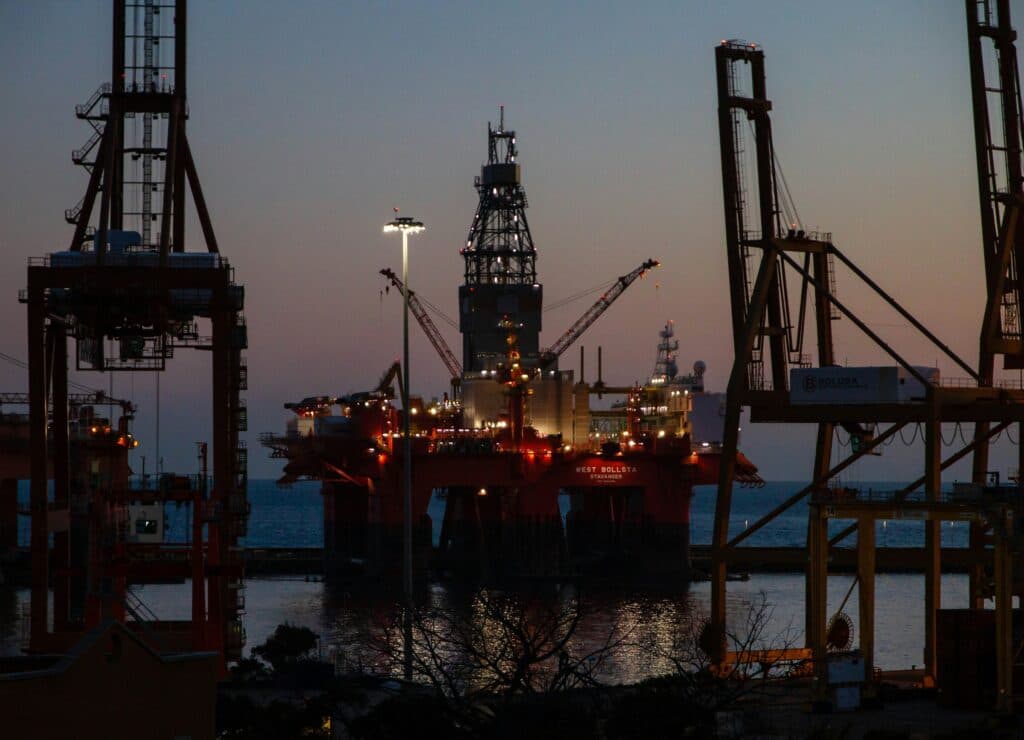
Markets are currently keeping a close eye on developments in the Middle East. Some analysts say oil prices could jump by tens of dollars in the short term following an Israeli-US attack on Iran, approaching the $100-a-barrel mark, particularly if traffic through the Strait of Hormuz were restricted. Around a fifth of the world’s seaborne oil trade passes through this narrow maritime corridor between the Persian Gulf and the Gulf of Oman. Any disruption would therefore affect not only the region but would immediately feed through into energy prices in Europe, Asia and the rest of the world.
Asian countries therefore have a strong incentive to push for a swift de-escalation. China is the clearest example. It has long been the main buyer of Iranian oil, despite US sanctions. According to data from analytics firm Kpler, China bought an average of around 1.38 million barrels of Iranian oil per day in the first half of 2025. In 2024, the figure was around 1.48 million barrels per day. These volumes account for more than 80 percent of Iran’s total oil exports, which, because of sanctions, are almost entirely dependent on the Chinese market.
“China will be the most important global voice to watch, including for potential signals as to whether this Middle East conflict could damage or even jeopardize diplomatic cooperation between the US and China, and even President Donald Trump’s planned visit,”said Rexon Ryu, president of consulting firm The Asia Group, who previously served three US presidents and worked on major foreign policy and national security challenges in Asia and the Middle East.
This scenario already appears to be unfolding. China’s Ministry of Commerce called for an immediate halt to military action on Saturday, just hours after the US and Israel attacked Iran and President Donald Trump called on Iranians to take power. “China is highly concerned about the military strikes against Iran launched by the US and Israel,” the Ministry of Commerce said in a post on social media platform X, calling for a return to dialogue and negotiations.
Tensions come at a sensitive political moment
Beijing has clearly been preparing for potential oil-market fluctuations for some time. In its regular Oil Market Reports, the International Energy Agency (IEA) estimates that China’s strategic oil reserves are equivalent to around 90 days of net imports. Commercial stocks held by state-owned and private companies should also be taken into account.
Even this buffer would be more than just a statistical figure in the event of a prolonged disruption to shipping through the Strait of Hormuz. China is the world’s largest oil importer, and a significant share of its supplies from the Persian Gulf—not only from Iran, but also from Saudi Arabia, Iraq and the United Arab Emirates—travels along this route. Any closure of this key maritime corridor would therefore mean not only a price shock but also a major logistical problem.
The escalation also comes at a sensitive political time. In the coming days, financial markets will be watching to see whether an attack on Beijing’s partner Iran disrupts the fragile trade truce between the United States and China. In recent months, both sides have sought to stabilize relations ahead of a planned meeting between President Donald Trump and Chinese leader Xi Jinping at the end of March.
Translation disclaimer
This article is a machine translation of the Czech original and has not yet been fully reviewed. In case of any doubt, please refer to the Czech version.