
23 October 2026, 14:38
Loading...
Merger of giants: NextEra Energy and Dominion Energy to create the world's largest energy player

Libor Láník
21 May 2026, 13:13
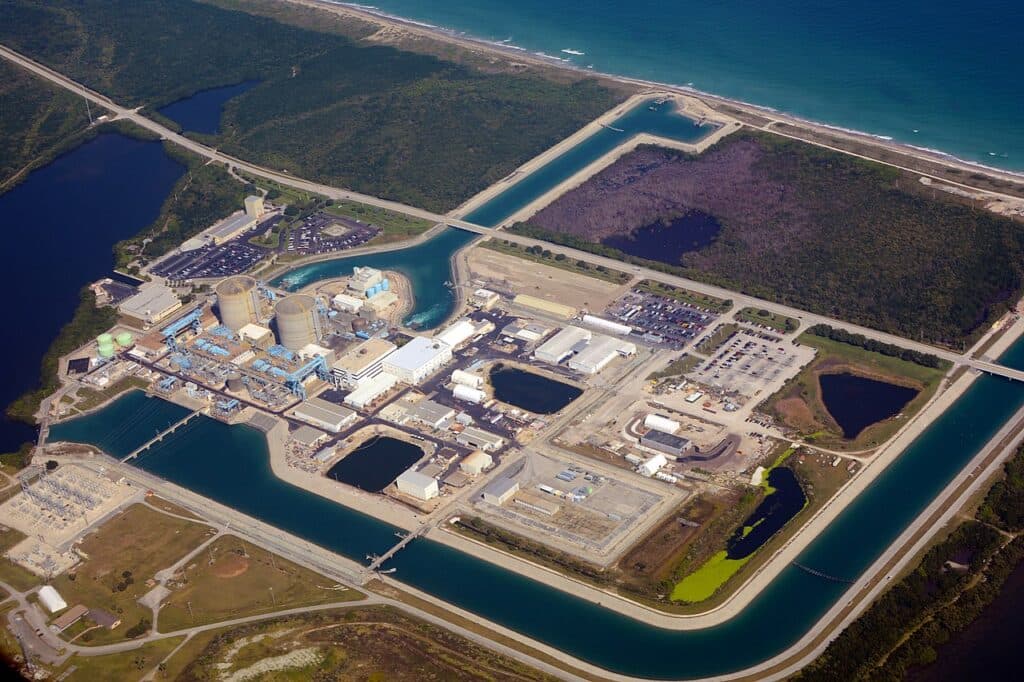
The United States is on the verge of a merger between two energy giants. NextEra Energy is set to acquire its competitor Dominion Energy through an all-stock transaction valued at approximately $66.8 billion. According to both companies, the combination would create the world's largest regulated electric utility.
For context, NextEra Energy, together with its subsidiary Florida Power & Light Company, operates seven nuclear units at four sites: Turkey Point and St. Lucie in Florida, Seabrook in New Hampshire, and Point Beach in Wisconsin. It also plans to restart the Duane Arnold plant in Iowa, which ceased operations in 2020. The company is also the largest renewable energy developer in the US and in recent years has entered into agreements with technology giants Google and Meta to supply electricity to their data centres.
Dominion Energy, by contrast, is a key energy player in northern Virginia, home to the world's largest concentration of data centres. The company's market capitalisation exceeds $50 billion. Its portfolio includes the Millstone nuclear power plant in Connecticut, North Anna and Surry in Virginia, and VC Summer in South Carolina. In 2024, the company also entered into a partnership with Amazon to supply nuclear energy for data centres, further strengthening its position in the rapidly growing AI energy segment.
The combined entity will have approximately 110 GW of capacity and serve around 10 million customers in Florida, Virginia, North Carolina and South Carolina. NextEra Energy shareholders will own 74.5% of the newly formed company, while Dominion Energy shareholders will receive the remaining 25.5%. The merger also reflects a broader consolidation trend in the US energy sector, which is seeking to respond to rapidly rising electricity demand driven primarily by the expansion of data centres and artificial intelligence.
"This is a historic moment for our two companies and for the states we are honoured to serve. Electricity demand is growing faster than at any time in the past decade. Projects are becoming larger and more complex. Customers need affordable, reliable energy now, not years from now," said NextEra Energy CEO John Ketchum.
According to him, the main reason for the combination is precisely its scale and the ability to finance, build and operate new infrastructure more efficiently.
"Scale matters more today than ever before—not because of size itself, but because it delivers capital and operational efficiency. It allows us to procure, build and operate energy resources more efficiently, which should translate into more affordable electricity for customers over the long term," Ketchum added.
Impact on customers?
Although the management of both companies primarily stresses supply stability and lower costs, some experts also point to potential risks. The greatest uncertainty is the future growth in electricity consumption by data centres and artificial intelligence, which are now significantly reshaping the US energy sector.
Energy companies are investing heavily in new generation capacity, transmission networks and backup resources in anticipation of a sharp increase in demand. However, if the estimates prove too optimistic, the costs of oversized infrastructure could ultimately be passed on to end customers in the form of higher electricity prices.
And this is precisely where forecasts diverge significantly. Some analyses expect data centres to account for up to 16% of total electricity consumption in the United States by 2030. More conservative scenarios, however, project a share below 7%. The difference between the forecasts shows how difficult it is today to estimate the true scale of the energy demands of the emerging artificial intelligence era.
Translation disclaimer
This article is a machine translation of the Czech original and has not yet been fully reviewed. In case of any doubt, please refer to the Czech version.
Sdílejte článek prostřednictvím:
You might also like

23 October 2026, 11:01

23 October 2026, 06:34