Russia-China relations on the new Silk Road: What will the forum in Beijing bring?

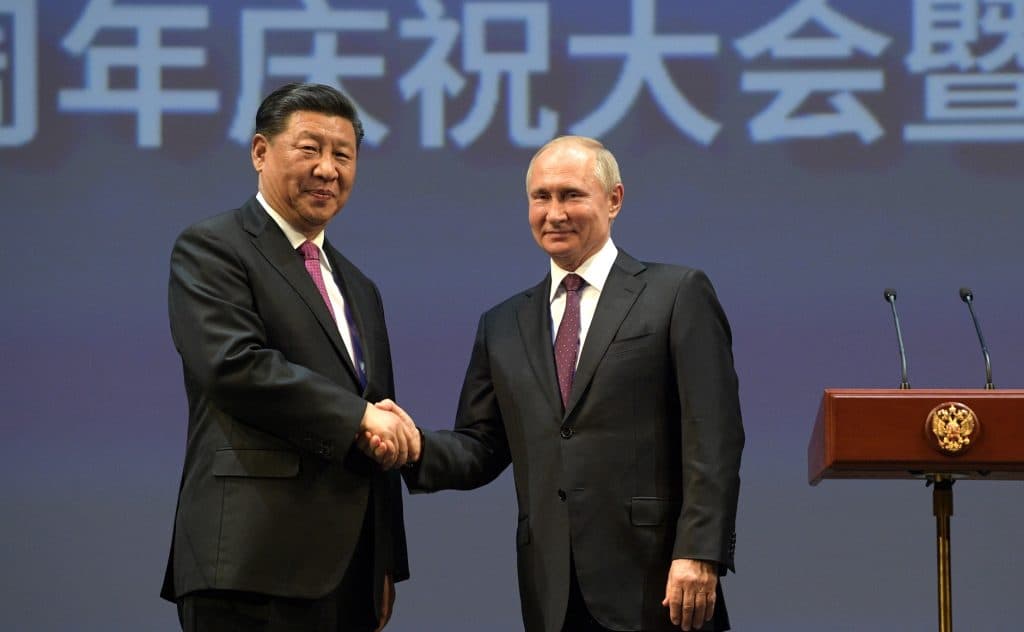
The third forum of China’s New Silk Road initiative (“One Belt – One Road Forum”) is being held in Beijing on 17 and 18 October 2023. The flagship project of Chinese foreign policy will build on the first two conferences, held before the coronavirus pandemic, starting in 2017. The initiative aims to create global infrastructure and an energy network across participating countries, while the forum itself serves to promote and deepen their cooperation. From this perspective, it will be interesting to watch Russian President Vladimir Putin, who has pledged to attend. Russia-China cooperation has grown in value recently, and the Russian president is expected to seek to strengthen the relationship further.
This is Putin’s first trip to China since the start of the conflict in Ukraine, and much has changed in the meantime. Russia has lost its European market in the West and has therefore naturally had to turn elsewhere. China has become one of its key partners, allowing it to build on a cooperation that was already developing very well.
One of the pillars of their energy ties is the Power of Siberia pipeline, which carries gas from eastern Siberia to China’s Heilongjiang province. Deliveries are expected to rise to 38 billion m3 by 2025, from the current 22 billion m3 a year. The deliveries are covered by an enormous 30-year contract worth $400 billion. The two countries are also building an equally strong and strategic relationship in the oil industry. China, the second-largest buyer of Russian oil after India, imports approximately 2 million barrels a day. This is therefore a very important and growing source of revenue for both countries.
The importance of Putin’s visit to China is underscored by the fact that he will be accompanied by the heads of energy giants Gazprom and Rosneft, Alexei Miller and Igor Sechin. This is a key partnership for Russia, which would like to take it to the next level through the Power of Siberia 2 project.
In practice, this would mean building a new gas pipeline that would carry oil from western Siberia and run through Mongolia. The new pipeline would have an annual transport capacity of up to 50 billion m3, with the potential to dramatically increase energy flows in Northeast Asia. For Russia, it would provide enormous financial support and partially compensate for the loss of the European market. Mongolia would become an important transit country, with socioeconomic and strategic benefits, while China would gain access to supplies at a favourable price. However, it is unclear whether such a massive volume of imports from one country is in China’s interests, given that its energy policy is characterised by considerable diversification, with gas also imported from Qatar, the United States and Australia. It is therefore clear that the incentives for carrying out the Power of Siberia 2 project differ in both their benefits and their strength.
Whether the negotiations have moved in Russia’s favour will become clear at the end of the forum or in the near future. After all, one of the six economic corridors underpinning the Belt and Road Initiative is the China-Mongolia-Russia corridor (CMREC). Ultimately, however, the outcome will probably depend on three factors. First, as already mentioned, whether China is willing to commit to buying such volumes. Second, whether China will need that much gas at all as renewable energy sources expand. And third, if it does, how strong a partnership China intends to build with Russia. In any case, Putin’s visit to China is expected to bring the two countries’ bilateral relations at least a little closer.
Translation disclaimer
This article is a machine translation of the Czech original and has not yet been fully reviewed. In case of any doubt, please refer to the Czech version.