3 November 2026, 10:36
Loading...
EU gas storage is less than three-quarters full. How much will be left after winter?

Martin Voříšek
3 November 2026, 10:36
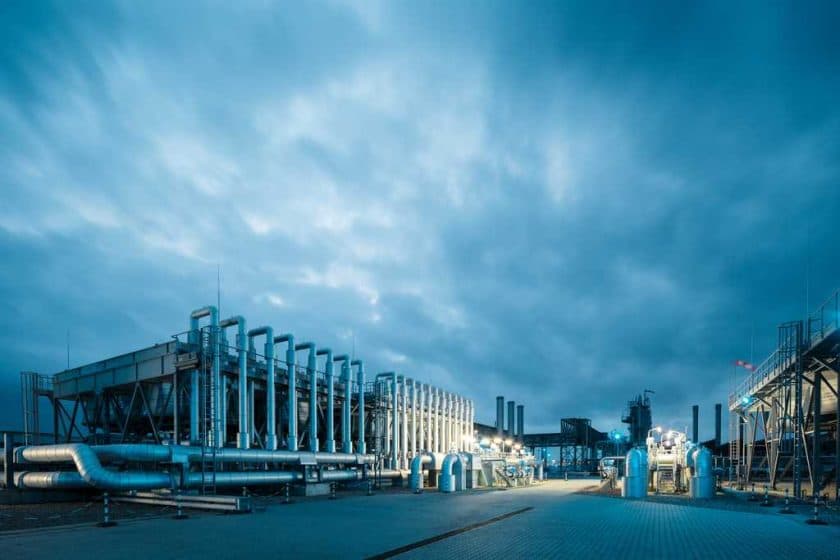
EU gas storage is less than 75% full and will not be significantly refilled from November onward. Historical data show that storage levels may be around a quarter of capacity after winter. This year, however, conditions are complicated by low stocks after last winter, a loss of LNG supplies from Qatar and the blockade of the Strait of Hormuz. All these factors, as well as average winter temperatures, will affect storage levels at the end of winter.
Gas storage facilities in the European Union reached this year’s highest filling level on 27 October, when they were 74.96% full. On the same day last year, they were 82.86% full, around 8 percentage points higher. As of 1 November, when storage facilities usually begin to gradually empty, the level stood at 74.56%.
The difference is all the more striking because the EU entered summer this year with storage facilities just 28% full, well below the nine-year average of around 40%. Refilling therefore had to start from an exceptionally low level, and storage did not reach last year’s level.
The next section looks at how many percentage points storage levels have fallen on average over the past eleven winters and where they could stand in spring 2027. We examine ACER’s assumptions for LNG imports and how the Czech Republic compares.
History offers a guide: around a quarter may remain in spring after starting at 75%
Between 1 November and 31 March, storage facilities emptied by between 39 and around 70 percentage points of capacity over the past eleven winters, with a median of approximately 51 percentage points. The mildest winter was at the turn of 2022 and 2023, while the harshest was in 2017/18. Last winter, 2025/26, was among the colder ones: the filling level fell from 82.81% to 27.66%.
At the current filling level, the median decline would leave storage around 24% full. The average decline over the past five winters (about 49.5 percentage points) would mean a filling level of around 25% after winter. A repeat of last winter’s decline would bring storage down to approximately 19%, while a mild winter like 2022/23 would leave around 35%.
A decline in stocks like that seen in winter 2017/18 would theoretically lead to storage being almost empty. However, it is worth noting that the gas market has changed significantly since the turn of 2017 and 2018. Any low storage levels would also affect gas prices and, in turn, incentives to save gas.
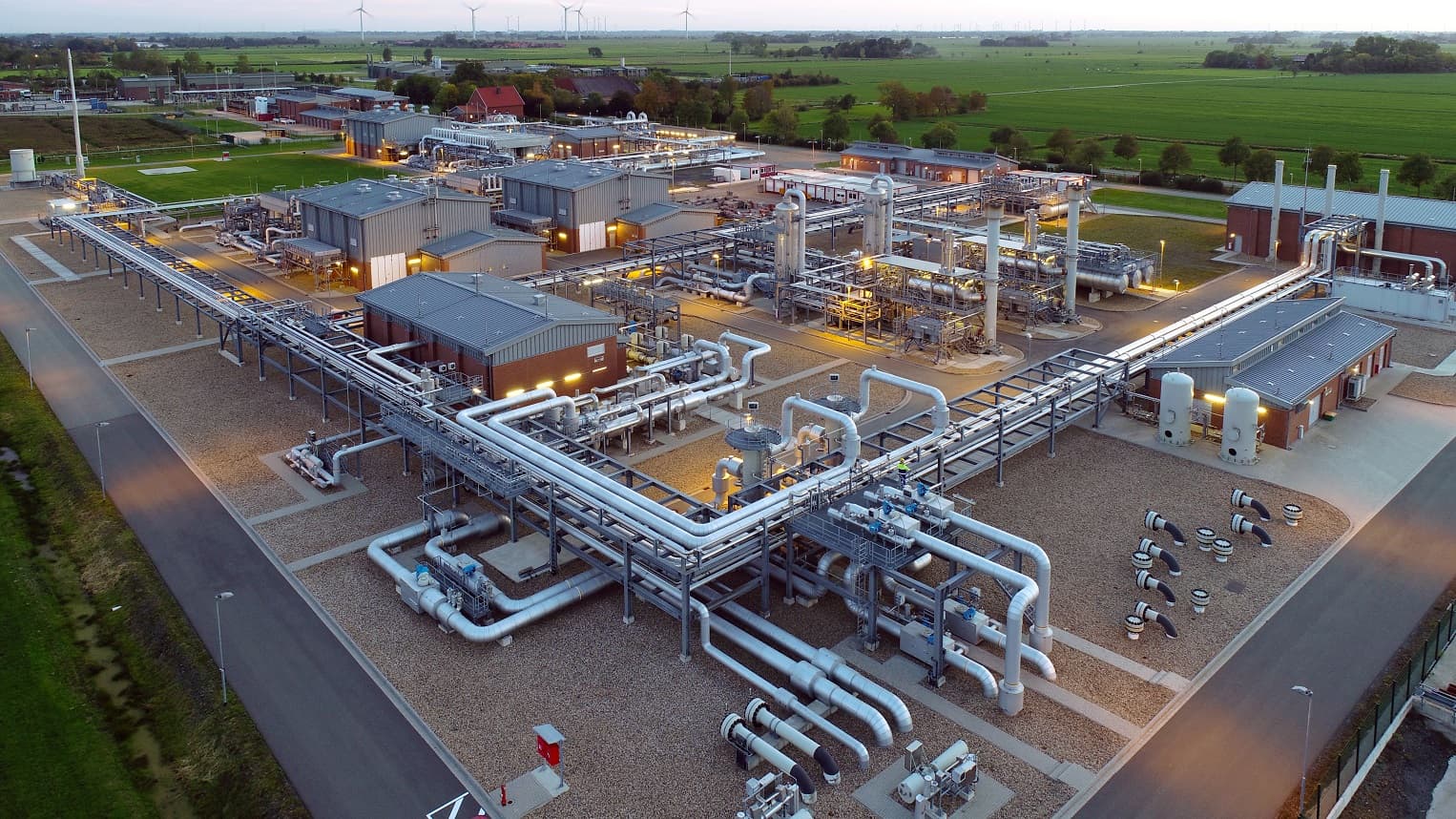
Jemgum underground gas storage facility. Source: Gazprom
Such a comparison has its limitations. The decline in percentage points depends on the weather, the price of natural gas and the initial filling level. Historically, more gas has been withdrawn from fuller storage facilities. This is therefore only a theoretical indication of what storage levels might be at the end of this winter.
Why this year’s starting point is worse than the headline figure suggests
This year’s slow refill of storage facilities reflected, according to an ACER report, weak demand for injecting gas into storage over the summer. Refilling was uneconomical due to the small gap between winter and summer prices and generally high gas prices. The European Union also eased its storage-filling requirement and made it more flexible. This further reduced traders’ incentive to inject gas.
Net summer injections reached around 43 bcm this year, below the ten-year average of 47 bcm. The estimated cost of filling storage was around EUR 27 billion. Although this was significantly less than the roughly EUR 108 billion in 2022, gas was still injected at the second-highest average price in ten years.
The countries furthest behind on storage refilling account for up to a third of the EU’s storage capacity. Germany and the Netherlands remain below their historical filling levels, and Germany’s largest storage facility, Rehden, was only 18% full on 21 October. Germany also applies a national target of 70% by 1 November, rather than the EU target of 90%.
LNG and Hormuz will determine how much gas remains
The Strait of Hormuz, through which 20% of global LNG supplies passed last summer, has been blocked for most of the time since 18 March 2026. ACER estimates the shortfall at 49 bcm. LNG imports to the EU fell by 14% year on year, and 64% of them came from the United States. In July, withdrawals from LNG terminals reached around 7.3 bcm, the lowest level since summer 2024.
The TTF spot price approached EUR 100/MWh, and according to ACER, the European Union paid an additional EUR 18–33 billion for gas imports this year because of the crisis.
This has practical implications for winter. If consumption remained at last year’s level, around 78 bcm (900 TWh) of LNG would be needed, according to ACER, for storage levels at the end of winter to match those of last winter. LNG imports to the EU would therefore have to reach a record high.
If LNG supplies fell below the average of the past five winters and stocks dropped to 15%, gas consumption would have to be reduced. The reopening of the strait at the beginning of 2027 could mean that around 20 bcm of LNG would be added to the global market in the second half of winter.
Czechia: Storage is fuller than average, but dependence on the region remains
Czech storage facilities were 77% full on 21 October, slightly above the EU average, while on 1 April they were only 30% full. At maximum withdrawal rates, they could cover 89 days of consumption, according to ACER—significantly longer than storage across the EU as a whole. Storage levels vary widely across the region: Poland is at 99%, Austria at 69% and Slovakia at just 55%.
Gas prices in Central Europe were higher this year than last, which ACER attributes to longer supply routes and less diversified sources. The hot summer also showed that natural gas consumption for power generation can increase even where it makes up a small share of the energy mix. Gas-fired power generation rose sharply in Czechia, too.
Russia still supplies around 11% of the EU’s gas, and TurkStream is the last major active route for Russian gas to the EU. Russian LNG supplies are due to end from 1 January 2027, although according to ACER they still accounted for approximately 14% of LNG supplies to the EU this summer.
Translation disclaimer
This article is a machine translation of the Czech original and has not yet been fully reviewed. In case of any doubt, please refer to the Czech version.
Sdílejte článek prostřednictvím:
You might also like

3 November 2026, 06:14
2 November 2026, 14:47
2 November 2026, 10:52