23 October 2026, 14:38
Loading...
We are not the cheapest, but we have stable electricity prices, says chair of European energy cooperative federation
Ekonews.cz
2 May 2023, 14:31
Dirk Vansintjan is an advocate of community energy. In 1991, he founded a citizen energy cooperative in his native Belgium. “We now have more than 70,000 members,” says the chair of the European federation of energy cooperatives in an exclusive interview with Ekonews. “Energy cooperatives are not just for a lucky few,” he adds.
“We have managed to protect cooperative members from the highest energy prices,” Vansintjan says, adding that each member has invested an average of around CZK 21,000 in the cooperative. In return, they receive electricity from renewable sources.
“Each of us has a collaborator within us,” he adds, explaining why he believes cooperation in cooperatives comes naturally to people. He also describes how citizen energy cooperatives can play a key role in the transition to clean energy.
Vansintjan came to Czechia to speak at TEDx Národní, a TEDx lecture format in Prague. As one of the speakers, he talked about community energy.
Over the past year, the European market has faced a huge rise in energy prices. Can energy cooperatives offer a way out of the crisis?
We may be coming to the end of the energy crisis, but now a financial one is arriving. People feel powerless and want solutions from the government. In Belgium, for example, every citizen received the same amount of financial support to overcome the effects of the crisis, but even those who did not need the money received it. Increasingly, it is becoming clear that people can do something themselves and do not have to rely solely on the government.
In our cooperative, we managed to protect our members from the highest energy prices. It is very positive that this is possible at all. The price of electricity is always linked to the most expensive method of generation, which during the energy crisis was gas. If you had to buy electricity on the market, you paid that high price regardless of whether it came from renewable sources or nuclear power plants. Without your own source of generation, it could not be done cheaply.
Since the 1970s, we have faced several crises. So this is certainly not the first one I have experienced. I am thinking, for example, of the oil crisis in 1973, the crisis in 1979 or the Chernobyl disaster in 1986. Every time a crisis came, the government could start addressing it and mitigating its impacts, or citizens themselves stepped in and founded energy cooperatives.
Why do cooperatives emerge in response to crises?
Each of us has a collaborator within us. I compare it to a cartoon image of a man with an angel on one shoulder and a devil on the other. Each of us has both within us – one is a collaborator and the other an individualist. In times of crisis, people tend to cooperate, and they enjoy doing so.
I ask myself: why do we not stop this economy that causes recurring crises and contributes to climate change? Why do we listen to the individualist on our shoulder? And why do we not listen to the collaborator instead?
You co-founded the citizen energy cooperative Ecopower, which supplies green electricity to 1.7 percent of Flemish households. How did it begin?
We started our energy cooperative with ten other people around a kitchen table. We now have more than 70,000 members. After school, I wanted to become an organic farmer. I bought an old water mill with a turbine that had previously generated electricity. My story began with restoring it, so it was somewhat accidental. Sometimes I think that if I had bought a brewery, I would probably be brewing beer today rather than generating electricity. In fact, my entire career and life story have been about encountering an obstacle each time, having to overcome it, and moving forward as a result. When I began generating electricity with the turbine at the water mill, the utility told me that I would also have to pay to supply them with surplus energy. My friends and I then created a lobbying group for renewables to change these conditions.
What does your cooperative look like today? Do you own energy sources other than solar panels?
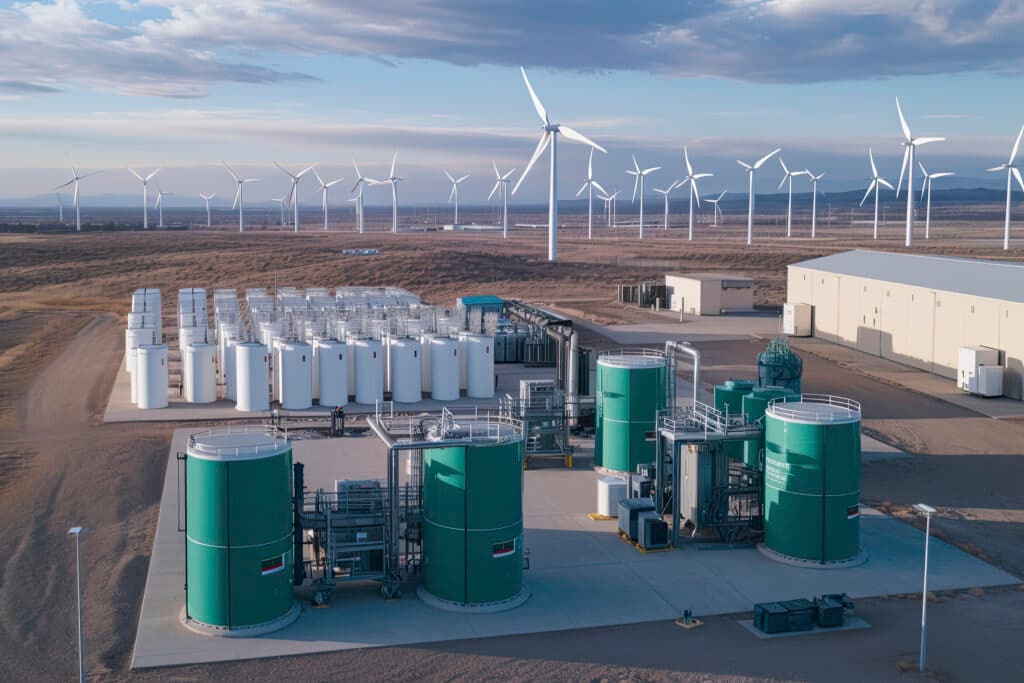
In addition to solar panels, the cooperative operates twenty wind turbines. We are now building two new ones and planning another six next year. Financing is never a problem; obtaining permits is more complicated. We sell electricity at cost, so we are very cheap. Companies with lower prices do appear on the market, but they often disappear after a few years. So sometimes we are not the cheapest, but we always have a stable price, and people value stability in times of crisis and stay with us.
How much do members have to invest in the cooperative? Would it not be better to have your own solar panels?
I sometimes hear that energy cooperatives are only for people who have a lot of money and can afford the investment and membership in the first place. But that is not true. On average, each member has invested EUR 900 in our cooperative (around CZK 21,000, author's note). Looking more closely at the figures, we find that three-quarters of members contributed only EUR 250 (just under CZK 6,000, author's note), for which they obtained 100% green electricity from our own installations.
For some people, it is difficult to put EUR 250 on the table all at once, so we give them the option of investing in the cooperative over one or two years. Having your own rooftop solar panels is at least ten times more expensive than membership. Energy cooperatives are not just for a lucky few.
You are the chair of the federation of citizen energy cooperatives REScoop.eu, which brings together initiatives in many European countries. Can cooperatives operate similarly to yours in other European countries?
In some European countries, cooperatives cannot offer electricity as cheaply as we do in Flanders simply because of their legislative rules. But thanks to the European Union, the same European directives apply in all countries. When we first met colleagues in Denmark and showed them how our energy cooperative works, they objected: “But Brussels does not allow this.” In the end, it turned out that only Copenhagen was interpreting the European directive in a way that prevented energy cooperatives from functioning well. The Danes could then make demands of their government because they knew from us that the problem was not in the European Union.
That is why it is important to monitor all European legislation. We want our members to always be informed about upcoming changes. We can react before the rules change. We approach member states, the European Parliament and the European Commission. And we have the advantage that our lobbying work is ethical; we are not doing it for money.
Some European Union countries have not yet incorporated two key directives on renewable energy and energy efficiency into national law. In Czechia, too, an amendment on community energy is only now being drafted. Are you trying to push these countries along?
We closely monitor how individual countries incorporate the two European directives containing the definition of community energy into their laws. On our website, we have a so-called Transposition Tracker, which shows on a map how individual European countries are performing. I know that the countries themselves monitor the Transposition Tracker regularly. Recently, someone from Estonia complained that the rules there had already changed, but that we had incorrect information on the website. So it works. It is the best part of our website.
But we also have many guides on our website. One, for example, is intended for municipalities. It shows how they can cooperate with energy cooperatives.
Which countries are involved in REScoop.eu?
Our federation now includes seventeen European countries. They are not only European Union countries; we also cooperate with cooperatives in the UK and Switzerland. I would say these are more countries of north-western Europe than southern Europe, while post-communist countries in particular are almost absent.
So there are no former socialist states in the federation?
We have active members in Croatia and Slovenia. Cooperatives from Estonia want to join us, and we will soon also have a member in Poland.
Why are cooperatives emerging more slowly in post-communist countries?
It is not easy because people there are not used to taking the initiative, while also thinking very individualistically. They say cooperatives are something from the past, from communism. I am trying to change this view. In reality, it is a misconception, because communists robbed cooperatives and took control of them, which is contrary to one of the main principles of cooperatives – autonomy. Communists never really liked cooperatives. By contrast, the United States has more than 900 energy cooperatives that supply 56 percent of the country's electricity. This is possible under capitalism, in “Trumpland”.
Is there a Czech initiative in your federation?
The Czech Republic is somewhat special. About two years ago, we provided training for local action groups in Varnsdorf, near the German border. We prepared people interested in community energy and taught them how they could get involved in cooperatives. I believe this is a good approach in former communist countries – using existing networks such as local action groups, towns and municipalities.
What do you see as the future of cooperatives?
The transition to renewable energy will succeed only if citizens are at its centre. The European Commission wants this too. We have several scientific studies saying that by 2050, when we need to have a decarbonised economy, almost half of electricity will come from household power plants. We must gradually electrify everything, so there is enormous scope for large companies. At the same time, however, they should leave room for citizens and their individual or collective efforts.
It is clear that a monopolist or former monopolist wants to retain its monopoly. When you speak with these people as private individuals, most of them agree with community energy, because when they leave the company and go home in the evening, they are citizens too.
In the Netherlands, it has been shown that the development of energy cooperatives can proceed very quickly. For example, I think that if wind turbines are owned by citizens, people in the surrounding area complain less about noise and accept them more readily. It is their wind farm, which brings them money and cheaper electricity. The transition to green energy sources then becomes easier.
Republished from EkoNews.cz, a website covering business and sustainability.
Translation disclaimer
This article is a machine translation of the Czech original and has not yet been fully reviewed. In case of any doubt, please refer to the Czech version.
Sdílejte článek prostřednictvím:
You might also like
23 October 2026, 11:01
23 October 2026, 06:34