
23 October 2026, 14:38
Loading...
Who is Kamala Harris, the US presidential candidate, from an energy policy perspective?

Libor Láník
7 August 2024, 11:34
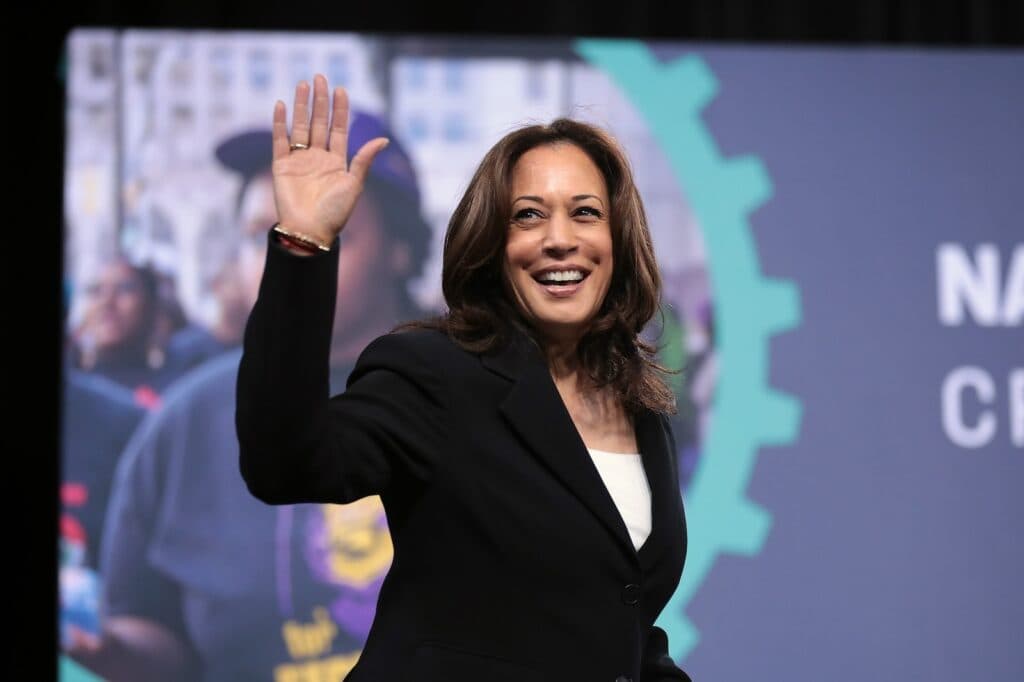
The race for the US presidency has changed course. Incumbent President Joe Biden has withdrawn from the race, and his place has been taken by Vice President Kamala Harris, whose official nomination was confirmed by the Democratic Party a few days ago. Who is Kamala Harris from an energy policy perspective? Which energy issues are associated with her, both in terms of her past and the outlook for the future?
Pressure had been mounting recently, including from within his own party, for Joe Biden not to continue his presidential campaign. And so it came to pass, with Kamala Harris, the incumbent vice president, former attorney general and senator, emerging as the expected replacement. At 59, Harris will seek to make history by becoming the first woman in American history to sit behind the desk in the Oval Office.
As the election campaign gets under way, it is therefore worth considering which issues Harris will champion. One of the key ones is the energy sector, whose development she has helped shape to some extent over the past four years, although it is difficult to assess her influence as the second-highest-ranking person in the country. In other words, Harris can now lay her cards on the table and show which direction she believes the United States should take.
From prosecutor to attorney general to vice president
To begin with, it is worth looking at what Harris has said about energy in the past, as her record can help illustrate her preferences. In 2005, as San Francisco's district attorney, she said: “Environmental crimes are crimes against communities, against people who are often poor and disenfranchised.” In connection with the statement, she announced the creation of a new environmental protection unit.
In 2015, as California's attorney general, Harris pursued criminal charges against Plains All-American Pipeline over an oil spill off the California coast. In 2016, she secured a settlement with Volkswagen, which had used defective devices to cheat emissions tests in its diesel vehicles.
In the same year, when she first ran for the US Senate, she raised the idea of taking California's emissions trading system (Cap-and-Trade) national. She also joined a proposal to ban plastic straws and sued the Obama administration over its plan for offshore fracking in the Pacific. Fracking is one of the most frequently discussed issues linked to Harris, but more on that later.
The following year, in 2017, Harris became a US senator and later also became a co-sponsor of the Green New Deal, a plan to transform the entire US economy that did not get far in Congress. Harris did, however, put some of its elements into practice in the later Biden administration, whose campaign began in 2019.
In that campaign, however, each candidate ran on their own, and Harris was much more ambitious than Joe Biden on climate policy. Her agenda can be summed up through several proposals: taxes on climate pollution, investment of trillions of dollars to reduce greenhouse gas emissions, and the aforementioned ban on fracking. The last proposal angered states such as Pennsylvania, Michigan, Ohio and New Mexico, where fracking is a cornerstone of the economy and supports hundreds of thousands of jobs. After joining Biden's ticket and his election as president, she very quickly reversed her position.
The Biden–Harris administration
The Biden–Harris administration, which has governed the United States for the past four years, can be viewed in two different ways. On the one hand, Tim Stewart, president of the U.S. Oil and Gas Association, says that “the Biden administration has been the most hostile to the oil and gas industry of any administration in history.” The political group Evergreen Action, by contrast, counters that the administration has delivered the most important climate achievements and will go down in history as a climate champion.
The fact is that Harris was and remains a frequent spokesperson for Biden's environmental policy, both nationally and internationally. Her involvement in the landmark Inflation Reduction Act cannot be overlooked, nor can her representation of the United States at the COP28 climate conference, where she committed the country to doubling energy efficiency and tripling renewable energy capacity. Finally, it is worth noting her role in implementing policies at the U.S. Environmental Protection Agency, where she helped secure 20 billion dollars for the “Greenhouse Gas Reduction Fund.”
During her time as vice president, Harris also supported policies such as cancelling the Keystone XL pipeline on the first day of the administration, delays in permitting oil and gas pipelines, the Interior Department's refusal to hold federal lease sales on schedule, and the current “pause” on permits for liquefied natural gas export infrastructure.
Who is Kamala Harris?
From the examples above, it is clear that Kamala Harris is a champion of climate justice whose affinity for green policies is impossible to miss. The examples show that for many years Harris has been a voice primarily advocating for the environment, and she is not afraid to sideline the interests of the oil and gas industry in the pursuit of a sustainable future. Her views have been fairly consistent, although her reversal on fracking—an activity she clearly considers wrong—seems somewhat questionable. That, however, is the reality of American politics.
In any case, she will enter the election from the position of the green left, which is in many respects the exact opposite of her rival, Donald Trump. On some issues, including the environment, they stand at opposite poles, although it is open to debate which of the two positions is more pragmatic. Either way, it will be clear after the November 5 election who will occupy the White House for the next four years.
Translation disclaimer
This article is a machine translation of the Czech original and has not yet been fully reviewed. In case of any doubt, please refer to the Czech version.
Sdílejte článek prostřednictvím:
You might also like


23 October 2026, 11:01


23 October 2026, 06:34