
23 October 2026, 14:38
Loading...
Huawei unveils ideal battery for Czech businesses. It's a flexible energy storage solution, says Konečný

Libor Láník
7 April 2025, 06:30
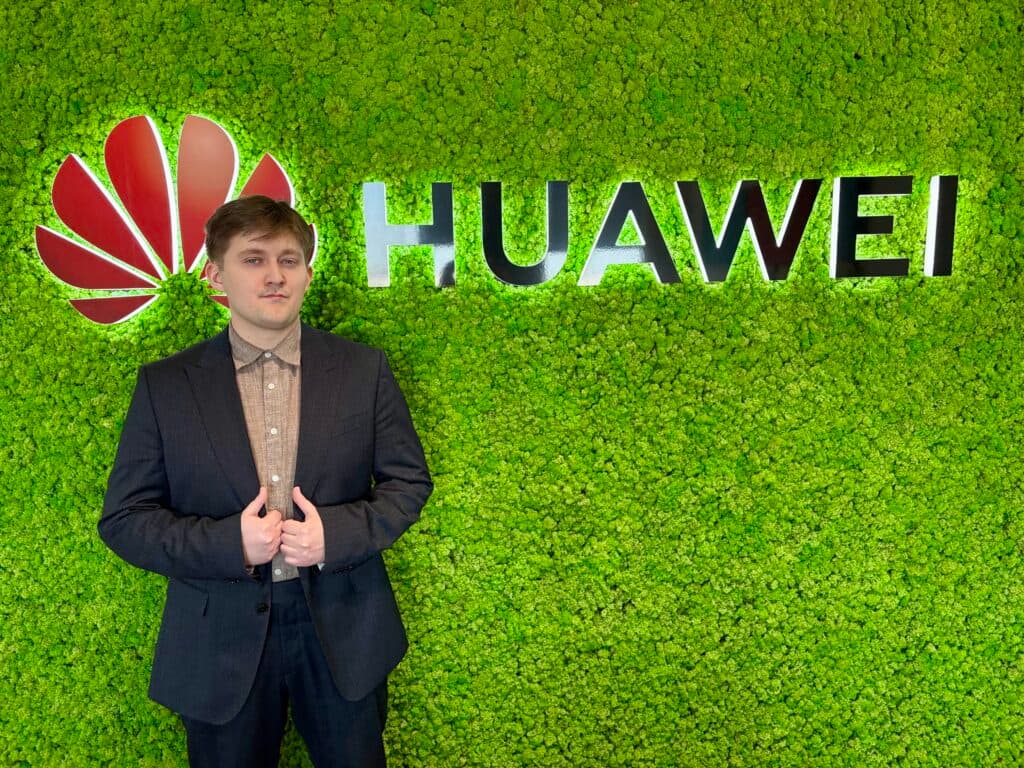
Battery energy storage systems are becoming a key technology for the modern energy sector. They help stabilize the grid, optimize the use of renewable energy sources and lower companies’ electricity costs. Yet their uptake in Czechia is not widespread so far. What role do they play in the market? And what sets Huawei’s new solution apart? We spoke with Marek Konečný, solution manager at Huawei, who outlined the advantages and potential applications of industrial and commercial batteries.
Let’s start with the bigger picture. Battery energy storage systems are often described today as a key technology for the modern energy sector. What role do you think they play in the market, and why is it important to support them?
We divide their applications into six main areas. The most common is maximizing self-consumption: many industrial companies install photovoltaics and generate their own electricity. But they often have a surplus during the day that they cannot use in time, so they have to sell it to the grid at a low price. With a battery storage system, they can store this energy and use it later, for example after sunset.
Another option is trading on the spot market. Electricity prices change every hour (and soon every 15 minutes), allowing companies to avoid expensive peak periods. They can buy energy cheaply at night, when prices fall, and use it during the day. As the share of renewables grows, these fluctuations will become more frequent, and batteries will make it possible to profit from them.
The third area is ancillary services to stabilize the grid. Grid frequency must be maintained at 50 Hz; otherwise, outages may occur. Today, grid stability is provided mainly by coal-fired power plants, but these will be phased out in the future. Batteries are a greener and cheaper alternative.
Then there is backup power: if the electricity supply fails, a battery can keep a company operating. This is useful, for example, for hospitals, data centers and industrial facilities.
Another application is addressing limited distribution grid capacity. If, for example, you want to build EV chargers but the local grid does not have enough capacity, a battery can balance demand and prevent overloading.
The final benefit is reducing contracted capacity, which helps companies lower the fixed charges they pay to the distributor based on the size of their circuit breaker and avoid penalties for exceeding their consumption limit.
Source: Huawei
How do battery energy storage systems help address the main weaknesses of renewable energy sources?
The main problem with renewable energy sources is their variability: clouds can block the sun, the wind can die down, and this can cause problems. But the energy sector needs stability. Battery energy storage systems are a solution because they can respond quickly to changes and balance fluctuations in the grid. This means there is no need to build new sources of stable generation, such as nuclear or gas-fired power plants.
How long can a battery energy storage system supply electricity?
It depends on its size and design. Some systems supply electricity for just 30 minutes, while others can deliver it for 8 hours or more. The economic sweet spot is usually between one and four hours; for longer-duration supply, pumped-storage power plants are generally used instead.
Can you say which types of businesses benefit most from battery energy storage systems?
They make the most sense for companies that can install photovoltaics and have variable energy consumption, with large peaks followed by drops. If a company’s consumption is stable, there is still potential, but the benefits are not as significant as for businesses that need to optimize their consumption.
Your company has introduced the Huawei LUNA2000-215-2S10 battery solution. What are its main specifications in terms of weight, dimensions, power and capacity?
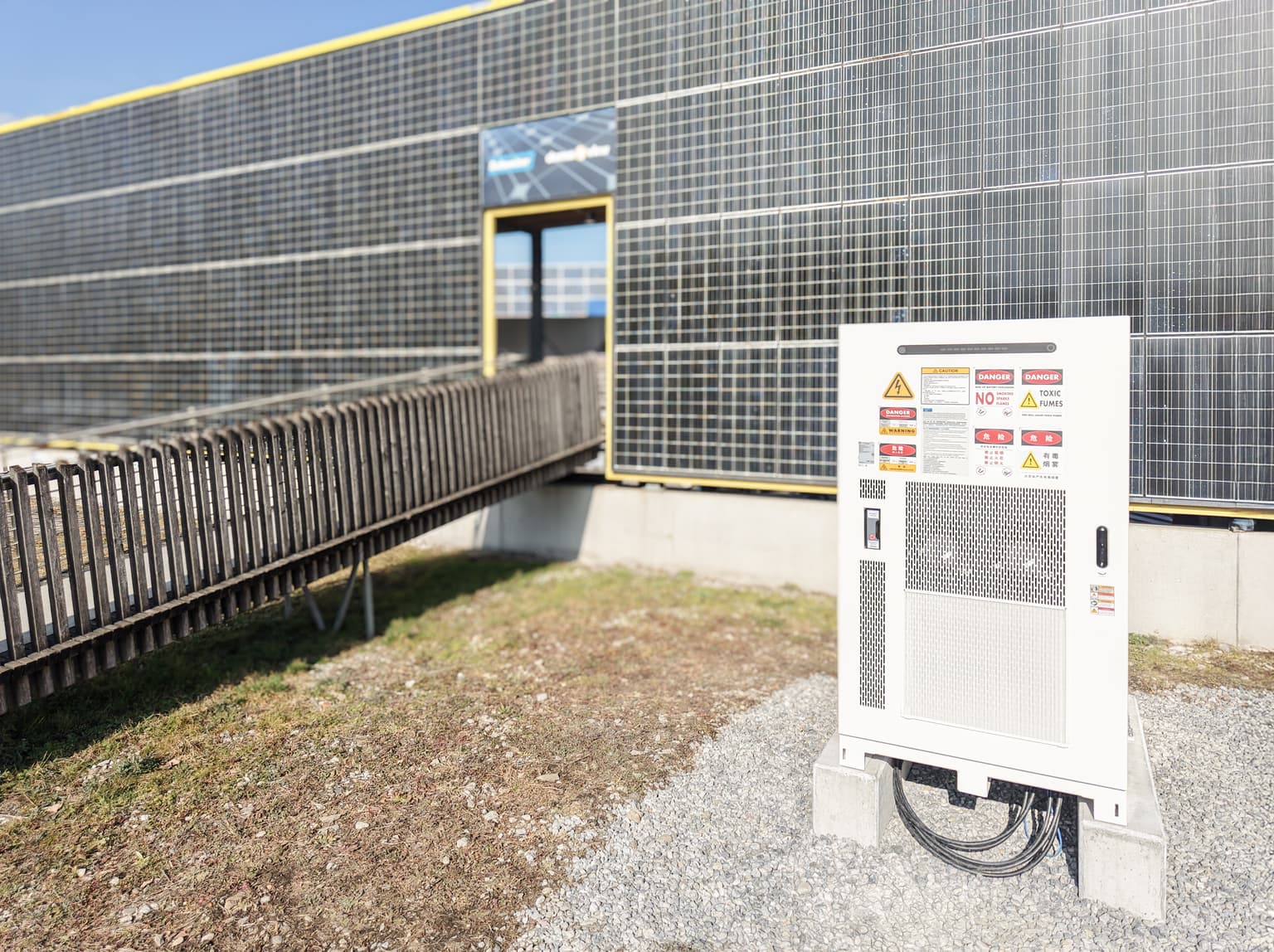
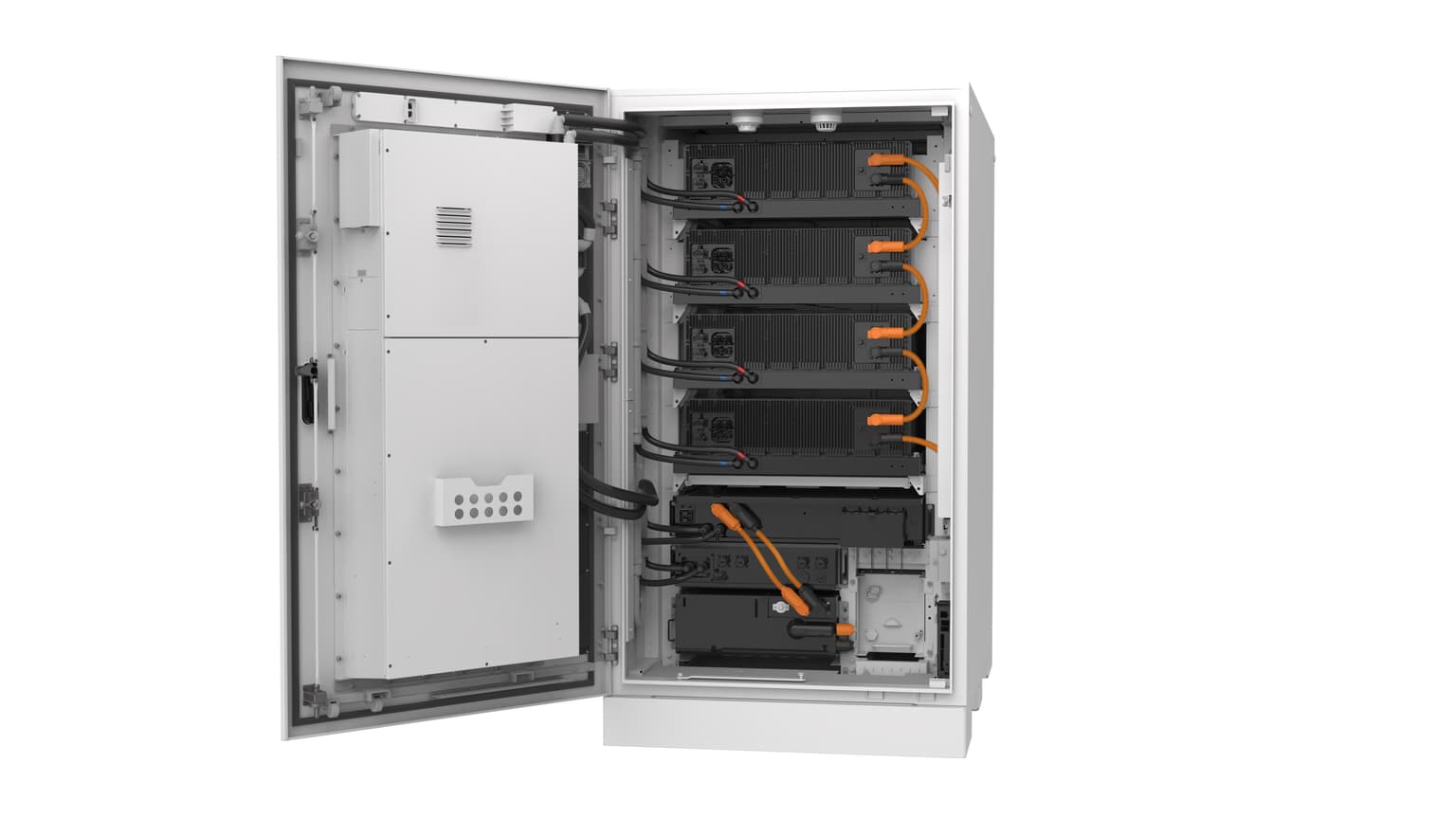
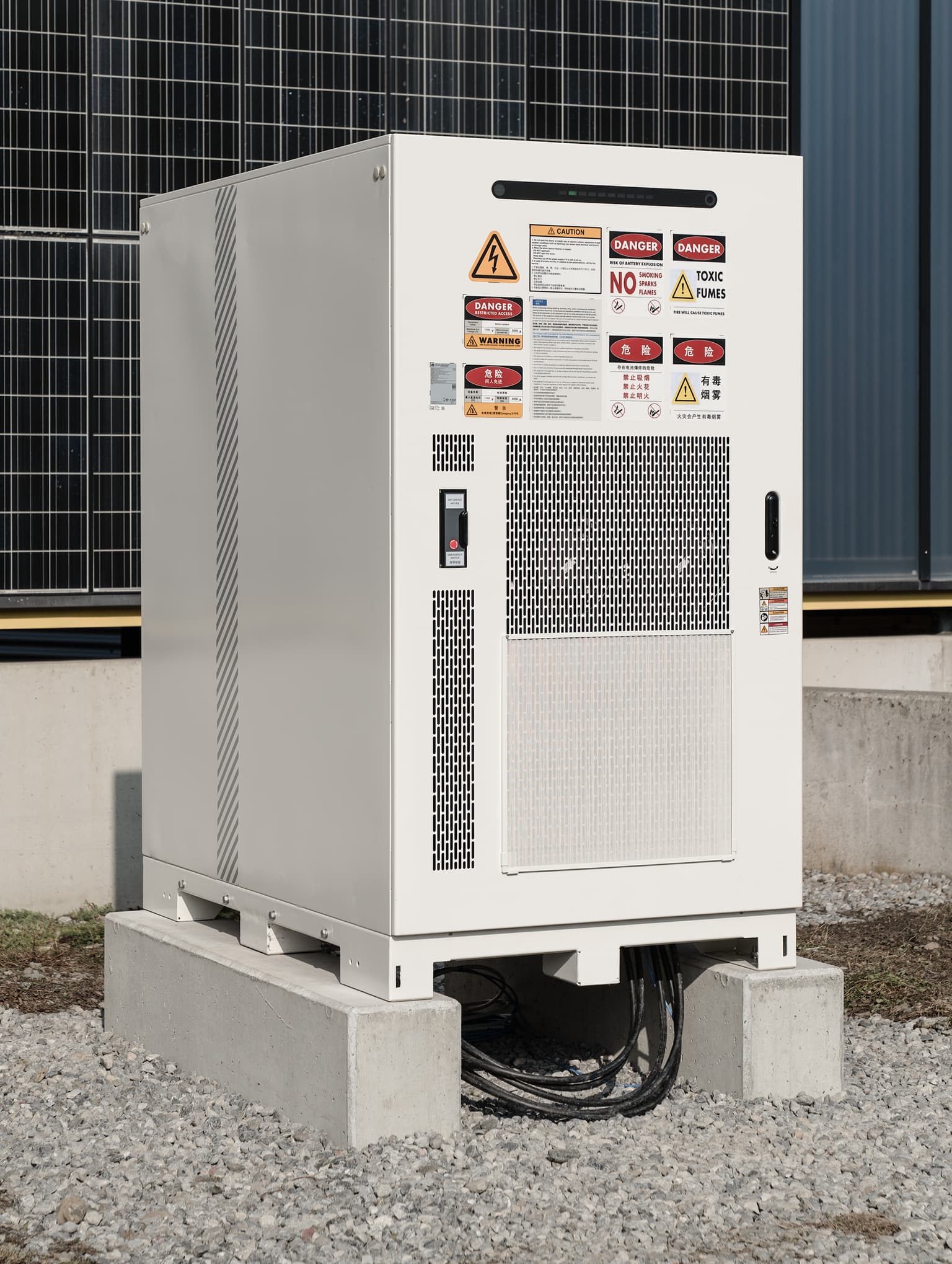
The Huawei LUNA2000-215-2S10 is a modern industrial battery energy storage system designed to optimize energy consumption and support energy flexibility, with a capacity of 215 kWh and an output of 108 kW. It is very compact, making installation easier: it is 1150 mm wide, 1800 mm deep and 2100 mm high. The entire unit weighs approximately 2800 kg.
Source: Huawei
How does it differ from the competition?
Many manufacturers are now catching up technologically, and liquid cooling has become standard, enabling greater efficiency and smaller battery systems.
Our solution uses hybrid cooling, combining liquid and air cooling and switching intelligently between them depending on conditions. In cooler weather, we use air cooling to save energy. At higher temperatures, liquid cooling kicks in because it is more efficient.
Another advantage is the use of waste heat: heat from the system’s power components can be used to warm the cells in winter.
These technologies enable us to achieve efficiency of up to 91.3%, one of the best results on the market. That may not sound like a big difference compared with the competition, but multiplied over thousands of cycles during the system’s lifetime, it has a significant financial impact.
You mention an efficiency of 91.3%. Does efficiency vary under different operating conditions?
Definitely. This figure applies under test conditions, at half the maximum output. If we charged and discharged the battery at full output (108 kW), efficiency would fall slightly.
Cooling plays a major role. If the battery operates under standard conditions, for example at 20 °C, it performs in line with the stated figure. However, if the ambient temperature is much higher or falls below zero, efficiency may decrease.
Overall, though, it depends on the system’s own energy consumption, the quality of its components and the efficiency of DC/AC conversion. As with our inverters, we aim to minimize energy losses, which helps us achieve market-leading efficiency.
Source: Huawei
What other advantages does this battery offer, and what makes it attractive to customers?
This battery stands out for its compact size and high capacity. Compared with previous versions, which were significantly larger and air-cooled, this one is much smaller and offers higher output. It is roughly the size of a standard pallet, making it easier to store and handle.
Its flexibility is a major advantage. If you need more than 215 kWh of capacity, you can connect multiple batteries side by side—up to 50—giving you capacity in the megawatt-hour range. Importantly, these batteries can be placed very close together without cooling becoming a problem.
Another advantage is that the battery is delivered fully pre-installed. Once it arrives, you simply place it on a concrete base, connect the cables and it is ready to operate. There is no complicated installation, saving time and labor.
We can also mention its asymmetric output, long service life and warranty, as well as our unique battery pack optimizer system, which helps increase returns and reduce costs.
And what about safety? What measures does Huawei have in place to prevent risks such as battery fires?
Safety is our number one priority. We have been supplying battery energy storage systems for more than 15 years, with batteries deployed all over the world, and we have never had a fire.
We use multiple layers of protection to minimize the risk of overheating or short circuits. If an incident were to occur despite these measures, we have safety features to prevent catastrophic consequences such as explosions.
Translation disclaimer
This article is a machine translation of the Czech original and has not yet been fully reviewed. In case of any doubt, please refer to the Czech version.
Sdílejte článek prostřednictvím:
You might also like


23 October 2026, 11:01


23 October 2026, 06:34