25 September 2026, 09:51
Loading...
Martin Ludvík: Current crisis already reflected in medium-term gas price outlook

Jakub Malý
25 March 2026, 13:40
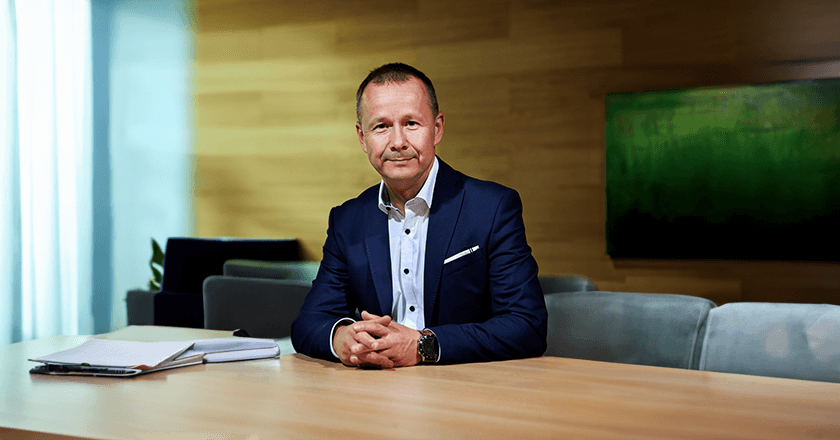
Current tensions in the Middle East have once again highlighted how sensitive energy markets are to geopolitical shocks. The conflict involving Iran has significantly increased the risk premium on oil, natural gas and electricity in recent weeks, raising questions as to whether this is merely a short-term market reaction or the beginning of a longer period of heightened volatility. How might the current situation affect energy commodity prices, what scenarios are traders monitoring in the markets, and what impact could potential price swings have on European consumers and industry? We asked Martin Ludvík, Chairman of the Board and CEO of Powertica Energie a.s. The information provided in this interview is valid as of the date it was conducted, 23 March 2026.
Current tensions surrounding Iran have once again brought a significant geopolitical risk premium back to the market. In your view, is the current rise in oil and gas prices mainly short-term nervousness, or the beginning of a longer period of heightened volatility?
The first weeks of the conflict triggered considerable nervousness in wholesale markets, reflected primarily in rising prices for so-called short-term contracts, meaning, in the case of gas and electricity, deliveries for the nearest periods, such as one month or one quarter ahead. In the initial phase, the market reacted mainly to restricted transit through the Strait of Hormuz.
However, as the escalation continues and energy infrastructure comes under attack, attention is shifting to the real impact on the global balance, particularly in LNG. Damage to LNG facilities is difficult to repair because of the technology used and may result in outages lasting weeks or months, which is already being reflected in the medium-term price outlook.
European gas is highly sensitive to developments in the Middle East. In your view, is natural gas now the commodity through which geopolitical risk is transmitted most strongly into Europe’s energy sector?
Definitely, and on two levels.
The first concerns gas itself. After a relatively cold winter, Europe is entering a period when it needs to fill storage facilities intensively for the next heating season, while current storage levels, at just under 29 %, are close to five-year lows. Lower levels were recorded only in 2022. This puts pressure on prices, particularly during the summer months.
The second level is the role of gas in Europe’s power sector. Gas-fired power plants often act as so-called marginal sources and set the wholesale electricity price. Rising gas prices are therefore directly reflected in electricity prices, as we saw during the 2022 energy crisis, which was a direct consequence of the war in Ukraine.
To what extent could the current situation affect electricity prices in Europe and the Czech Republic? Is it already apparent that more expensive gas is once again pushing up electricity prices for near-term delivery as well as longer-term contracts?
Although the current increase in energy prices is an order of magnitude lower, today’s situation can to some extent be compared with the 2022 energy crisis, when Russian gas supplies to Europe were disrupted as a result of the war in Ukraine. This shortfall was largely replaced by LNG, whose price is currently under pressure in response to geopolitical developments in the Persian Gulf.
In both cases, the initial price increases were reflected primarily in short-term contract prices. Gas delivery for April 2026 rose from 33 EUR/MWh to 62 EUR/MWh, while electricity rose from 78 EUR/MWh to 99 EUR/MWh. However, as the conflict drags on and the global LNG balance is disrupted, for example as a result of a 17 % reduction in capacity at Qatar’s Ras Laffan LNG terminal following an Iranian attack and a possible delay to the planned QatarEnergy North Field East project, higher prices are gradually being reflected in longer-term contracts as well.
We are now seeing this in both gas and electricity, where the price increase is also spilling over into annual deliveries. The annual contract for gas delivery in 2027 rose from 30 EUR/MWh to 49 EUR/MWh, while electricity rose from 88 EUR/MWh to 105 EUR/MWh. Despite these significant increases, I am convinced that the extreme levels seen in 2022 are not a threat, as markets and their participants have learned a great deal. Governments and their administrations likewise have the necessary experience and tools, particularly legislative ones, to curb any extremes.
Oil is traditionally the first commodity to be affected by similar crises. Do you think that, paradoxically, gas and electricity could be a greater problem for Europe this time than oil itself?
I believe that in the current situation, gas and electricity may be a greater problem for Europe than oil itself.
The main reason is the technological and infrastructure complexity of LNG. Any outages or damage to LNG facilities have considerably longer-lasting effects than disruptions to oil infrastructure, as repairing or replacing them is more complex and time-consuming.
Another reason is that an oil crisis affects the entire world in a very similar way, whereas the impact of high gas prices on electricity prices is specific to Europe.
How would a potentially longer-lasting conflict affect ordinary customers in the Czech Republic, in your view?
The primary impact would be higher prices. We are already partly seeing this, for example at filling stations, where rising oil prices are reflected relatively quickly.
If the conflict continued, further price increases could be expected not only for energy but also for other commodities and products linked to the Persian Gulf region (e.g. fertilisers, urea, etc.). These primary price impulses then spill over into the wider economy and may contribute to rising inflation.
Could the current tensions also change longer-term thinking about Europe’s energy mix? In other words, does geopolitics once again bring the issue of energy dependence into play, or does it instead strengthen the debate on the need for decarbonisation?
It certainly can, and personally I believe it should. Energy self-sufficiency is one of the main pillars of national and European security, while also having a strong economic dimension. If Europe is dependent on gas, with 40-45% supplied through LNG imports, rising LNG prices strongly affect not only Europe’s economy but also its competitiveness against the rest of the world. All of this is compounded by the Green Deal, i.e. CO2 emissions pricing, the phase-out of coal (so far without a replacement), and fortunately the temporary move away from nuclear power (Germany, Belgium, Italy, ...). However, it should also be noted that renewables tend to strengthen energy self-sufficiency and, when they are generating, help curb rising electricity prices.
How do you think the current situation is changing the behaviour of traders in energy markets? Have you seen a greater effort in recent weeks to hedge prices in advance and limit risk, or rather more speculative positions betting on a further rise in volatility in oil, gas and electricity markets?
One of the few positives of such situations is that all price turbulence has, to a certain extent, a “cleansing” effect. Strict wholesale market rules force speculators to post additional collateral or partially or fully close their positions.
For energy suppliers serving end customers, these price fluctuations are a reminder that excessive speculation on commodity price movements does not pay off in the long run and that rigorous risk management remains a key element of their business strategy.
And one less conventional question: does the current situation show that the market may now value uncertainty itself more than a physical shortage of commodities? Is the price of fear not one of the most important “commodities” traded by energy markets today?
Honestly, I do not believe that fear in itself is one of the most important “commodities” being traded. Fear is primarily an emotion that is very often triggered by the existence of a risk, or a set of risks. Unfortunately, there is currently no shortage of such risks around us: the risk of global warming, security risks linked to Ukraine, Venezuela or the Persian Gulf, migration risks, and the risk of an AI bubble. Moreover, all of this is shared online in the media and on social networks. In today’s fully interconnected world, more than ever, information, the ability to analyse it and draw the right decisions from it are becoming strategic “commodities”.
Translation disclaimer
This article is a machine translation of the Czech original and has not yet been fully reviewed. In case of any doubt, please refer to the Czech version.
Sdílejte článek prostřednictvím:
You might also like
24 September 2026, 11:23
24 September 2026, 10:30
24 September 2026, 06:56