
23 October 2026, 14:38
Loading...
Petr Rokůsek: Flexibility in the Czech power system is enormous, an untapped potential

Martin Voříšek
4 November 2018, 15:43
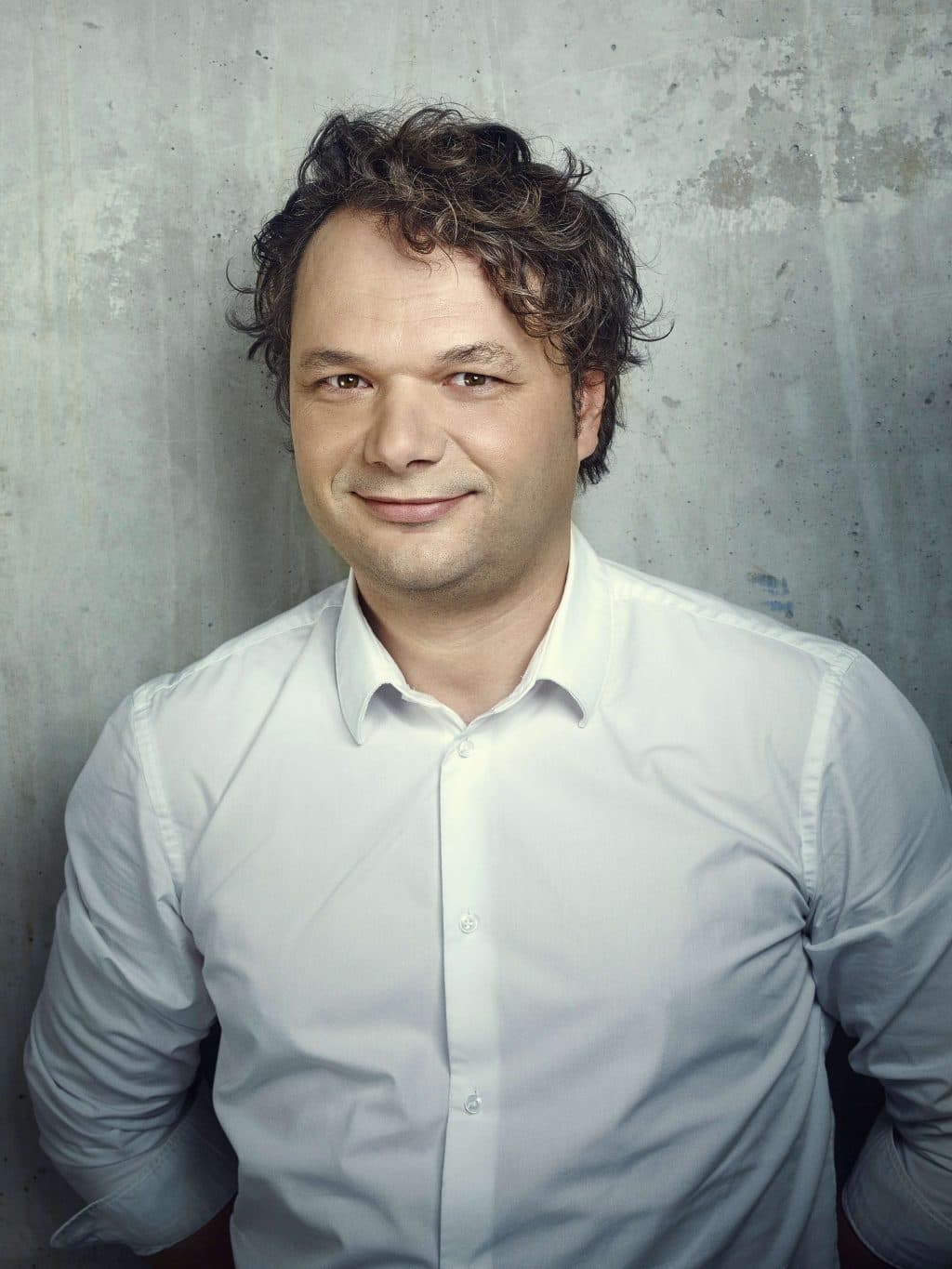
Innovator and visionary of modern energy Petr Rokůsek will be the keynote speaker at the November Share Your Energy conference. The founder of Nano Energies spoke to us about how he and his team aim to overcome Czech regulations, start sharing electricity between neighbours, and the need for cooperation between traditional energy players and their new-age challengers.
You are no newcomer to the energy sector – Nano Energies recently celebrated 10 years on the market, and you have always positioned yourselves very differently from other energy companies, successfully so. So, to begin, I would like to ask what to expect from the energy sector in the coming years and what you consider crucial?
For me, everything in energy stems from a vision of what it could look like, what the current forces are, and what one camp believes versus another. We all live in a certain bubble, but reality is important to me. There is the camp of experts who are staunch advocates of conventional energy, then there are renewable energy enthusiasts, while another group cannot imagine the future without nuclear power. It is a kind of hypnosis that is very often tied to a single country.
I have attended many conferences where, for a long time, people said that we in Czechia have the right view of energy, while everything is being done wrong in neighbouring Germany. If one at least travels between Germany and Czechia, it must be clear that we cannot maintain our current conditions in their entirety and that it would be appropriate to observe what is actually being considered in Germany, what will happen there, and how we will adapt to it here.
So are you saying that now is the right time, when the energy sector is changing and we in the Czech Republic are finding that it is time for innovation and to enrich conventional traditional energy with it? Should we look abroad for inspiration, for example to Germany?
Here, the battle between conventional and new energy is still under way. A comparison can be made with religion – conventional energy is like Catholicism, which has been here for centuries. Opposed to it is the modern opposition, a kind of “new age”. Each has its advantages and disadvantages, and the two systems are fighting each other. This clash needs to be viewed differently. When two fight, the third wins.
Should we see it as Nano Energies trying to be that third player in the market? Specifically, how do you envision the position of the third party as you described it?
Not so long ago, there was intense competition between taxi services in busy locations. They fought each other over which would be better, until Uber entered the picture. That is the third party I am talking about, which ultimately has a decisive influence on the whole sector. Instead of competition between the two camps, it is time to cooperate. We should abandon old models that are currently very financially advantageous for us, but only because they are connected to an old system that cannot remain here indefinitely. Just as Uber did, someone can enter the energy sector and cause a revolution. That is why it is important to observe current developments without any prejudice and as they truly are. The question is when to expect such changes. It may be with a generational change in key energy companies or with the wider deployment of modern technologies.

Do you think the Czech Republic is close to such changes and that we will soon see substantial changes in the domestic energy sector as well? It is clear that conditions for developing energy innovation are more favourable in some European countries.
It does not matter what we think in Czechia. A month ago, no one would even have thought that shared Lime electric scooters would be parked on every corner, and suddenly it is reality. You see all of Prague riding on batteries. And where did this come from? Someone somewhere in the world simply decided to bring 300 scooters here with a mobile app in a short period of time. Sooner or later, we can expect similar changes in energy as well.
It is difficult to compare this with energy, where regulation is relatively strong and legislation often prevents innovative solutions. One need only look at the barriers facing energy storage in the Czech Republic. Do you think you may encounter a similar barrier?
Many people in the energy sector believe it is regulated and difficult to change. However, the entry of new players cannot be prevented, including those from sectors such as telecommunications. Such a player will have an entirely different view of the energy situation and will implement an approach it is accustomed to from telecommunications. The current state of regulation is unsustainable. Regulation is always slow and, if it does not adapt to reality, it causes problems for actual operations. Sometimes this can even involve activities contrary to the law, because energy business licences are precisely defined. That is why energy is different from ordinary services.
One might argue that scooters are not regulated, whereas cars and taxis are. However, scooters are the beginning. Small household battery systems are similar: they can serve only limited purposes, which is not contrary to any regulation. Gradually, these battery systems can develop into larger installations. Many people underestimate this, especially major market players.
I expect major players to bring stability to the energy sector. If they underestimate the rise of new technologies, they could destabilise the sector to some extent. I respect major players and conventional energy in general, as they have an indispensable role. At the same time, however, I want there to be those who pioneer new-age solutions.
The biggest change will come through internet companies, which have enormous expertise and vast amounts of data, will know how to use artificial intelligence, and will know people’s needs precisely, adapting their products perfectly to them. Their strength will primarily lie in solutions that are not local but global and can be deployed through an app. Similar to Uber or Lime.
You continually refer in your answers to a clash between conventional energy and the new age. Is Nano Energies’ future to be somewhere between these two currents?
Not only would I like us to continue heading in that direction, but I believe we are already such a company. Nano Energies came about because we identified certain types of inefficiency in transmission systems and spot markets, made them more efficient, and financial benefits followed. We are not just an electricity trader with the ability to persuade customers to switch from one contract to another. As part of a comprehensive business, we are able to predict the situation in transmission systems well, which is crucial to our business. Naturally, we ask ourselves where else we can use this approach to bring efficiency to other parts of the market. For example, we can intelligently manage large machines, CHP units and many other things through the Digital Energy Services division. And we do not have to wait for batteries to do so.
Ten years ago, we tested an interesting pilot project involving a water tower, which showed that many devices can perform a storage function. The water tower pumped water up at night, and it then flowed by gravity to users, naturally with the assurance that there would be enough when needed. We created a positive business model for such a water tower that would save enormous costs simply by starting the pump at the right moment. Unfortunately, the entire project foundered on water-sector regulation: when a company saves money, it has to reduce customers’ bills, and therefore its profit does not increase. In effect, you do something extra and gain nothing.
When you speak about smart management, where do you see the greatest opportunity in this field?
At the level of larger machines, we see enormous potential in managing security of supply and storage, which can be achieved solely by correctly managing electricity generation and consumption and their timing. This is essentially a flexibility aggregator, which we are currently developing. We want such aggregators to be used instead of expensive reserve resources, which are paid simply for being on standby and may operate for only ten hours a year.
What concerns you about batteries and reserve resources?
We should consider what we already have at our disposal before flooding the country with batteries, whose production and disposal are neither cheap nor environmentally friendly. Of course, we will be happy to manage battery storage because it is simple, but the question is whether that is truly where we should start. It makes no sense to build another pumped-storage plant and damage nature when we can achieve the same result with resources already in operation.

I would like to pause briefly on the flexibility aggregator itself. What stage are you specifically at, and what results have you achieved?
First, it should be said that we are 50% to 60% an IT company. We handle all IT ourselves. For us, a flexibility aggregator is nothing new. As early as 2008, we had a pre-implementation analysis that envisaged it. A substantial part of the development is primarily about ensuring that the aggregator is recognised, usable in the market and reliable. In 2016, we managed more than 100 MW, which we did not use for ČEPS, but in relation to the spot electricity price. Our company has been a flexibility aggregator for years, and our IT systems are designed to aggregate flexibility in the market.
A flexibility aggregator is not entirely commonplace in the Czech Republic. How successful are you in recruiting participants and making participation attractive for them?
The main advantage lies in the electricity price, which we can reduce. For clients with a portfolio of CHP units for heating plants, we can save them on the order of tens of percent through remote management while maintaining the client’s core business. It is no problem for us to mathematically define and comply with a specific client’s conditions.
For other customers, using our services can accelerate the payback of their own machines and equipment severalfold. I mean situations in which we place the generation or consumption of equipment on the spot market. If, with a flexibility aggregator, we gain access to other markets as well, the economics could improve further in broad terms.
One need only look across the border. In Belgium, the price of flexibility and availability is routinely competitively tendered. For us as taxpayers, this has an immediate advantage: procuring flexibility is cheaper than building power plants that can be replaced by flexible use of existing generation and consumption.
Is flexibility a topic only for large producers, or is it worthwhile for small resources too?
Flexibility is not limited to large machines. What we do today with large machines can also be applied to households. However, this requires tens of thousands of households, and the barrier is the need to integrate them. In the future, we like the idea of decentralisation. Households will not be as dependent on their supplier and will connect their machines with one another – flexible management is then simpler at that scale. This is also one of the reasons why we support the Share Your Energy conference. We would like to invite representatives of companies to Czechia that have already carried out pilot projects with this focus.
Do you really think peer-to-peer electricity sharing is feasible in Czechia?
We too have invested in our IT, and we are already able to launch such household integration. The only problem is designing the service so that it complies with regulation. We have an electricity licence, an invoice has a prescribed format, and if we do not meet these requirements, we would naturally be acting contrary to the rules. But that is a problem for integration purposes.
You mentioned the Share Your Energy conference, which is to focus, among other things, on blockchain and peer-to-peer. At the same time, you say you already have the IT in place for trading between households. Are you planning to use blockchain for this?
It is an important element that will reduce the cost of a large number of transactions. For our purposes, we understand it as a 100% reliable record that cannot be erased and does not need to be further verified in a complicated way. It is essentially a reliable ledger.
Blockchain will make a complex system that would otherwise be very expensive and uncertain cheaper and more efficient. As a result, we will be able to carry out among households the transactions we currently conduct with larger machines at the B2B level, with households trading among themselves. Put simply, we can imagine a user saying: “I have a photovoltaic system generating electricity, and if someone pays me this much for it, I am willing not to charge my car at that time for that price.” The transaction will take place automatically thanks to the reliable ledger.
Will the advantages of the whole model for households be similar to those for large consumers? I would expect you to have analyses and economic models for such a system.
Such a model cannot be created simply. Nothing is just black or white. Electricity sharing opens up additional possibilities for customers, which is precisely why pilot projects are being carried out. Based on our old system, it appears that such a model will not work economically. For example, I do not think that in the future anyone should buy their own photovoltaic system. It will be financed precisely through sharing. And, of course, more such examples can be found.
Nano Energies operates in several European and foreign markets. As a company, would you prefer to implement some of your plans abroad rather than in the Czech Republic?
Without question, the situation in Czechia is more complicated than in other European countries. Personally, I am sceptical. Czechia is neither flexible nor sufficiently progressive in energy innovation. We prefer Switzerland or Liechtenstein and countries that have no problem adopting very rapid and bold legislation for blockchain.
Lead photograph author: Salim Issa
Translation disclaimer
This article is a machine translation of the Czech original and has not yet been fully reviewed. In case of any doubt, please refer to the Czech version.
The article continues for subscribers
Premium content
The rest of this article is available to premium subscribers only. Get access to all premium articles on oEnergetice.cz.
Best value: annual subscription
Monthly option 4 € / month
3.25 €/ month
You might also like
23 October 2026, 11:01
23 October 2026, 06:34