25 September 2026, 09:51
Loading...
Thanks to vPPAs, we will supply 460 GWh of green electricity annually. We have a problem in Czechia, says Rezolv Energy’s Matej Krušpán

Martin Voříšek
21 November 2024, 17:30

Direct renewable electricity purchase agreements (known in English as power purchase agreements, or simply PPAs) are still a relatively new phenomenon in the Czech Republic. In other European countries, however, they are an entirely commonplace way of securing financing for the construction of renewable electricity generation facilities.
Czech company Rezolv Energy is one example. It is primarily active in Central and Eastern Europe, where it is currently building projects with hundreds of MW of installed capacity, including both wind farms and solar plants. In the Czech Republic, however, the PPA market is only at its beginning, partly because renewable energy accounts for just under 15% of the Czech energy mix, the lowest share in the EU. “Available renewable capacity is an essential prerequisite for a healthy PPA market, so it is vital that rapid progress is made in this area,” says Matej Krušpán, Chief Commercial Officer of Rezolv Energy.
We asked Matej Krušpán about the projects Rezolv Energy currently has under construction and about the type of PPA that is now gaining ground at the expense of physical PPAs.
Rezolv Energy celebrated its second anniversary this year. What do you consider your greatest achievement over that period?
One of our achievements is that we are already developing a 2.2 GW portfolio of wind and solar power plants in South-Eastern Europe. This portfolio includes four large projects in Romania and Bulgaria.
We have also started construction on two of these projects: VIFOR, a 461MW wind project in Romania’s Buzău County, and the “Saint George” project, a 225MW solar project in north-eastern Bulgaria. We were able to begin construction on the basis of two financing agreements. The first, a financing facility of up to EUR 291 million to support construction of the first phase of the VIFOR project, was provided by a consortium of eight lenders. The second facility, up to EUR 90 million in debt financing from the International Finance Corporation (IFC) and Raiffeisen Bank International, will support construction of the “Saint George” project.

Source: Rezolv Energy
Another of our achievements is the six PPAs for green electricity supply that we have signed with leading companies in the market, including T-Mobile Czech Republic, Slovak Telekom, Bekaert and Ardagh. We also value the confidence of all our other prospective customers, with whom we are currently negotiating more than 10 PPAs.
What types of renewable energy projects do you prefer for your investments? In which countries do you currently see the greatest potential?
Our company focuses on large wind and solar projects, which allows us to consolidate savings and create economies of scale.
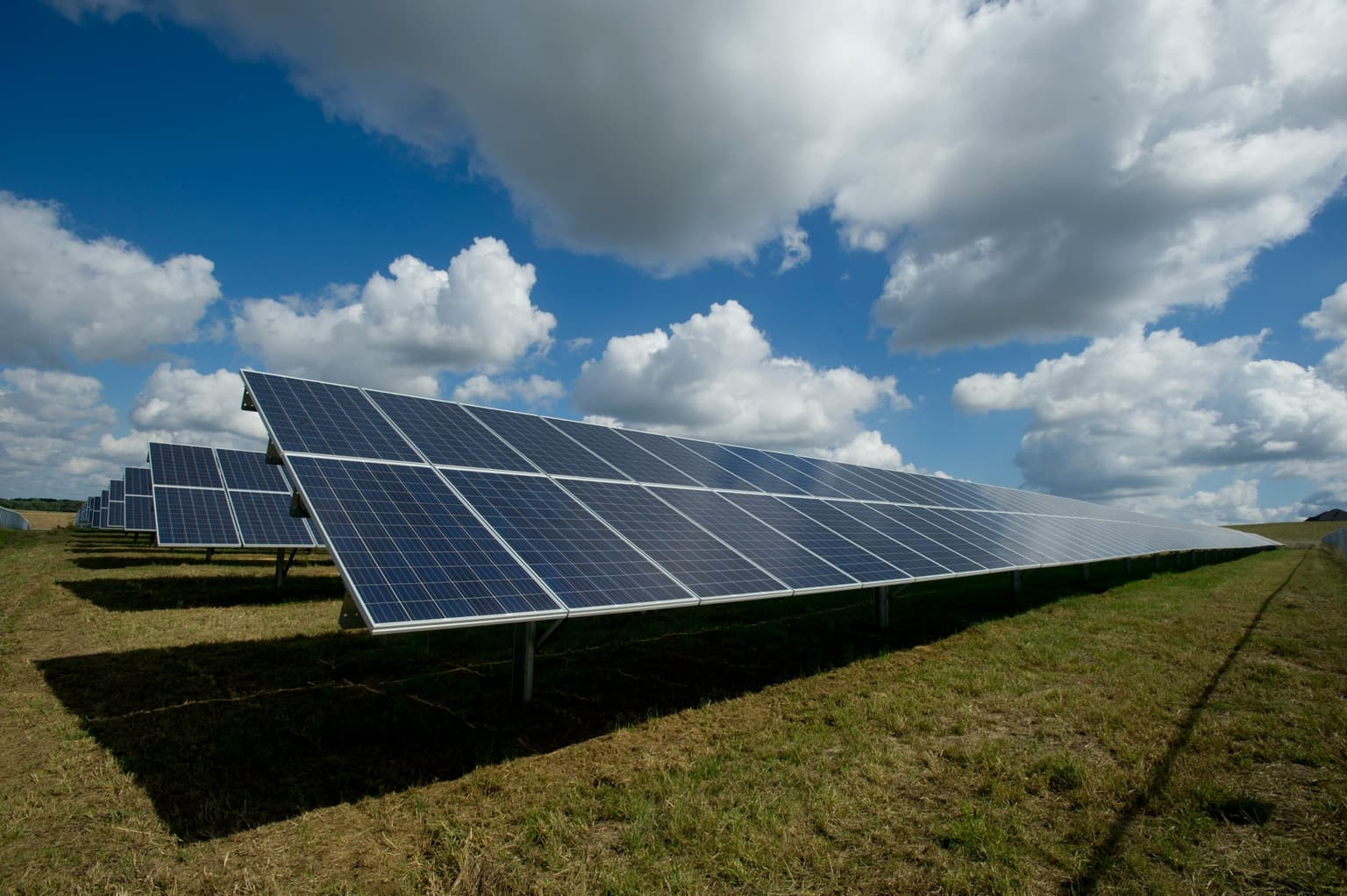
For example, the “Saint George” project is being built on a former airport in Silistra, across an area of 165 hectares, where a total of 400,000 solar panels will be installed. Once commissioned, it will be one of Bulgaria’s largest solar projects. However, our largest project is Dama Solar in western Romania, which at 1,044 MW will be Europe’s largest solar power plant.
Source: Unsplash
Projects of this scale require very large and, preferably, flat sites, consistently strong winds or high solar irradiance. At the same time, spare capacity for connection to the distribution grid needs to be available near the site. So far, we have developed projects meeting these criteria in Romania and Bulgaria.
Would you be interested in a project in the Czech Republic?
Certainly. Our company is headquartered in Prague, and we would all be very pleased to build a large renewable energy project in our “home” country. Hopefully, the planned new acceleration zones could provide us with such an opportunity for a wind farm.
You already operate assets with an installed capacity of approximately 2.2 GW. What share of this capacity is supported by the state and what share do you sell directly to customers, for example through power purchase agreements?
Our projects are subsidy-free, and our main objective is for the overwhelming majority of green electricity to be sold through PPAs. This makes sense to us because long-term customer contracts ensure stable and often low-cost electricity. At the same time, PPAs help offtakers achieve their sustainability goals. If we simply sell electricity to the grid, companies cannot claim that they use green energy. By entering into PPAs, we can therefore support our customers’ sustainability commitments.
PPAs are still not commonplace in the Czech Republic – could you explain what a PPA is and the difference between a physical PPA and a virtual PPA?
Before this summer, most PPAs signed in Central and Eastern Europe were so-called physical PPAs, under which the buyer uses green energy directly from the source, generated by a wind or solar power plant.
Under virtual PPAs (sometimes referred to as vPPAs), there is no direct delivery of green electricity. It is a financial contract, under which the buyer receives guarantees of origin proving that the purchased green energy comes from a specific wind or solar power plant. These certificates can be used for sustainability reporting and to meet corporate ESG targets. One of the main reasons virtual agreements are popular is that they allow a wind or solar park to meet the energy requirements of a group of several facilities, such as factories or data centres, located in different places.
This year, Rezolv Energy concluded a significant vPPA with Deutsche Telekom Group companies, including T-Mobile Czech Republic and Slovak Telekom. What makes this transaction unique?
Our agreements with T-Mobile Czech Republic and Slovak Telekom were the first cross-border vPPAs signed by Czech or Slovak companies, making them an important signal to other companies. Businesses do not have to wait for renewable energy projects to emerge in their domestic market. They can secure long-term supplies of clean energy now through virtual vPPAs.
Why are there so few agreements of this type in the Czech Republic?
Renewable energy currently accounts for just under 15% of the Czech energy mix, the lowest share in the EU. Available renewable capacity is an essential prerequisite for a healthy PPA market, so it is vital that rapid progress is made in this area.
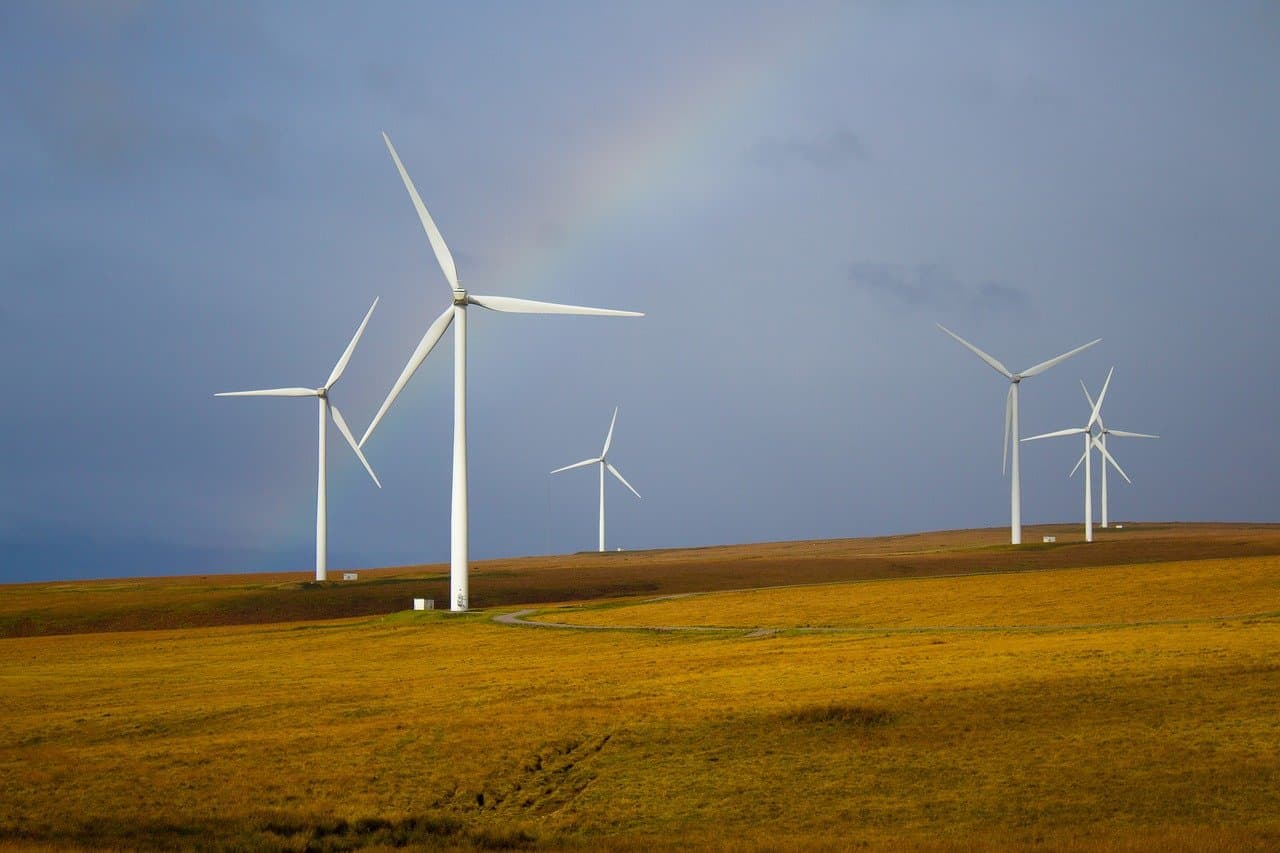
Wind farms, illustrative photo. Source: Pixabay
Another obstacle is the same one we see across the whole Central and Eastern European region. PPAs are still a relatively new concept here. They represent a change in purchasing practices and are an important decision for companies in terms of financial commitments and trust. It is therefore understandable that buyers are cautious. For these reasons, our signed PPAs with T-Mobile Czech Republic, Slovak Telekom and CE Colo Czech Republic were a major moment and an important signal for the market.
What is the volume of PPAs signed by Rezolv Energy this year?
Our six signed PPAs total 460 GWh, a greater PPA volume than that secured by any other developer in South-Eastern Europe.
These virtual vPPAs were concluded with companies in telecommunications, steelmaking and packaging. Are other industries also interested in purchasing renewable energy?
Yes, many. The sustainability commitments driving companies’ demand for PPAs are not limited to specific sectors. Currently, the five largest PPA buyers in Europe come from ICT, heavy industry, telecommunications, retail and transport. I expect the ICT sector to remain at the forefront, as the sustainability commitments made in this sector are becoming increasingly difficult to fulfil due to rising electricity consumption caused by the rapid growth in the volume of data processed. The expansion of artificial intelligence will accelerate this trend further.
Another significant sector I would like to mention is the automotive industry. Over the past three years, there has been a sharp increase in PPAs in the automotive sector in Western Europe, and this trend is also reaching our region. In July, we signed a ten-year vPPA with Bekaert, which manufactures steel wire and surface treatment technologies and also has a large automotive division. I expect further similar agreements in the coming years.
Why should companies sign ten-year PPAs for the supply of renewable electricity?
I would identify four main advantages.
First, a well-structured PPA will reduce a company’s energy costs over the long term compared with traditional energy supply contracts. PPAs have a clear business rationale.
Second, PPAs provide companies with cost stability over a longer time horizon, so they do not have to deal with the risks of fluctuations in energy markets.
Third, and crucially, PPAs offer offtakers environmentally friendly, green, decarbonised electricity. This is naturally important for companies that have committed to reducing emissions or are seeking to improve their sustainability performance.
Finally, I would mention that PPAs are intended to support the construction of new renewable generation. So, by signing a PPA, companies help build power plants that will supply them with clean energy. It is not only a way for businesses to benefit from the energy transition, but also a way in which they can contribute to it and receive public recognition for doing so. That was an important factor for all our customers.
Supporting and developing PPAs is one of the objectives of the electricity market reform adopted in response to the energy crisis. In your view, are the changes heading in the right direction?
We were certainly pleased that, through the reform of the EU electricity market design, the European Commission is seeking to support PPA growth by requiring Member States to ensure suitable conditions for their development. It is thus encouraging Member States to make greater use of PPAs to support both new installations and existing power plants. As part of this process, the European Commission was tasked with identifying barriers to cross-border PPAs and developing best practices. We hope that rapid progress will be made in this area.
Translation disclaimer
This article is a machine translation of the Czech original and has not yet been fully reviewed. In case of any doubt, please refer to the Czech version.
Sdílejte článek prostřednictvím:
You might also like

24 September 2026, 11:23

24 September 2026, 10:30
24 September 2026, 06:56