16 September 2026, 12:26
Loading...
Czech nuclear plants not threatened by drought: ČEZ relies on cooling towers

oEnergetice.cz, ČTK
31 July 2026, 19:49
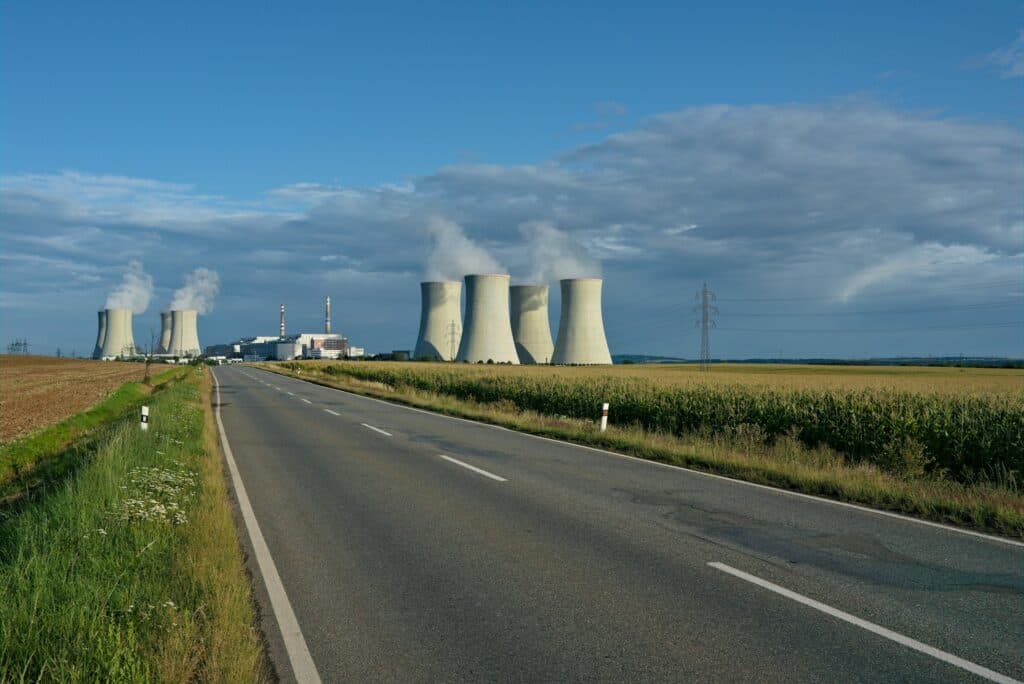
Current heat and drought do not threaten Czech nuclear power plants or their cooling systems. ČEZ spokesperson Ladislav Kříž told the Czech News Agency (ČTK). According to him, the Dukovany and Temelín plants use a cooling-tower system to cool their condensers, in which water consumption is significantly lower than at plants using so-called once-through cooling in France or Hungary. No operational restrictions are therefore currently needed.
For example, Hungary's Paks nuclear power plant has had to curb operations due to drought in recent days. Owing to the low flow of the Danube, it is continuing electricity generation at roughly half its usual volume. Hungarian Prime Minister Péter Magyar also announced on Thursday that the plant would soon be completely shut down. Romania has also reported problems with power generation due to drought. According to media reports, the current decline in Danube water levels is the result of a combination of prolonged drought and a summer heatwave.
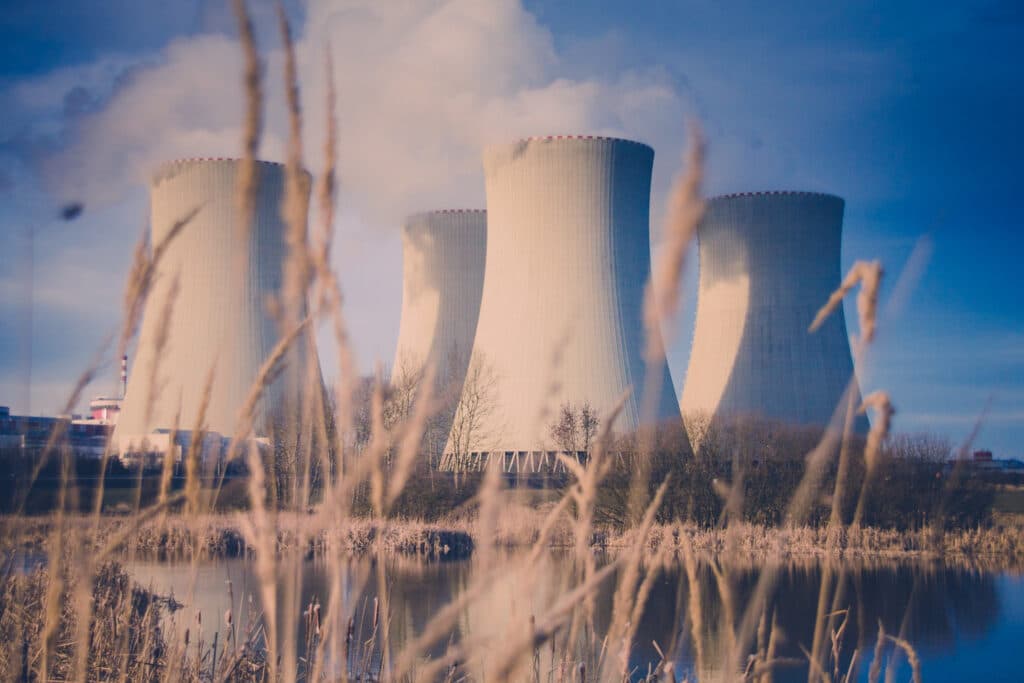
However, according to Kříž, Czech nuclear power plants are not affected by these problems. "We are fortunate in this respect to have cooling towers. Our Dukovany and Temelín nuclear power plants use a cooling-tower system to cool condensers. Thanks to this, they have never had to restrict operations in any way in the past in connection with hydrological conditions, and we do not expect this to be necessary in the future either. In this case, water consumption for cooling is orders of magnitude lower than at plants using so-called once-through cooling," he said. According to him, once-through cooling is used, for example, at power plants in France and Hungary.
The Temelín plant draws cooling water from the Hněvkovice reservoir on the Vltava River, while Dukovany draws it from the Dalešice reservoir on the Jihlava River.
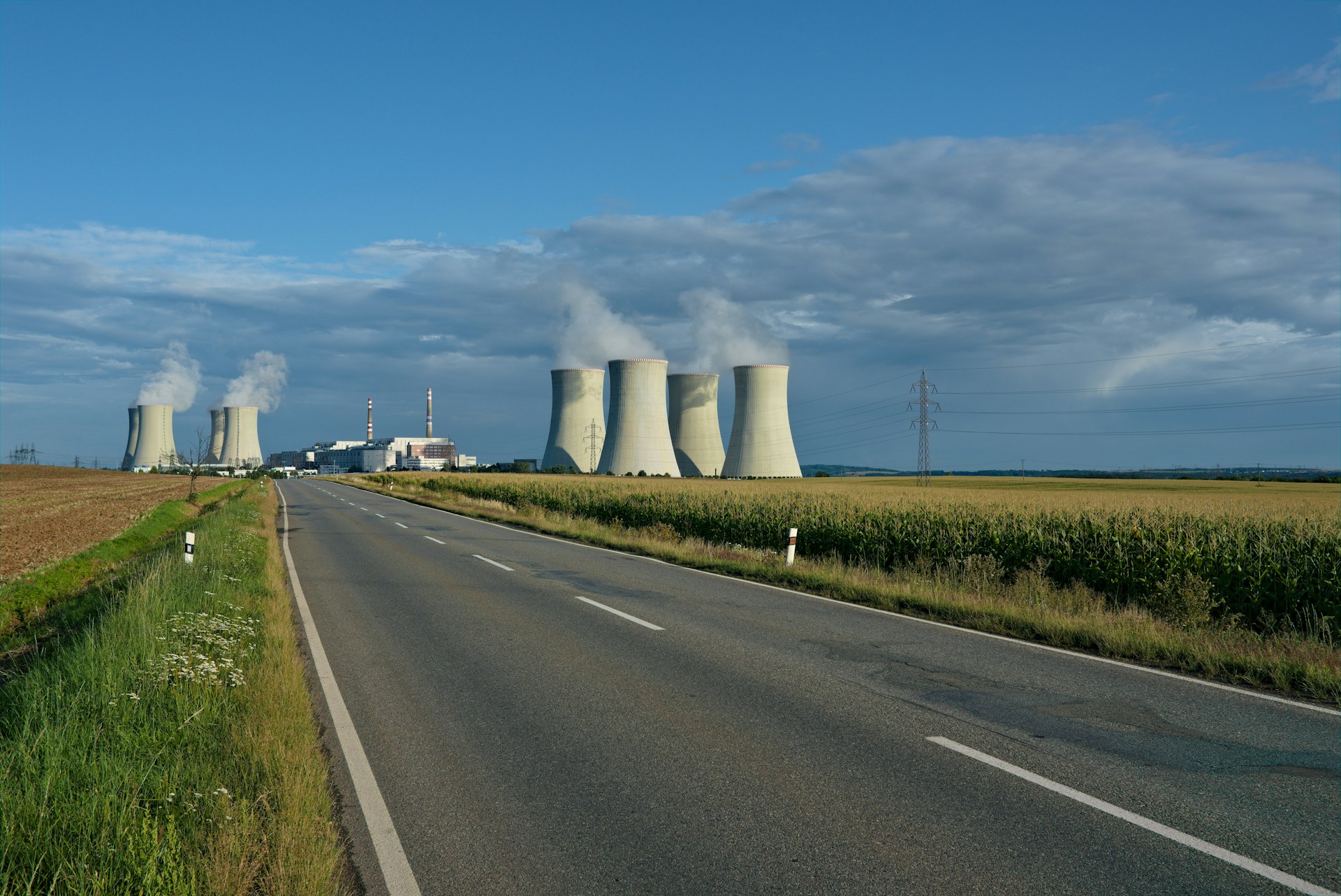
Dukovany nuclear power plant. Source: Unsplash
Given the Czech Republic's long-term drought problems, ČEZ is preparing for a further deterioration in water availability. For example, due to climate change, cooling with water from the Jihlava River via cooling towers will apparently no longer be sufficient for the new nuclear units at Dukovany. "We therefore envisage a combination of water cooling and so-called dry air cooling here. Again, this involves cooling towers," Kříž added.
Four nuclear units are currently in operation at Dukovany, each with a capacity of 510 megawatts (MW). Another two units, each with a capacity of approximately 1000 megawatts (MW), are located at Temelín in South Bohemia.
Preparations are also continuing at Dukovany for the construction of two new reactors. They are to be built by South Korean company KHNP. At last year's prices, the cost of both units is CZK 407 billion. The first of the new reactors at Dukovany is expected to be completed in 2036.
Translation disclaimer
This article is a machine translation of the Czech original and has not yet been fully reviewed. In case of any doubt, please refer to the Czech version.
Sdílejte článek prostřednictvím:
You might also like
16 September 2026, 06:50
15 September 2026, 14:55

15 September 2026, 10:02