Demand for LNG ships rises as fuel cuts emissions from maritime transport

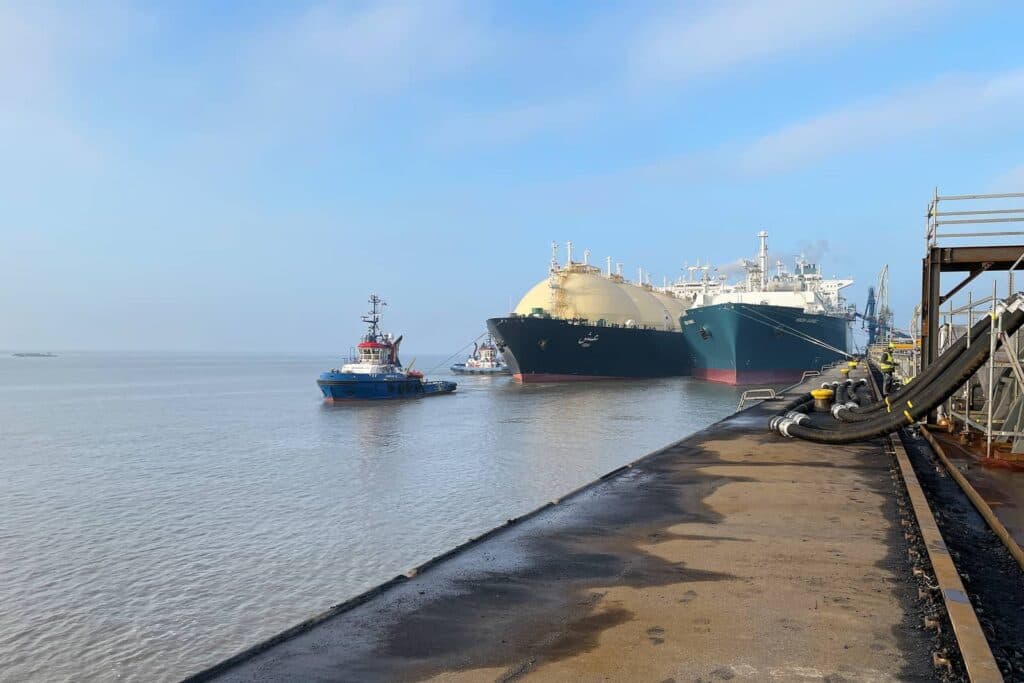
The maritime industry, responsible for around 2% of global CO2 emissions, is at a crossroads. With demand for liquefied natural gas (LNG) rising, more ships are being converted to this cleaner fuel, as part of a wider trend towards decarbonising global shipping. Although LNG offers a short-term solution for cutting emissions, industry companies say the sector still faces challenges, including limited shipyard capacity and the need for new technologies to ensure long-term sustainability.
The maritime industry, particularly shipping, makes a significant contribution to global greenhouse gas emissions. According to the International Energy Agency (IEA), international shipping emissions in 2019 accounted for 2% of total carbon dioxide (CO2) emissions in the energy sector, equivalent to approximately 714 million tonnes of CO2.
At the same time, the sector continues to grow as global trade volumes rise. In addition to container ships and oil tankers, the boom in new vessels has also reached another sector: the gas industry. It has developed rapidly in recent years, and many companies believe in the growth and future of liquefied natural gas (LNG).
In recent years, the maritime industry has therefore focused on switching to alternative fuels to reduce its environmental impact and meet increasingly stringent regulatory requirements. The latest report from private-sector company Lloyd’s Register (LR) shows that although the industry has made progress in upgrading engines to use alternative fuels, it still faces several significant challenges that are slowing the process.
The first engine conversions to methanol fuel began in 2015. In 2024, interest in converting ships to LNG saw an unexpected resurgence. In previous years, the liquefied natural gas market had attracted the attention of many private investors and governments. This has likely had an impact on shipbuilding. More than 305 new LNG-powered ships were ordered in 2024, significantly more than alternatives such as methanol or ammonia.
Although LNG is an effective short-term solution for reducing emissions, the report notes that further progress will require finding additional ways to reduce methane emissions and ensure sustainability.
The industry is also hampered by the limited capacity of shipyards able to convert vessels to alternative fuels. Although the number of shipyards capable of carrying out such conversions has risen to around 16, mainly in China and the Middle East, their annual capacity is still insufficient to meet growing demand. While the capacity for vessel conversions is estimated at 465 per year, actual demand could exceed 1,000 conversions annually.
Translation disclaimer
This article is a machine translation of the Czech original and has not yet been fully reviewed. In case of any doubt, please refer to the Czech version.




