2 October 2026, 06:14
Loading...
LNG Canada to double capacity. Where will LNG supplies from the second phase go?
Erik Novotný
2 October 2026, 06:14
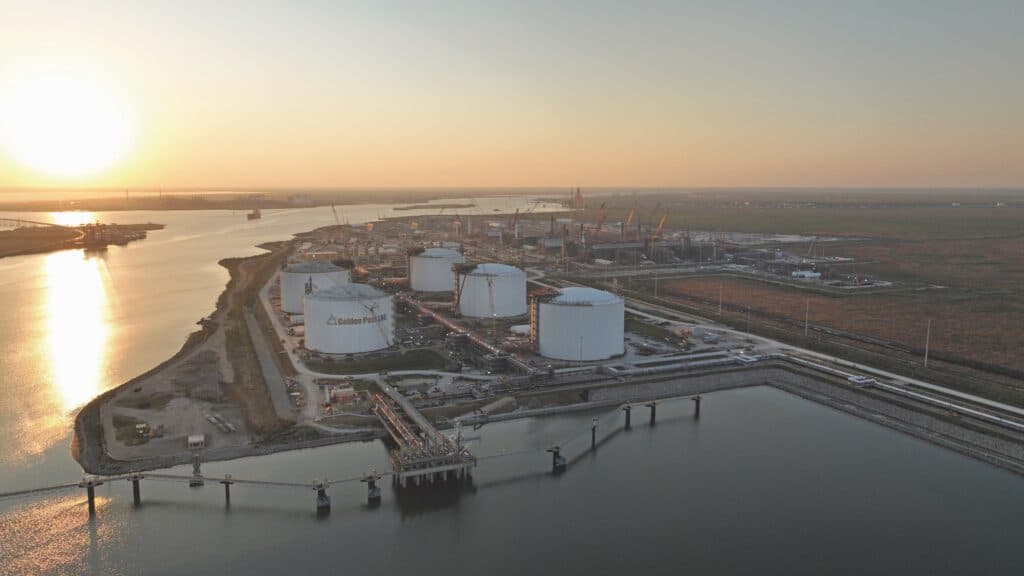
Partners in the LNG Canada project approved a final investment decision on 29 September for the second phase of the export terminal in Kitimat, British Columbia. The expansion will double the facility’s capacity to 28 million tonnes of LNG per year. It is the first major expansion of Canada’s LNG infrastructure and will further strengthen the country’s export role in the global liquefied natural gas market.
The project’s second phase includes two liquefaction trains, an LNG storage tank, a condensate tank, a loading berth, and expanded processing and auxiliary systems. Commercial operations are expected to begin in the early 2030s. Gas will be supplied to the terminal by the expanded Coastal GasLink system. Its capacity will be supported by five new compressor stations. TC Energy, which owns the pipeline, announced that it will continue expanding its infrastructure following LNG Canada’s investment approval.
Focus on diversifying supply
The decision comes amid a heightened focus on diversifying LNG supplies and energy security. At the same time, the global market is facing a months-long disruption to some supplies from the Persian Gulf as a result of the war in the Middle East.
In this context, LNG Canada is particularly significant for Asian buyers. Compared with projects on the US Gulf Coast, the terminal on Canada’s west coast offers shorter shipping routes to Asia. According to Shell CEO Wael Sawan, the project’s first phase has already demonstrated its strategic importance during supply disruptions from the Middle East.
First shipments are already heading to Asia
LNG Canada began exports in mid-2025 and has since shipped approximately 150 LNG cargoes, according to data from S&P Global Energy CERA. Most of them went to South Korea, China and Japan. The first phase has therefore already established a functioning export route from Canada’s west coast to Asian markets.
The expansion will further strengthen this direction while increasing Canada’s ability to use its extensive natural gas reserves in the western part of the country for export.
Political support and a major investment
In 2025, the second phase was included among projects supported by the Canadian federal government’s Major Projects Office, which aims to accelerate strategic infrastructure investment. Ottawa is also seeking to diversify trade relations amid tensions with the United States.
Prime Minister Mark Carney said LNG Canada’s decision demonstrates Canada’s ability to accelerate major infrastructure projects while maintaining high regulatory standards. The Canadian government expects the expansion to attract approximately 33 billion Canadian dollars in private capital.
Who stands to benefit from the expansion?
Shell is the project’s largest stakeholder, with a 40% share, and will receive nearly 6 million tonnes of LNG per year from the second phase. Petronas holds 25%, PetroChina and Mitsubishi each hold 15%, and Korea Gas Corporation holds the remaining 5%. Mitsubishi will receive an additional 2.1 million tonnes per year, bringing its total LNG volume to 4.2 million tonnes. According to Mitsubishi, this is equivalent to approximately 40% of Japan’s current annual LNG imports. MidOcean Energy is also participating in the second phase through its partnership with Petronas, with its associated volumes set to rise from 700,000 to 1.4 million tonnes per year.
For the European market, the project is significant mainly indirectly. The new export capacity will expand global LNG supply while also strengthening the diversification of supply beyond traditional export hubs. The direct impact on European supply will therefore depend on trade flows and price conditions in individual markets.
Translation disclaimer
This article is a machine translation of the Czech original and has not yet been fully reviewed. In case of any doubt, please refer to the Czech version.
Sdílejte článek prostřednictvím:
You might also like
1 October 2026, 18:46
1 October 2026, 17:03