According to data published on Sunday, the UK has enough gas in storage to meet demand for approximately two days. At the same time, tensions in the Middle East are putting further pressure on the global liquefied natural gas market, as some tankers reroute from Europe to Asia, where prices are higher. However, the UK government and the transmission system operator stress that alongside LNG supplies, the country relies primarily on ongoing supplies from Norway and domestic production.
According to the British newspaper The Guardian, the UK had enough gas in its underground storage facilities to meet demand for approximately two days as of Sunday. At current consumption levels, these stored supplies could be used up within just a few days. Media reports say the situation is being exacerbated by the conflict in the Middle East and growing uncertainty in the global liquefied natural gas (LNG) trade, prompting some suppliers to reroute tankers from Europe to Asia.
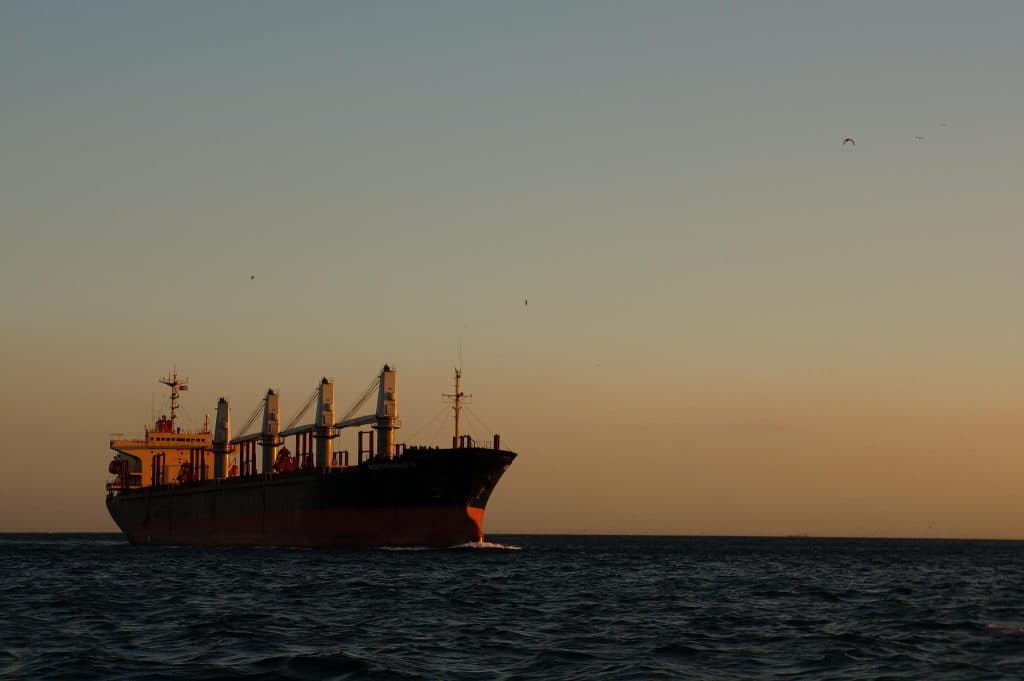
According to ship-tracking data compiled by Bloomberg, at least two LNG tankers have turned around in the middle of the Atlantic since Friday, changing course from Europe towards Asian terminals. This was already the latest in a series of similar reroutings within a single week. In a period of heightened geopolitical uncertainty, the Asian market is offering higher prices, incentivising traders to divert shipments.
On Saturday, the UK had approximately 6 999 GWh of gas in storage, compared with around 9 105 GWh at the same time last year, according to data from transmission system operator National Gas cited by The Guardian.
The current volume amounts to less than two days of consumption. At maximum capacity, UK gas storage facilities can cover around twelve days of consumption, significantly less than in most European countries.
According to data from Gas Infrastructure Europe, the UK is among the European countries with the smallest gas storage capacity relative to consumption. Germany and Italy, for example, have storage facilities that can cover several months of winter demand. The UK energy system is therefore much more dependent on ongoing supplies, particularly from Norwegian fields, domestic production in the North Sea and LNG imports.
National gas system operator and government seek to reassure the market
National Gas, which operates the main natural gas transmission infrastructure in the UK, stresses, however, that low storage levels do not pose an immediate threat to supplies.
“Gas storage levels in Britain are broadly in line with what we would expect at this point in the year, and are comparable to levels at this time last year. It is important to recognise that storage makes up only a small part of Britain’s diverse gas supply mix. Most of our gas comes from the UK and Norwegian continental shelves, supplemented by LNG, interconnectors with continental Europe and storage,” a company spokesperson said.
According to the spokesperson, the UK market draws on several sources in parallel every day.
“Great Britain benefits from a wide range of supply sources that the market uses every day. Together, these sources provide the flexibility needed to balance supply and demand throughout the year,” they added.
The UK Department for Energy Security and Net Zero issued a similar response.
“It is categorically false that the UK has access to only two days’ worth of gas supplies. We have a diverse energy mix and are confident in the security of our supplies,” a spokesperson said. The department said gas would continue to play a significant role in the country’s energy system in the coming years as it transitions to low-emission sources.
Tensions in the global market have nevertheless risen sharply in recent days. Gas prices began to surge after the United States and Israel launched large-scale airstrikes on Iran, putting the Persian Gulf region at risk of a wider conflict.
Particular attention is focused on the Strait of Hormuz, a narrow sea corridor between Oman and Iran through which, according to the International Energy Agency, around one-fifth of the world’s seaborne trade in LNG and oil passes.