US LNG: salvation or a new chain of energy dependence?

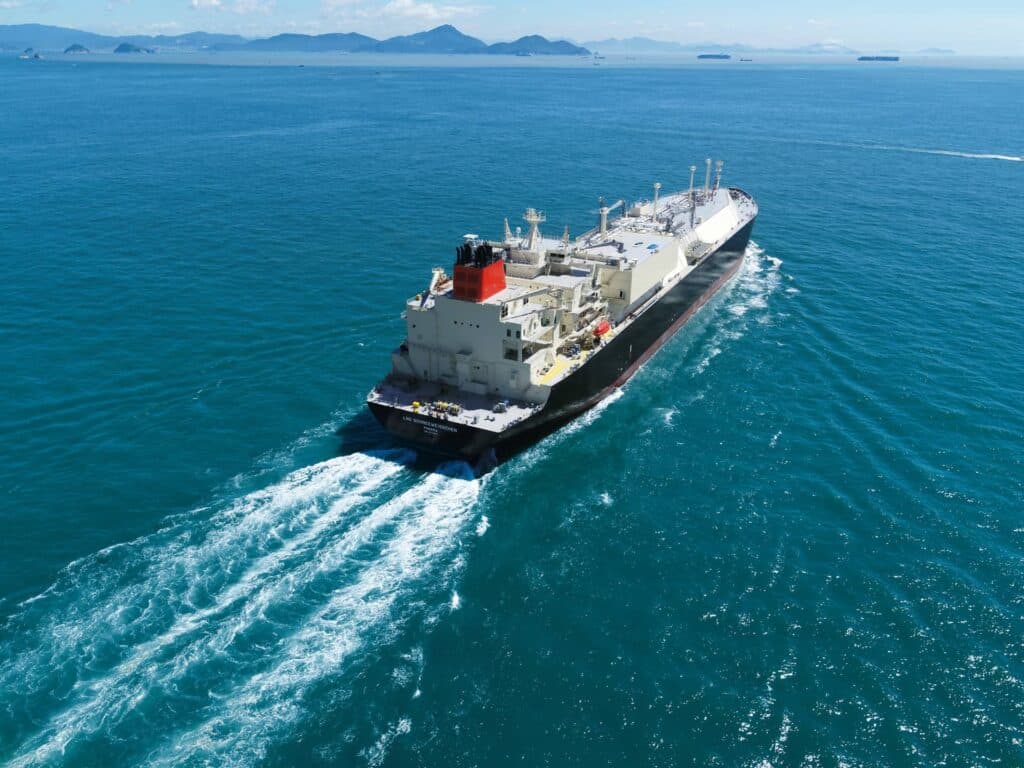
It looks as though Europe has failed to learn from the past and is now swapping dependence on one supplier for dependence on another. Replacing Russian natural gas supplies with American liquefied natural gas (LNG) could come at a cost. Donald Trump’s unpredictable behavior makes it clear that there is no such thing as a “reliable partner,” and the question of Europe’s energy dependence remains on the table.
The term “energy weapon” seems to have secured a place in modern history, resurfacing at regular intervals. When British Admiral Reginald Bacon declared in 1923 that the oil blockade of Germany during the First World War had contributed significantly to the collapse of the country and its army, he was highlighting the enormous power of energy flows, which can be more effective than weapons themselves. In the Second World War, Joseph Stalin again wielded the energy weapon by denying the Germans access to the oil fields in the Caucasus. And the situation surrounding the Arab oil embargo of 1973 probably needs no further explanation. In short, world leaders understood long ago that energy can be used as an effective weapon.
The United States has also politicized energy flows and is pressuring Europe to increase its purchases of American energy commodities, threatening potential increases in trade tariffs. To make matters worse, even countries friendly with America, such as Canada, have begun to see energy as a weapon. Canada has decided to fight President Trump’s tariffs by raising electricity prices.
Major energy producers are once again using their influence over energy production and purchases. Recent moves by Washington also support this view: it has barred most American oil and gas companies from operating in Venezuela and is considering tougher sanctions against countries buying Russian and Iranian oil.
Ban on Russian gas imports
Europe’s disadvantage is that its territory is not rich in traditional energy resources, unlike Russia, the Middle East or America, for example. This means its dependence on imports of these primary commodities is growing, as domestic oil and gas fields, such as the North Sea basin, become less economically viable. These reserves are also dwindling and, combined with pressure to phase out carbon-intensive energy sources such as coal, this is forcing the Old Continent to rapidly seek alternatives to meet its energy needs.
It is therefore unsurprising that the share of energy needs met by imported energy commodities has risen from 50% in the 1990s to 58% today. Other major importers, such as China and India, meet around 24% and 37% of their energy needs, respectively, from foreign sources.
The EU has also recently committed to gradually ending imports of Russian LNG and “pipeline” gas. The ban will be fully in force from the end of 2026 and autumn 2027, respectively. However, the shift away from Russian gas has significantly increased strategic dependence on American LNG, for which EU buyers pay a much higher price than they did for Russian supplies.
US LNG imports into the EU rose from 21 billion m³ in 2021 to an estimated 81 billion m³ in 2025. This means that in 2025, 57% of LNG imports into EU countries came from the United States.
Europe’s dependence on imports has backfired several times in recent years. Russia halted gas supplies to the EU shortly after the war in Ukraine began, triggering a major energy crisis. According to European Commission data, the EU spent the equivalent of 3.8% of its gross domestic product on energy imports in 2022 after oil and gas prices surged.
Last summer, the White House leveraged Europe’s dependence on imports to demand further purchases of American oil and gas in exchange for lower tariffs. Qatar threatened to restrict LNG supplies unless Brussels eased the EU’s climate rules.
Europe has become more dependent on the United States since its rift with Moscow. America’s share of EU LNG imports jumped to 60% in the third quarter of last year, up from 28% in the same period of 2021.
Replacing Russian gas with American LNG made sense at the time, as building LNG import terminals was the fastest way to resolve the energy crisis. The EU also took it for granted that the United States was a reliable partner. But relying on energy supplies from the unpredictable US administration under President Trump could backfire badly for Europe in the future.
Translation disclaimer
This article is a machine translation of the Czech original and has not yet been fully reviewed. In case of any doubt, please refer to the Czech version.