
28 October 2026, 15:10
Loading...
What was the situation with Russian gas in Europe in 2023?

Jakub Malý
30 April 2024, 13:12
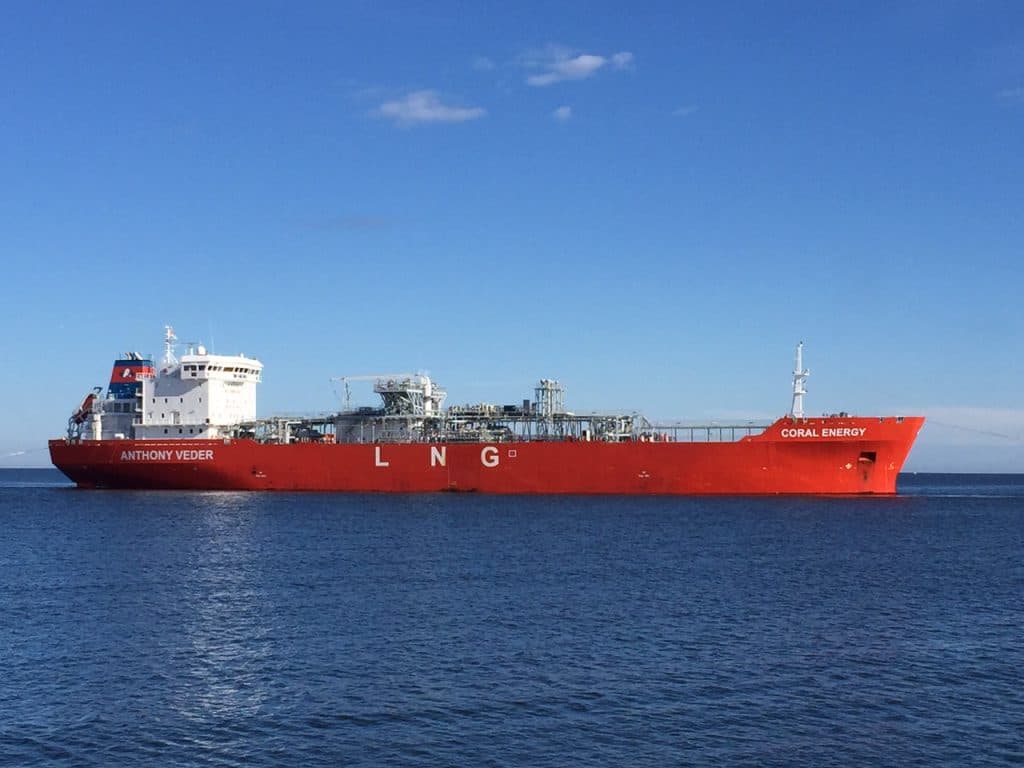
The first analysis of the state of the EU LNG market by the Agency for the Cooperation of Energy Regulators (ACER) was published a few days ago. The analysis offers insights into several interesting aspects of how the LNG market works, including the situation with Russian gas in the EU.
The return of Russian gas to the Czech Republic was reported in February this year. The latest data for 2024 are not yet available in a consolidated form, but a look at 2023 may offer an indication of what the situation will look like in the future.
In 2023, the EU received 18 billion cubic meters (bcm) of Russian LNG, of which at least 1 bcm—and possibly more—was merely transshipped and subsequently re-exported to China, India, Turkey or other destinations. The Yamal terminal, located in northwestern Siberia, was the main route for Russian LNG exports to the EU, handling 16 bcm. The remainder came through the Vysotsk and Portovaya terminals.
A comparison of the gas situation in 2021 and 2023 shows a clear link between the gradual decline in Russian natural gas supplies via pipeline and the growing share of LNG supplies. It is also clear that Central European countries, led by Slovakia and Hungary, have the greatest difficulty moving away from Russian gas.

Estimated share of Russian gas supplies via pipeline compared with LNG supplies, including member states and their natural gas supplies of Russian origin in 2021–2023. Source: ACER
Information on LNG contracts is also interesting. According to ACER, more than 100 long-term LNG supply agreements have been signed since Russia's invasion of Ukraine. These contracts have an average duration of 15 years, while their average annual contract quantity (ACQ) is 1.35 million tonnes (or 1.8 bcm). Indexation formulas based on TTF and other European gas hubs were not used in a large proportion of these contracts; those hubs had become less attractive due to sharp price increases and price volatility.
The dramatic decline in Russian pipeline gas supplies to Europe was offset primarily by increased LNG supplies and higher imports from Norway. Savings also made a significant contribution: year-on-year gas consumption fell by 13.5% between 2022 and 2023. A comparison of supplies in 2021 and 2023 shows a clear increase in the share of LNG. The United States is currently the EU's largest LNG supplier, with 56.2 bcm in 2023. Norway was the largest supplier of gas overall in 2023, with 87.8 bcm.

Gas supplies to the EU by route. Source: ACER
Ongoing efforts to reduce Russian gas supplies
ACER continues to call for a move away from Russian gas supplies, while highlighting numerous challenges and warning that the international LNG market remains tight. Conditions are expected to ease significantly after 2026.
One of the challenges ACER highlights is the use of restrictions on gas supplies from Russia and Belarus. This legislative option was approved by the European Parliament a few days ago. This could allow countries to control how companies offer the use of gas terminals and entry points, in order to ensure adequate gas supplies. Although these measures are intended to reduce dependence on Russian gas, it is important to bear in mind that many long-term LNG supply agreements were signed before Russia's invasion of Ukraine.
Russian LNG imports should therefore be reduced cautiously, especially given that the key gas supply contract between the EU, Ukraine and Russia is not due to expire until the end of 2024. This could mean losing 13.6 billion cubic meters of gas compared with 2023 supplies. The reduction of Russian gas supplies should therefore begin gradually, primarily in the spot LNG market.
Translation disclaimer
This article is a machine translation of the Czech original and has not yet been fully reviewed. In case of any doubt, please refer to the Czech version.
Sdílejte článek prostřednictvím:
You might also like

28 October 2026, 13:08

28 October 2026, 11:10

28 October 2026, 09:08
