
31 October 2026, 12:55
Loading...
30 ships carrying gas for Czechia have arrived at the Eemshaven terminal so far

oEnergetice.cz, ČTK
5 January 2024, 09:15
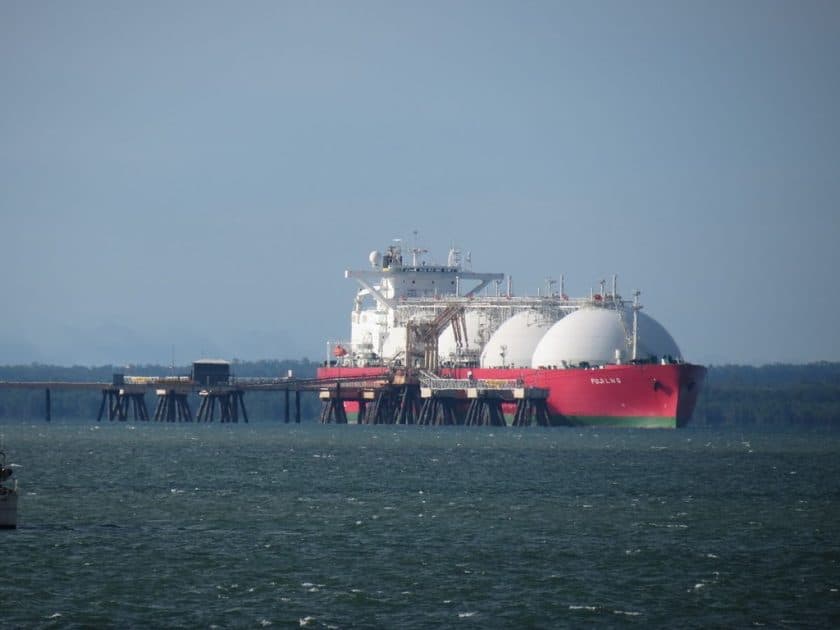
The terminal in Eemshaven, the Netherlands, has handled 30 ships carrying gas for the Czech Republic since September 2022. They carried 2.7 billion cubic metres of gas, more than a third of the Czech Republic’s annual consumption. 26 of the ships arrived last year. Deliveries are expected to continue this year at a rate of two to three ships carrying gas per month. ČTK was informed today by ČEZ, which leases capacity at the terminal. According to the company, Russian gas was excluded from deliveries to the terminal, with most of the ships coming from the US. ČEZ also secured LNG capacity in Germany last year, with gas from those facilities to be available from 2027.
The Eemshaven terminal began operations in mid-September 2022. It was the first liquefied natural gas terminal to start operating in Europe since the beginning of the war in Ukraine. The facility can process up to eight billion cubic metres of gas a year, of which up to three billion are earmarked for the Czech Republic. The Czech Republic, or rather ČEZ, has leased capacity at the terminal until 2027. The multinational companies Shell and Engie also use the terminal.
According to ČEZ CEO Beneš, the terminal is operating as planned. „Last year, an average of two tankers carrying gas destined for the Czech Republic arrived each month, and we want to continue at a similar pace this year. Buying gas cargoes by ship and working with our partners in Eemshaven are giving us further experience in the LNG market, which we are putting to good use. At the end of last year, we managed to secure a stake in another terminal, on the Elbe in the town of Stade near Hamburg,” Beneš said.
According to ČEZ, most of the ships that arrived at the Dutch terminal with gas destined for the Czech Republic had set out from the United States, either Louisiana or Texas. Other tankers arrived from Africa and South America. The company says none of the deliveries came from Russia.
The Eemshaven terminal consists of two vessels that allow LNG to be stored and regasified. Liquefied natural gas is brought to the terminal on specially adapted tankers. After being heated at the terminal and converted into gas, it is injected into the gas transmission pipeline network.
At the end of last year, the Czech Republic, together with ČEZ, also secured capacity at an onshore LNG terminal under construction in Germany. From 2027, the Stade terminal near Hamburg will provide access to two billion cubic metres of gas a year, more than a quarter of current domestic consumption. The company signed a 15-year contract with the operator, with an option to extend it. ČEZ also said it would explore further opportunities to secure capacity at other LNG terminals. Last year, for example, the company held talks about securing capacity at an LNG terminal in Poland, but ultimately put the option on hold because of the terms offered.
Translation disclaimer
This article is a machine translation of the Czech original and has not yet been fully reviewed. In case of any doubt, please refer to the Czech version.
Sdílejte článek prostřednictvím:
You might also like

31 October 2026, 08:21
30 October 2026, 20:16
30 October 2026, 12:33