A saviour for Europe? US gas is heading elsewhere, but will reshape the global market

All these hopes have been voiced for years: Europe would benefit from the US shale boom, America would export liquefied natural gas to our continent, and Russia’s Gazprom would be less able to throw its weight around. But sceptics also made themselves heard. They agreed that Americans would export increasing volumes of LNG, but not to Europe.
Experience from the first months after the first US LNG export terminal in Louisiana began operating in February has proved the sceptics right. At least at first glance. As far as exports from the Sabine Pass terminal are concerned, Europe accounts for just eight percent.
Moreover, the gas was heading to Portugal and Spain, a market that is in practice relatively separate from the rest of the continent. And Gazprom, by contrast, is increasing its gas exports to Europe from the opposite direction. A more detailed analysis nevertheless shows that US exports will help Europe in the future. Overall growth in global gas supply is effectively reducing dependence on any single supplier.
We do not know where it will be exported
For now, let us return briefly to history. When US Energy Secretary Ernest Moniz visited Prague in April 2014, he somewhat cooled Central European enthusiasm. He acknowledged that European companies were among the future buyers of gas. But he immediately added: “We do not tell them where to export the gas. So we do not know exactly whether it will go to Europe or somewhere else.”
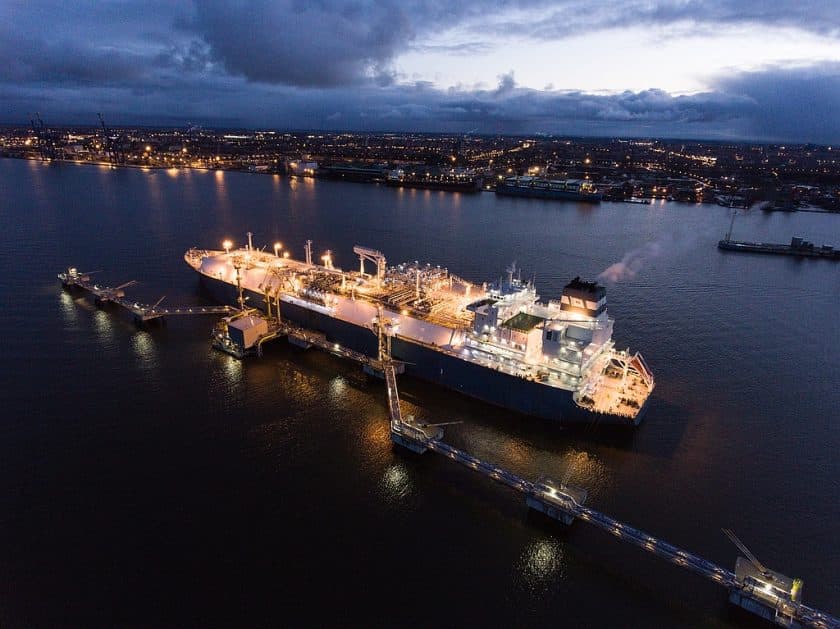
In doing so, Moniz precisely captured the essence of the matter. US LNG exports are fundamentally changing the logic of global gas trade. Exports are carried out under long-term contracts, but without so-called destination clauses. Companies such as British group BG Group, later acquired by Shell, take delivery of a cargo in Louisiana and send it wherever they can earn the most money from it. Naturally, the overall calculation includes not only the price of the gas itself, but also the costs of transport and processing the commodity (liquefaction and subsequent regasification) at LNG terminals.
The Fukushima shift
For example, when the entire Visegrad Four, including the Czechs, stepped up lobbying in the US in recent years and called for US gas exports, objections were occasionally raised by experts. In their view, the commodity from the United States would not end up in Europe, but in Asia.
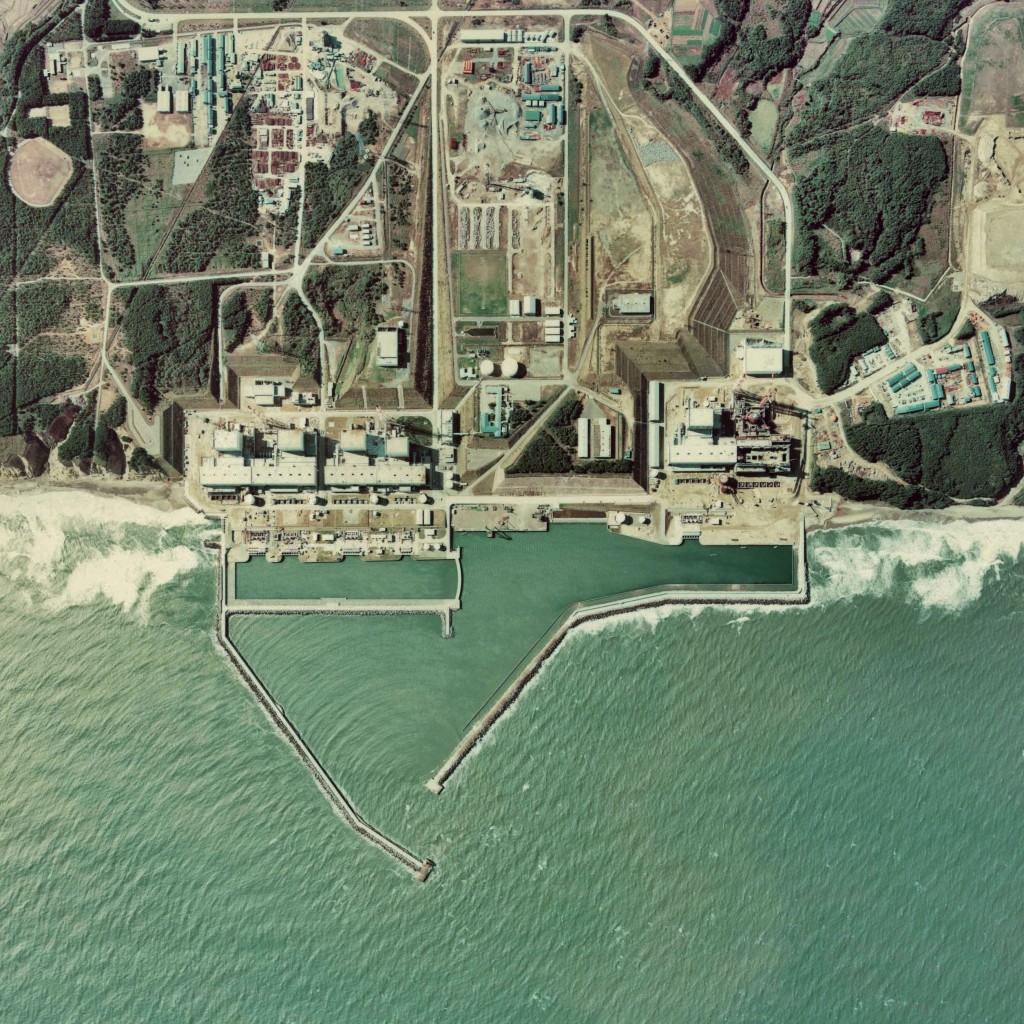
There, demand for LNG rose sharply after Japan, in the difficult period following the Fukushima accident, shut down its nuclear power plants. This naturally had a considerable impact on overall demand and rising gas prices.
The Czechs, Slovaks and Hungarians naturally knew well that even as LNG exports from the United States increased, not a single cubic metre of US gas might actually reach their countries. But supplies of this commodity to our continent were meant to alter the overall balance in Europe and indirectly weaken Gazprom’s dominant position in the eastern part of the EU. Even then, however, there was also an argument that overall growth in supply on the global market could only benefit Europe.
Asia? No, Latin America
This year has shown that the main “absorber” of US gas has in fact not been Asia, but primarily Latin America so far. Its share of total imports from Louisiana was just under 60 percent, with Chile alone importing more than a quarter – 28 percent.
Exports to the southern part of the American continent are becoming even more attractive as supplies become faster and cheaper thanks to the expansion of the Panama Canal. It could be argued that Latin America is at the forefront of interest only temporarily, while US export capacity is limited to a single LNG export terminal. After all, the expansion of the Panama Canal will also benefit LNG shipments to Asia, and the volume of US gas earmarked for export will increase considerably – four more terminals are under construction on the Gulf Coast and in Maryland. The existing Sabine Pass terminal will be expanded.
From gas back to nuclear
Asia may be attractive, but the situation has changed greatly in terms of its competition with Europe. The Japanese have embraced nuclear power again, are restarting nuclear units, and will curb their use of fossil fuels – including gas – in view of climate commitments.
Meanwhile, geographically closer Australia is also directing gas towards Asia, and its LNG export boom has already taken on more tangible proportions than the US one. In the coming years, Australia will overtake Qatar to become the world’s largest LNG exporter, while the United States will probably move into third place.
For the future attractiveness of the European market to suppliers of US liquefied gas, price comparisons with Latin America and the Middle East will be more important.
Oil still matters
So will more US gas ultimately reach Europe? Some experts are convinced that it will. This is unlikely to happen this winter, but higher oil prices could contribute to it in the coming years. Today’s relatively low gas prices in Europe do not favour imports from America, but it is possible to assume that a link between the prices of the two strategic commodities – gas and oil – still applies to a significant share of Gazprom’s supplies.
And surpluses from the global LNG trade can also find an outlet on the European spot market. Despite criticism that the EU is still not doing enough, Europe has relatively well-developed LNG import terminal infrastructure, which continues to expand – as the examples of Poland and Finland show. Nor should the pipeline network that distributes the commodity from coastal terminals across the old continent be underestimated. On the other hand, it is clear that any strengthening of Europe’s energy security is impossible without further infrastructure development.
A major European change
Nevertheless, such estimates regarding future supplies of US gas to the European market resemble crystal-ball gazing. The explanation can again be found in Ernest Moniz’s words in Prague – destination clauses simply do not exist for US gas. The situation can change quickly.
But the most important point can be added immediately: from the perspective of how the European market functions, it does not matter all that much. US gas exports will affect our continent regardless of whether the commodity from the US actually arrives here.
“Game-changer”
Leading French energy expert Sylvie Cornot-Gandolphe stated in a recent study that US LNG is changing the balance in Europe in any case; it is a genuine “game-changer”. In a market characterised by excess capacity, Europe has the potential opportunity to draw on more sources. And the price of gas for Europe is effectively “capped” at a level equal to the price of US gas (which is cheaper over the long term), plus the costs of transport and regasification. None of the current suppliers will be able to charge more if they do not want to risk being pushed out by US competition.
Europeans’ bargaining position vis-à-vis gas suppliers is improving, and energy security is being strengthened. The Czech Republic, too, could benefit more from this trend in the future if further pipeline interconnections are built here (for example with Poland), even if this may seem disadvantageous and too expensive in the short term – as Lenka Kovačovská, the deputy industry minister for energy, points out.
Consultancy firm Morten Frisch identifies trends in another study that gas buyers can generally welcome. Sellers are coming under great pressure, while buyers are gaining flexible terms. Contracts are no longer as long-term as before, take account of seasonal fluctuations in supplies, and make less use of the “take-or-pay” rule (the obligation to pay even if gas is not taken).
Gazprom will not disappear
The party that the new situation was expected to weaken most is naturally aware of the new trends. Gazprom, too, is adapting to the new conditions and becoming increasingly flexible in its relationships with partners. It is adjusting its prices and selling some gas, as Cornot-Gandolphe points out, through auctions.
The French expert expects that the Russians could in the future “throw” more gas onto the spot market and engage in a price war with US LNG. But such a war cannot be waged indefinitely – funds need to be raised for further investment, whether in production in Russia or additional export terminals in the US.
Thanks to intensified competition, however, gas importers can benefit, and Europe faces a rather promising future. Perhaps only until a price war and persistently low gas prices lead to an overall reduction in investment. It is always possible to slide into the opposite extreme, and excessive efforts to push out Gazprom could ultimately prove counterproductive. It will lose its dominant position, but will remain one of Europe’s important partners. Europe must seek mutually beneficial relationships with all suppliers.
The author works as a consultant and energy-project specialist at HATcom.
Translation disclaimer
This article is a machine translation of the Czech original and has not yet been fully reviewed. In case of any doubt, please refer to the Czech version.