
23 October 2026, 14:38
Loading...
Analysis: Biomethane could cover up to 18 percent of Czech gas consumption in the future

oEnergetice.cz, ČTK
23 October 2025, 11:03
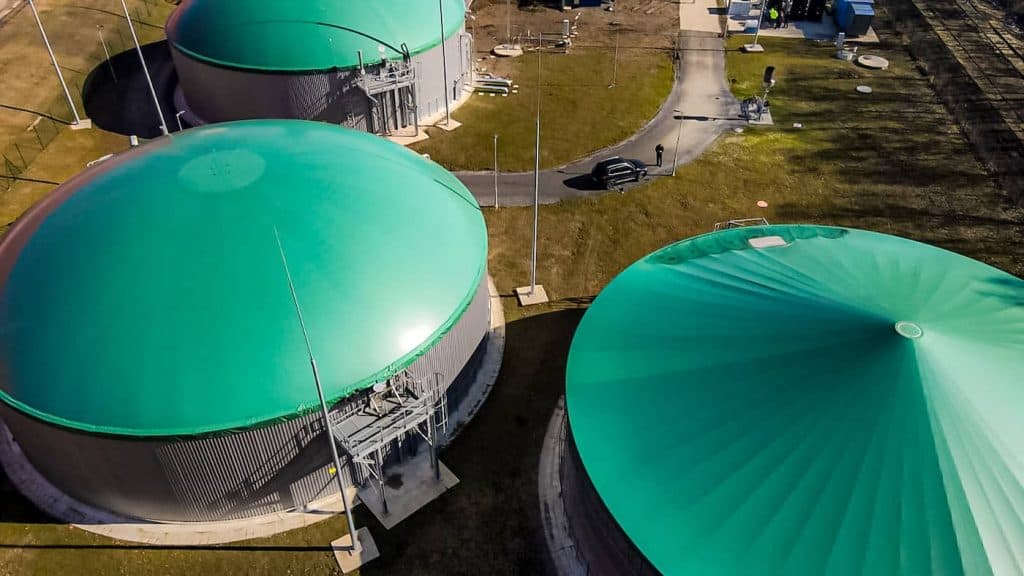
Biomethane could cover up to 18 percent of Czech gas consumption in the future. Total production could reach 14 terawatt-hours a year if some existing biogas plants were converted and new production facilities built. This is according to an analysis by independent company EGU, presented to journalists today by energy group innogy. The analysis says biomethane, one of the so-called green gases, will play a key role in reducing emissions and moving away from fossil fuels after 2030.
There are currently 540 converted biogas plants (BPS) operating in Czechia. Of these, 411 are agricultural or waste-processing plants, which have the greatest potential for conversion into biomethane plants (BMS). There are currently 13 such plants in Czechia.
Biogas plant operators currently receive operating support in the form of a feed-in tariff or a green bonus. The support period was set at 20 years, and operators are therefore not sufficiently motivated to convert their plants and inject biomethane into the gas network. Support for most plants will end in 2031 or 2032. The analysis expects a more significant shift to biomethane production to begin at that point.
According to the analysis, the conversion of biogas plants should begin primarily with those located close to high-pressure gas pipelines. EGU estimates that plants located within 500 meters of a pipeline have the potential to produce around 115 million cubic meters of biomethane. If at least 15 percent of agricultural plants switched to biomethane by 2030, production could increase by 20 to 41 million cubic meters.
Alongside the conversion of existing facilities, new biomethane plants focused mainly on processing livestock products and biodegradable waste are expected to be built in Czechia. According to the analysis, the available volume of these feedstocks creates potential for a further 207 new biomethane plants. Together, they could add another 628 million cubic meters of production, helping to achieve the overall target of 14 terawatt-hours.
According to the CZ BIOM association, under current state plans Czechia aims to have around 100 biomethane plants by 2030. Biomethane production would then be up to 20 times higher than today.
According to the analysis, natural gas should remain a transitional energy source until hydrogen can be used on a larger scale. Hydrogen production in Czechia could reach up to 24 terawatt-hours a year, or roughly a third of gas consumption. The analysis warns, however, that decarbonization without the use of gas and gas infrastructure would be significantly more expensive and slower.
In its ten-year strategy, innogy plans billion-koruna investments in zero-emission energy sources, including the conversion of a biogas plant in Písek into a biomethane production facility for 150 million crowns, the company said at a press conference today. It plans to start injecting biomethane into the gas network in 2027. Within five years, it is targeting production capacity of 2000 cubic meters per hour. Energy financial group (EFG) is currently the largest biogas producer in Czechia.
Czech authorities presented a biomethane action plan in the summer, under which the Czech Republic is to produce 491 million cubic meters of biomethane in 2030.
Translation disclaimer
This article is a machine translation of the Czech original and has not yet been fully reviewed. In case of any doubt, please refer to the Czech version.
Sdílejte článek prostřednictvím:
You might also like


23 October 2026, 11:01


23 October 2026, 06:34