
28 October 2026, 15:10
Loading...
First biomethane plant in Czech South Moravia starts operating in Rakvice

oEnergetice.cz, ČTK
7 March 2024, 16:22
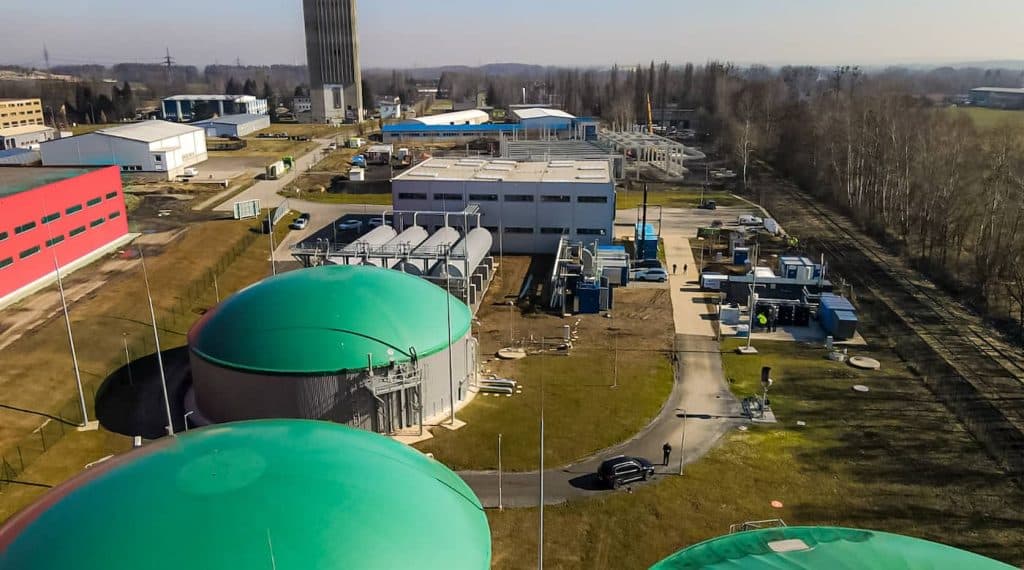
BPS Rakvice will begin operating the first biogas plant in South Moravia to supply biomethane to the gas distribution network in Rakvice, in the Břeclav district. This is gas of the same quality as natural gas. It is a low-emission energy source that uses purpose-grown biomass or plant and animal residues, and is suitable primarily for heating as well as for use as fuel in trucks and buses. The company’s managing director, Ondřej Frič, and Environment Minister Petr Hladík (KDU-ČSL) told journalists today at the plant’s official opening.
There are around 570 biogas plants in Czechia, but only seven of them supply biomethane to the distribution network. “The business plan is based on producing low-emission energy and reducing emissions,” said Frič, who is also commercial director of AgriKomp Bohemia. The company supplied the technology.
He said there is currently no operating support for these energy sources, so the plant will initially sell its output to Germany. Hladík said, however, that ministries are working together to make it viable to build and operate these biomethane sources. He said Czechia has the potential to develop biomethane sources that could meet a fifth of the country’s gas consumption. This would improve energy security as well as reduce emissions.
The biogas plant in Rakvice has been operating since 2013, but operating support for these sources ended at the time, and the plant was earning only enough to cover its loan repayments. Its owners therefore decided to add biogas production to its existing electricity and heat output. The investment amounted to almost 50 million crowns. The gas produced only needs to be purified before it can be injected into the distribution network. “The technology is working, and we are still waiting for the offtake and sample analysis before we can inject it. We also need a licence from the Energy Regulatory Office, and I expect we’ll start injecting in the first half of April,” Frič said.
To ensure it has enough feedstock for production, the company works with a local farmer, from whom it buys silage maize and rye for biogas production. “We have a certificate confirming that they are grown sustainably. We also pay him to take away the digestate, which is used as fertiliser on fields. The carbon footprint of biomethane is also calculated, and for this production we specifically use cattle manure, poultry litter and plant-based materials unsuitable for further processing,” Frič explained. Hladík said this was an example of the circular economy, in which waste is reused.
Annual biomethane production is expected to reach 6480 MWh, which the operators compare with the consumption of the National Theatre’s boiler room, which amounted to 5123 MWh in 2017. Frič said it was now difficult to estimate how quickly the investment would pay off, given the situation on the electricity and gas markets. Prices for both commodities are falling, as are emissions allowance prices. “We originally calculated a payback period of ten years. It will certainly take several years longer now, but we see the current market situation as temporary,” Frič said.
Translation disclaimer
This article is a machine translation of the Czech original and has not yet been fully reviewed. In case of any doubt, please refer to the Czech version.
Sdílejte článek prostřednictvím:
You might also like

28 October 2026, 13:08

28 October 2026, 11:10

28 October 2026, 09:08
