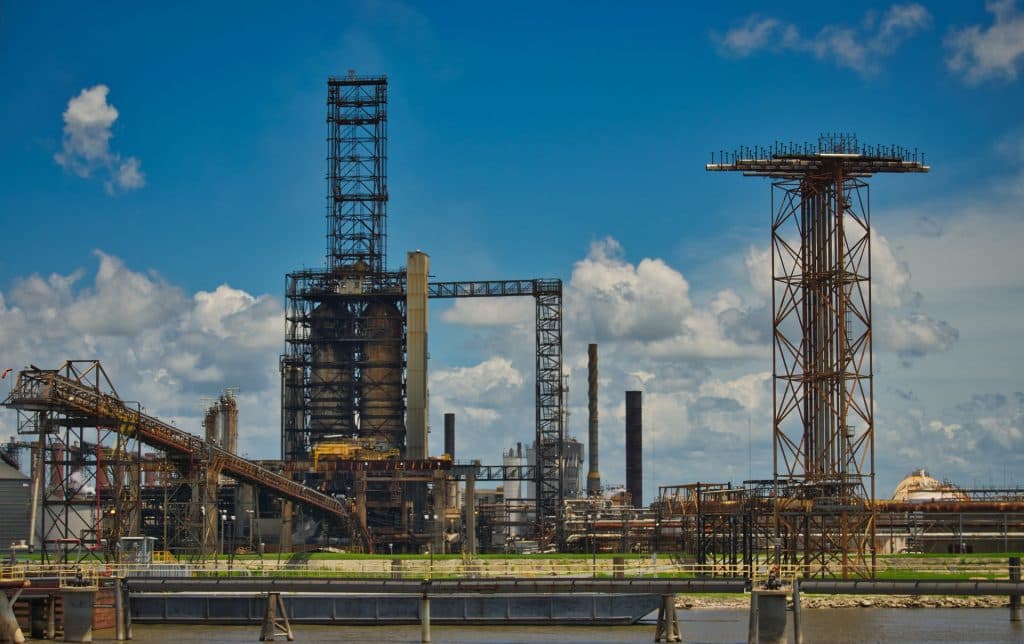
Gas storage filling slowly due to Hormuz, needs more replenishment than in past years

Martin Voříšek
Martin Voříšek
25 May 2026, 09:40
evropske-zasobniky-plynu-se-plni-pomalu-do-cile-pro-zimu-chybi-pres-50-procentnich-bodu

European gas storage facilities are significantly less full after winter than in recent years, and refilling has so far been slow. Storage facilities are currently around 38% full, compared with 46% at the same time last year. The market is further complicated by the tense situation surrounding LNG supplies and unfavourable futures prices, which reduce traders’ incentive to store gas for winter.

Europe is entering the main phase of the injection season with relatively low gas inventories. According to data from Energostat, European Union storage facilities were 37.7% full as of 23 May. This is 8.2 percentage points lower than on the same day last year and also significantly below the historical average for this date of 50.1%.

This year’s starting position is also weaker than in the past two years. In the second half of May 2023, European storage facilities were around two-thirds full, with a similar level in 2024. This year’s figure is closer to 2021 and 2022—the period before and during the energy crisis, when the gas market faced greater uncertainty, particularly due to reduced gas imports from Russia.

The lowest level in the past 12 months was recorded on 31 March, when inventories fell to 27.7%. Since then, stocks have increased by only 10.1 percentage points. This still leaves a gap of 52 percentage points to the 90% level, which is a key indicative target under European regulation ahead of winter.

The market offers little incentive for traders

The slower replenishment of inventories is not solely related to the physical availability of gas, but also to the economics of storage. According to Bloomberg, the main issue is the structure of futures prices, with summer contracts more expensive than winter contracts because of supply concerns. Storing gas is therefore not sufficiently attractive for traders, as buying gas now and selling it in winter may not cover storage costs.

This situation is particularly evident in Germany, which has the largest storage capacity in Europe. German storage facilities are less than 30% full, yet German market operator THE is not currently planning an intervention. Its representatives expect the market to begin replenishing storage facilities more substantially over the summer.

“We are fairly confident that, even though the price spread is unfavourable at present, there will be enough gas in storage for the coming winter,” Sebastian Kemper, head of the German gas market operator, told Bloomberg.

Some other countries are taking the opposite approach. France and Italy have introduced incentives to support gas injection into storage facilities. These differing national approaches may be important in the coming months, as low inventories in Germany would affect prices across Europe in the event of a tight market.

Hormuz raises the risk of high winter prices

Geopolitical risk is also entering the equation. According to Equinor, a prolonged disruption to shipping through the Strait of Hormuz could significantly complicate Europe’s gas supply. If the strait were quickly reopened, Europe could reach an acceptable, albeit tight, storage level of around 75%, according to Equinor. However, if restrictions lasted another one to three months, the situation could become critical.

The reason is LNG’s importance to the European market. Since Russian pipeline supplies were reduced, Europe has become much more sensitive to developments in the global liquefied natural gas market. In the event of disruptions in the Persian Gulf, European prices therefore respond not only to domestic consumption, but also to competition from Asian buyers.

Gas prices at the Dutch TTF hub were around 50 EUR/MWh in May. In March, they briefly rose as high as 74 EUR/MWh, their highest level since January 2023. High prices may curb some demand, for example in industry or power generation, but they also increase the cost of filling storage facilities.

For the Czech Republic, price and regional security are the main concerns

For the Czech Republic, developments in European gas storage matter for several reasons. Following its shift away from Russian gas, the domestic market is closely linked to north-western Europe and the LNG terminals located there. Low storage levels may therefore feed into price expectations.

Gas is not declining in importance in the Czech energy sector as quickly as might appear. It is expected to play an important role in the move away from coal in district heating and, to some extent, in the power sector, where new natural gas-fired capacity is planned. Higher or more volatile gas prices could therefore worsen the economics of planned projects and increase pressure on support mechanisms.

This year’s injection season will thus be an important test of European energy security after the crisis years. While Europe benefited from high inventories and weaker demand in the previous two years, it is entering this summer with lower stocks and greater sensitivity to geopolitical developments.

Translation disclaimer

This article is a machine translation of the Czech original and has not yet been fully reviewed. In case of any doubt, please refer to the Czech version.