Gas supplies to Ukraine via Greece and the Balkans are rising. December auction confirms the Vertical Corridor’s growing role
The November monthly capacity auction for Route 1 showed a sharp rise in interest in transporting gas from Greece to Ukraine via the so-called Vertical Corridor. Three traders booked 13.68 GWh per day for December, more than double the November volumes, reports CeenergyNews.
The auction for monthly capacity products paved the way for the first commercial gas deliveries from Greece to Ukraine, and the results of the December auction held on 24 November confirm the trend is gathering pace. Three participants took part in the auction, with demand reaching 60% of the total capacity offered. The route is jointly made available by the transmission system operators DESFA in Greece, Bulgartransgaz in Bulgaria, Transgaz in Romania, VestMoldTransgaz in Moldova and GTSOU in Ukraine.
Traders booked 13.68 GWh of capacity per day for December, more than double the November volume. According to Greek network operator DESFA, Route 1 is proving to be a competitive route for transporting gas from Greece through Bulgaria, Romania and Moldova to Ukraine. This transportation route is also one of the key building blocks of the Vertical Corridor, which, following Russia’s invasion, evolved from a long-delayed infrastructure concept into a strategic north-south artery for European energy.
The Vertical Corridor
The idea for the Vertical Corridor dates back to 2016, when Greece, Bulgaria, Romania and Hungary signed a memorandum to link their transmission systems along a north-south route. At the time, Europe was still primarily importing Russian gas via Nord Stream 1, while Nord Stream 2 was under construction.
The project was also a response to the cancelled South Stream project, which was intended to bring Russian gas under the Black Sea to Bulgaria and onwards towards Italy, Hungary and Austria. After it was cancelled in 2014, Moscow shifted its focus to TurkStream, which has redirected Russian gas flows to Turkey, Bulgaria and Serbia since 2020. As a result, the original Trans-Balkan gas pipeline became largely unused.
The Trans-Balkan route, however, is proving to be a valuable foundation for a new European north-south corridor, and technical modifications now allow gas to flow in reverse, from south to north—from Greek LNG terminals all the way to Ukraine.
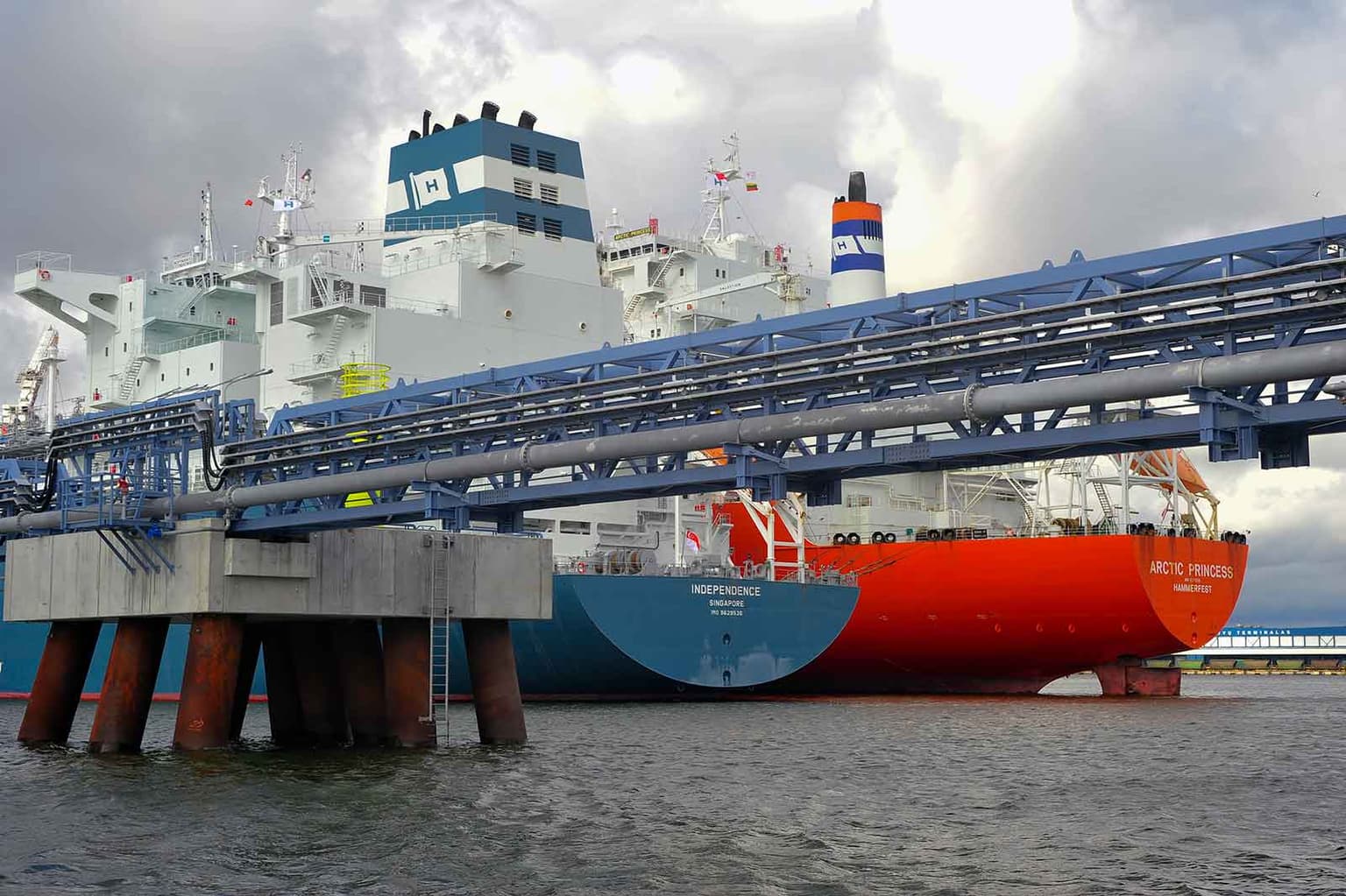
In January this year, gas network operators from Greece, Bulgaria, Romania, Moldova, Hungary, Slovakia and Ukraine signed a memorandum to further support the project. Its strategic importance is also growing thanks to new LNG capacity, particularly the planned floating terminal (FSRU) near Alexandroupolis.
In addition to Route 1, two more transportation routes are being prepared to further increase available volumes and make supplies to Ukraine and the wider regional market more flexible.
To make the new capacity products attractive to traders, the participating transmission system operators agreed on a 25% discount on monthly tariffs. ICGB, the operator of the IGB pipeline between Greece and Bulgaria, and Ukraine’s GTSOU have gone further, offering a 46% discount—the largest in the region. They aim to demonstrate their support for Ukraine’s energy resilience and wider regional cooperation.
Capacity will be available only as a monthly product in a single auction at a uniform price, and may be used exclusively for deliveries to Ukraine—with no access to national virtual trading points or domestic exit points in transit countries.
Closer cooperation between Greece, Ukraine and the US
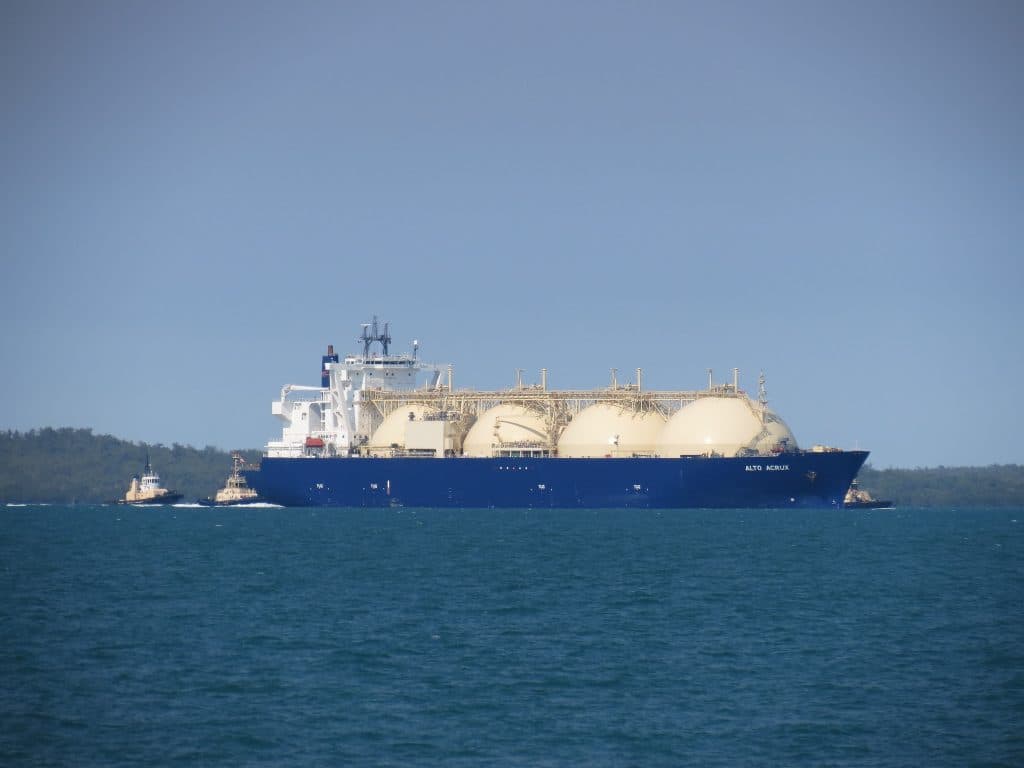
Alongside the auction itself, another major announcement came this week: Greece’s state-owned trading company DEPA Commercial and Ukraine’s Naftogaz have agreed on gas supplies for the winter of 2025/2026. The agreement will allow Ukraine to receive US liquefied natural gas (LNG) transported through Greece for the first time. The LNG will be transported by the joint venture ATLANTIC-SEE, in which DEPA holds a 40% stake. It will first arrive in Greece and then be transported to Ukraine.
The agreement provides for gas to flow through the routes offered by the operators of the five European countries participating in the Vertical Corridor.
“Delivering natural gas to Ukraine through a reliable, multinational corridor creates an energy bridge between the infrastructure of Greece and Ukraine and strengthens Europe’s wider energy resilience. US LNG supplies will be secured through ATLANTIC–SEE, in which DEPA holds a 40% stake, underscoring the company’s commitment to providing practical and secure energy solutions across southeastern Europe,” said DEPA Commercial Director Konstantinos Xifaras
Ukraine needs to import gas
Russian attacks over the past two winters have destroyed part of Ukraine’s gas production infrastructure, with production at some fields brought to a complete halt. Ukraine is therefore being forced to increase natural gas imports from global markets. It previously managed to get through the heating season using its own gas production, but now needs to import 4.4 billion cubic metres of gas for the winter of 2025–2026.
This is also why Kyiv is systematically strengthening its links with European partners, and why the Vertical Corridor is becoming more important: it provides access to LNG from the Aegean and Mediterranean seas.
The December auction for Route 1 shows that the Vertical Corridor has evolved from a theoretical project into a real infrastructure pillar for the region. Combined with the new Naftogaz–DEPA agreement and the future Route 2 and Route 3, the north-south axis is becoming another element of energy security for Ukraine and the whole of central and southeastern Europe.
Translation disclaimer
This article is a machine translation of the Czech original and has not yet been fully reviewed. In case of any doubt, please refer to the Czech version.