
1 November 2026, 21:20
Loading...
Germany has record gas storage levels, but supply risks remain

David Vobořil
5 November 2023, 08:00
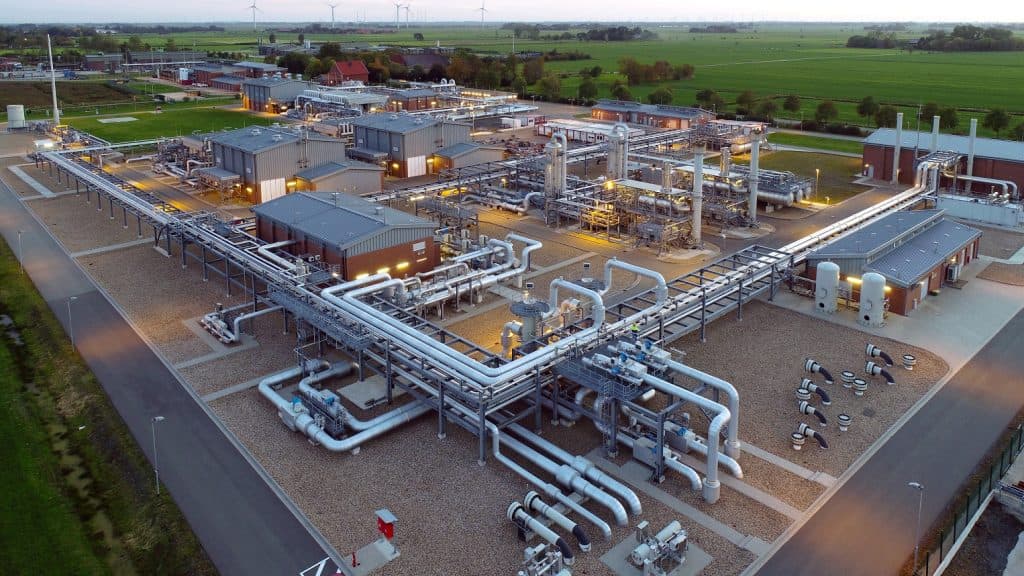
Germany has more gas stored in its storage facilities than ever before, according to data from Gas Infrastructure Europe (GIE), the association of European gas infrastructure operators, and network regulator BNetzA. German gas storage facilities have continued to fill even after the heating season began in October. However, BNetzA says risks to security of gas supply remain in the event of a very cold winter.
As of 1 November, German gas storage facilities were 99.8% full, above the legally required level of 95% by the same date. At the same time, thanks to increased capacity, the volume of stored gas is at a record high.

Gas storage levels in Germany. Source: Bundesnetzagentur, AGSI+
In mid-November last year, gas storage facilities were 100% full, but their capacity has increased since then. So despite lower storage levels, more gas is in storage: currently 254 TWh.
Earlier this year, BNetzA and the Ministry for Economic Affairs (BMWK) expressed concern that reaching the required levels would be more difficult in summer 2023 because of reduced gas supplies from Russia. However, low gas consumption has so far helped mitigate the problem. Although prices have fallen sharply compared with the previous year, consumption is currently at the same level as in 2022 and around 15% below the long-term average.
Germany consumed 850 TWh of natural gas in 2022, 18% less than in 2021. German storage facilities therefore hold approximately 30% of the country’s annual gas consumption. Germany currently accounts for more than a fifth of total EU gas stocks.
The starting position for winter 2023/24 is significantly better than it was a year ago. However, BNetzA says risks to natural gas supplies in Germany remain in the event of a very cold winter. Such a winter would cause a sharp increase in gas consumption and, if the remaining Russian gas supplies to southeastern Europe were also cut off, those countries would have to be supplied via Germany in the event of shortages. BNetzA therefore says saving gas remains important.
Norway and LNG supplies via Belgium and the Netherlands now provide most of Germany’s gas, around 90 percent. Germany’s own LNG terminals account for only about 10% of total gas imports, and thus play a smaller role in supplying the country. They are currently operating at only a fraction of their import capacity.
Storage levels in the EU and Czech Republic
Like Germany, the EU as a whole has high gas stocks, with storage facilities currently 99.4% full. Total gas stocks in the EU cover around 30% of the bloc’s gas consumption.
The Czech Republic has also reached storage levels of around 99% of capacity. In the Czech Republic, stored gas capacity is enough to cover around half of annual consumption.
Translation disclaimer
This article is a machine translation of the Czech original and has not yet been fully reviewed. In case of any doubt, please refer to the Czech version.
Sdílejte článek prostřednictvím:
You might also like

1 November 2026, 16:09
1 November 2026, 07:59

31 October 2026, 12:55

31 October 2026, 08:21