23 October 2026, 14:38
Loading...
Green hydrogen flows through Czech gas pipelines for first time. GasNet launches its first hydrogen town
oEnergetice.cz
15 May 2026, 11:06
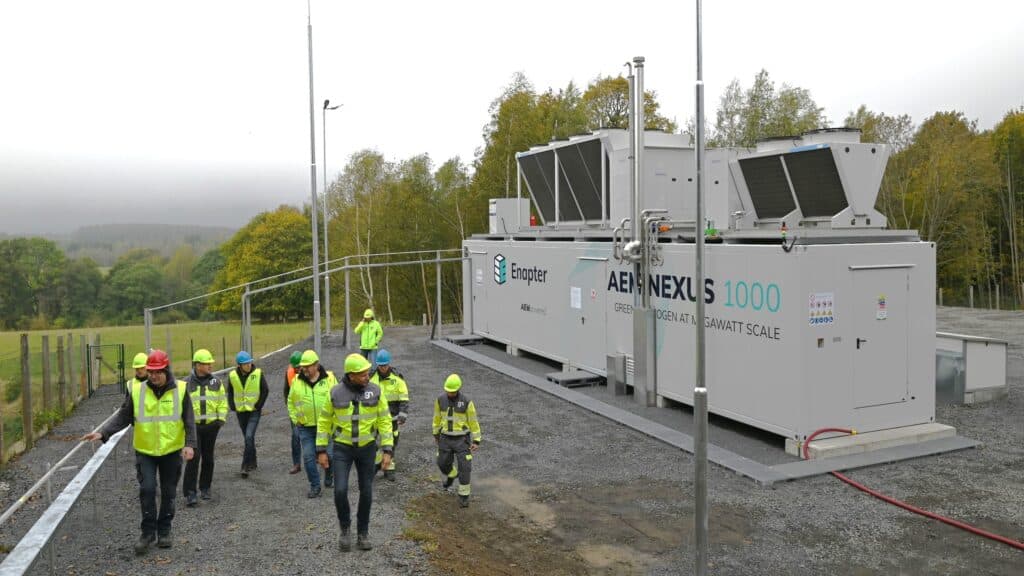
For the first time ever in Czechia, renewable hydrogen is flowing through a public distribution network. The GasNet Group has begun distributing a blend of natural gas and hydrogen in Hranice near Aš, in the Karlovy Vary Region. Distribution is taking place as part of a pilot project testing the potential for future use of H2 in the gas network. It is the first Czech town where customers have begun fully using this renewable gas. Hydrogen is also produced directly at this location, and besides significantly reducing emissions, distribution of this gas blend also strengthens the region's energy security and self-sufficiency.
“Hranice is the first town in Czechia where we are distributing a hydrogen blend. In the Central European context, this is a unique concept because, unlike other similar projects in Slovakia or Germany, hydrogen is produced directly at the point of consumption,” says Andrzej Martynek, CEOof the GasNet Group, adding: “This pilot project is providing us with valuable experience from real-world operation. It has also verified the technical, operational and safety parameters of this solution. However, this is not a model that we will now automatically roll out widely at other locations. We see it primarily as an important step in preparing for the possible future use of hydrogen in the distribution network.”
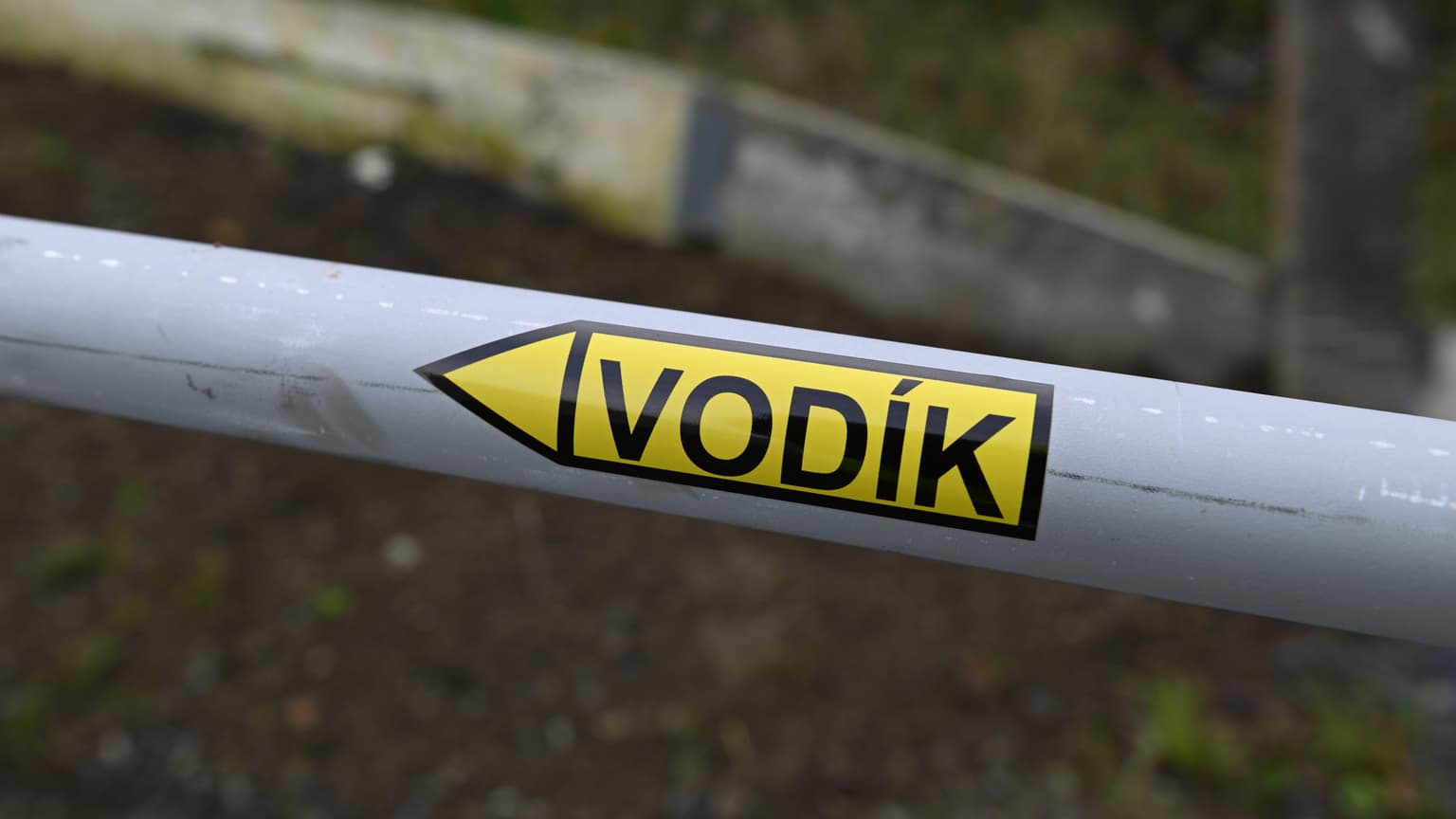
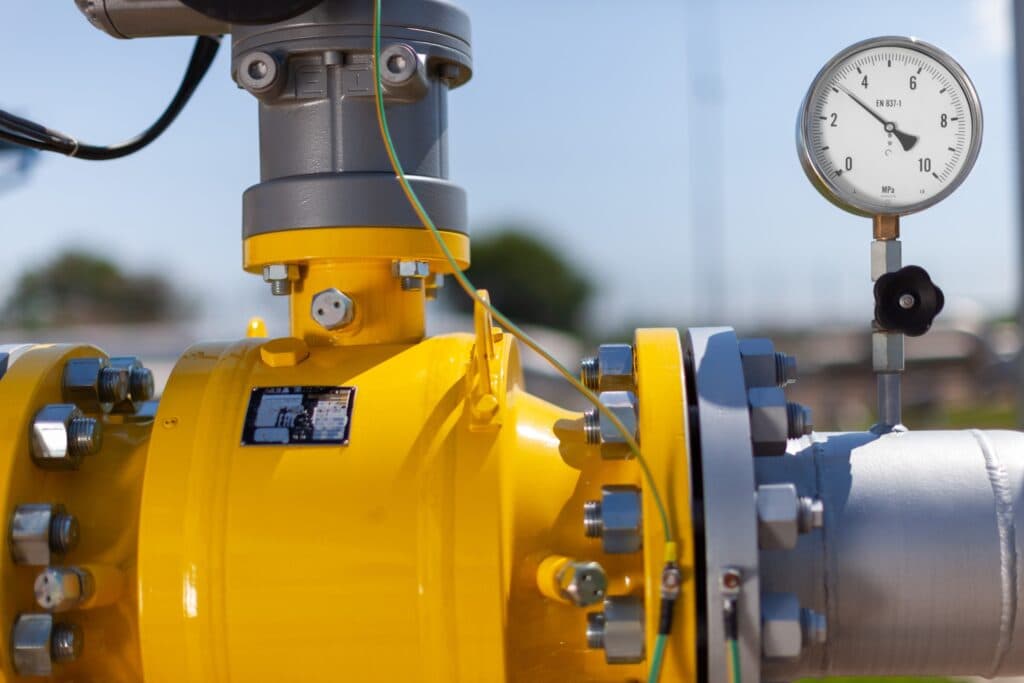
Hydrogen pipeline
Hydrogen passes the test. Supplies ran without issues during the heating season
The past heating season tested the ultimate reliability and safety of gas-blend supplies for end customers. People in Hranice heated their homes with a blend of hydrogen and natural gas throughout the winter, as GasNet began supplies in test mode last autumn. Throughout the period, gas engineers carefully monitored and assessed the operation of their equipment, including at several customer inspection points.
“Test operation confirmed that both the distribution system and gas appliances operate with the blend without any issues. The winter period is crucial for the gas sector. Gas consumption peaks due to heating, and this was the final major test before the start of regular distribution,” Andrzej Martynek explains.
Emission reductions
Hydrogen in natural gas significantly reduces emissions generated by combustion. No harmful substances are released when hydrogen is burned; only pure water vapour is emitted into the atmosphere.
GasNet is now distributing a 10% hydrogen blend in Hranice. Customers use the gas in the same way as when pure natural gas is distributed – it is used for heating and cooking in the town, while a local industrial company also uses it in its production. In total, this involves 360 connection points.
“Our innovative project in Hranice clearly demonstrates that distributing low-emission hydrogen blended with natural gas through existing gas infrastructure is technically feasible. Together with biomethane, hydrogen is genuinely becoming another low-emission gas that we can already inject into the public distribution network. As a distributor, we are preparing systematically and over the long term for a gradual increase in its share in gas infrastructure. Further development of hydrogen use will of course depend on its price and availability on the energy market,” explains Andrzej Martynek of GasNet.
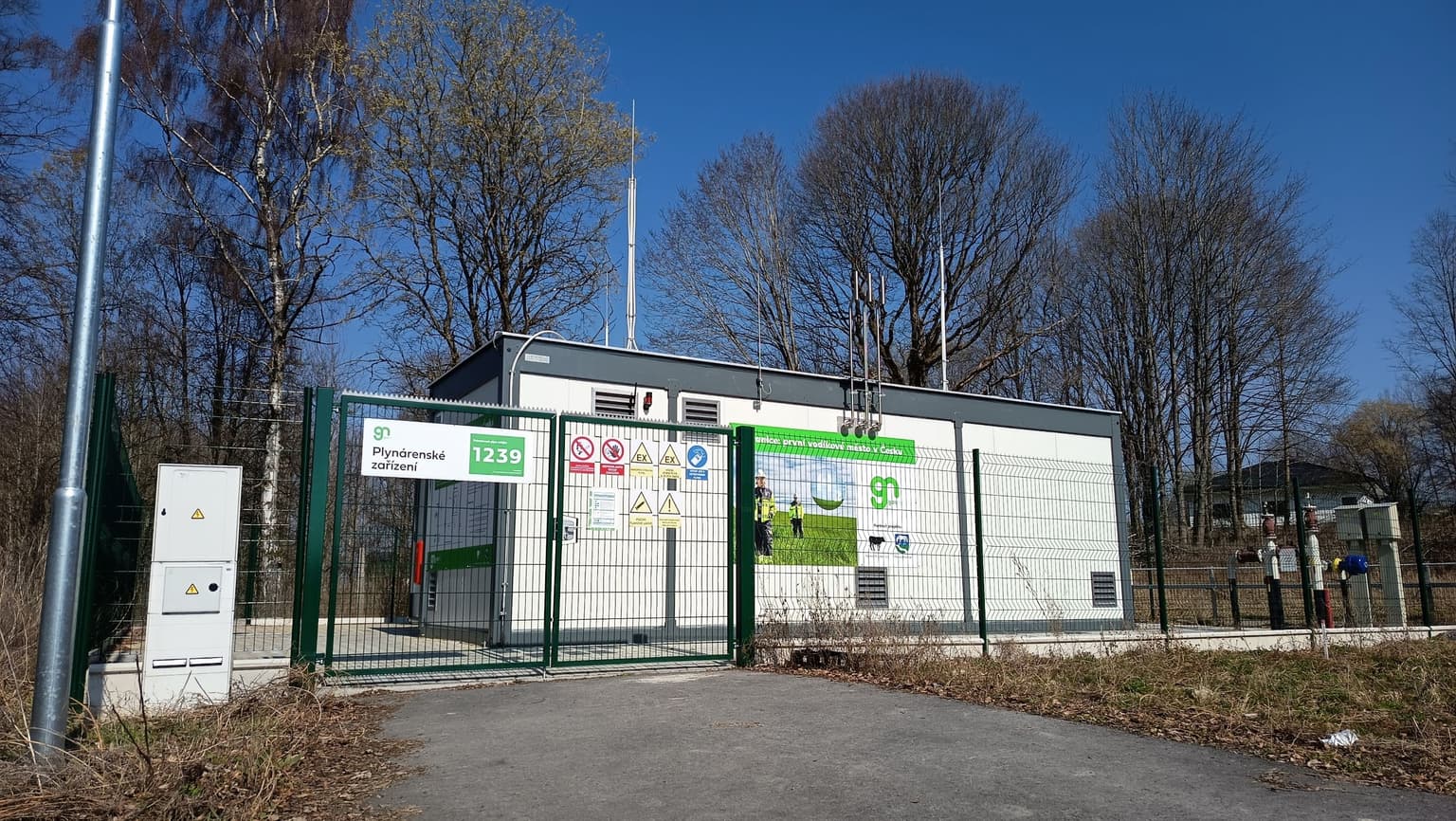
Blending and injection facility
Local hydrogen for local gas pipelines
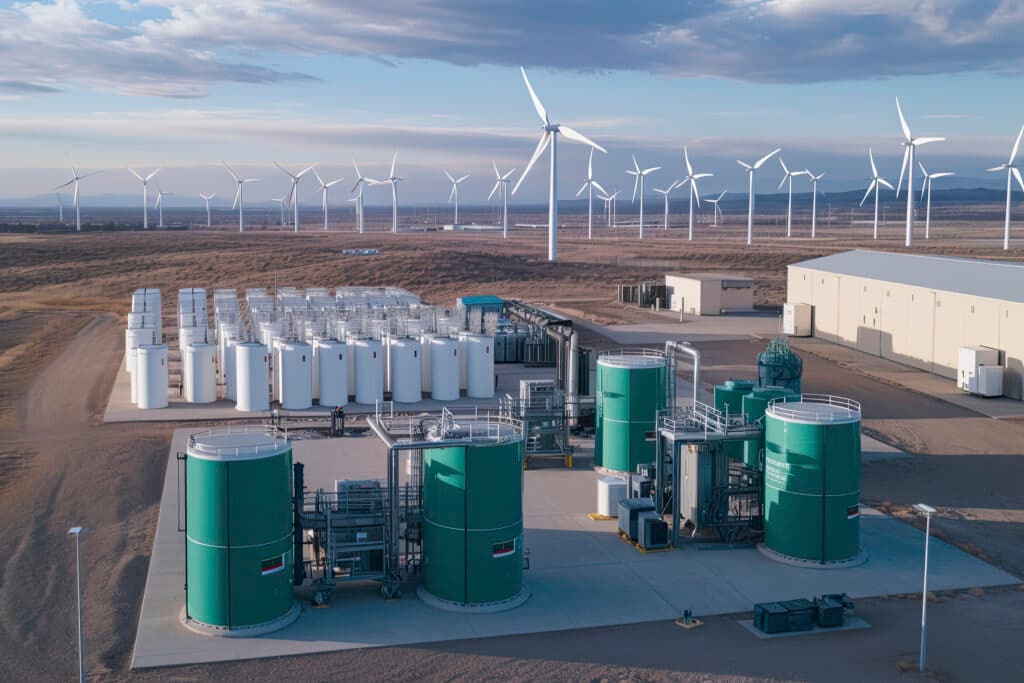
Hydrogen for Hranice is produced in the vicinity of the town. Production is provided by Farma Trojmezí, which uses renewable electricity from its own wind and solar park to produce it. The hydrogen produced is then stored in above-ground tanks, from which it travels via a hydrogen pipeline to the blending facility. Here, GasNet engineers mix it with natural gas in the required proportion, and the blend is injected into the local distribution network, which transports it directly to customers. The blend is consumed directly in the town and its surroundings, as the entire local network operates as a closed island.
“The project began with the Trojmezí – Hranice near Aš wind farm, which we commissioned in 2007 with a capacity of 2,7 MW. When expanding the park with a solar component, we began looking for an efficient way to make the best possible use locally of surplus electricity generated from renewable sources. We found inspiration in Germany in 2018, where we became acquainted with projects converting electricity into hydrogen and subsequently blending it into natural gas. It was this experience that led us to the idea of preparing a similar solution in Hranice,” says Václav Benedikt, chairman of the board of Farma Trojmezí a.s.
This was followed by the purchase of a suitable construction site, the launch and implementation of the project's public-law approval process, and the selection of suitable hydrogen production technology. This part of the project's preparation took place between 2020 and 2024. At the same time, Farma Trojmezí began cooperation with GasNet in April 2021.
The building permit became legally effective in April 2024. Farma Trojmezí obtained permission for test operation of the hydrogen production facility in February 2025, and the entire facility was granted final approval two months later.
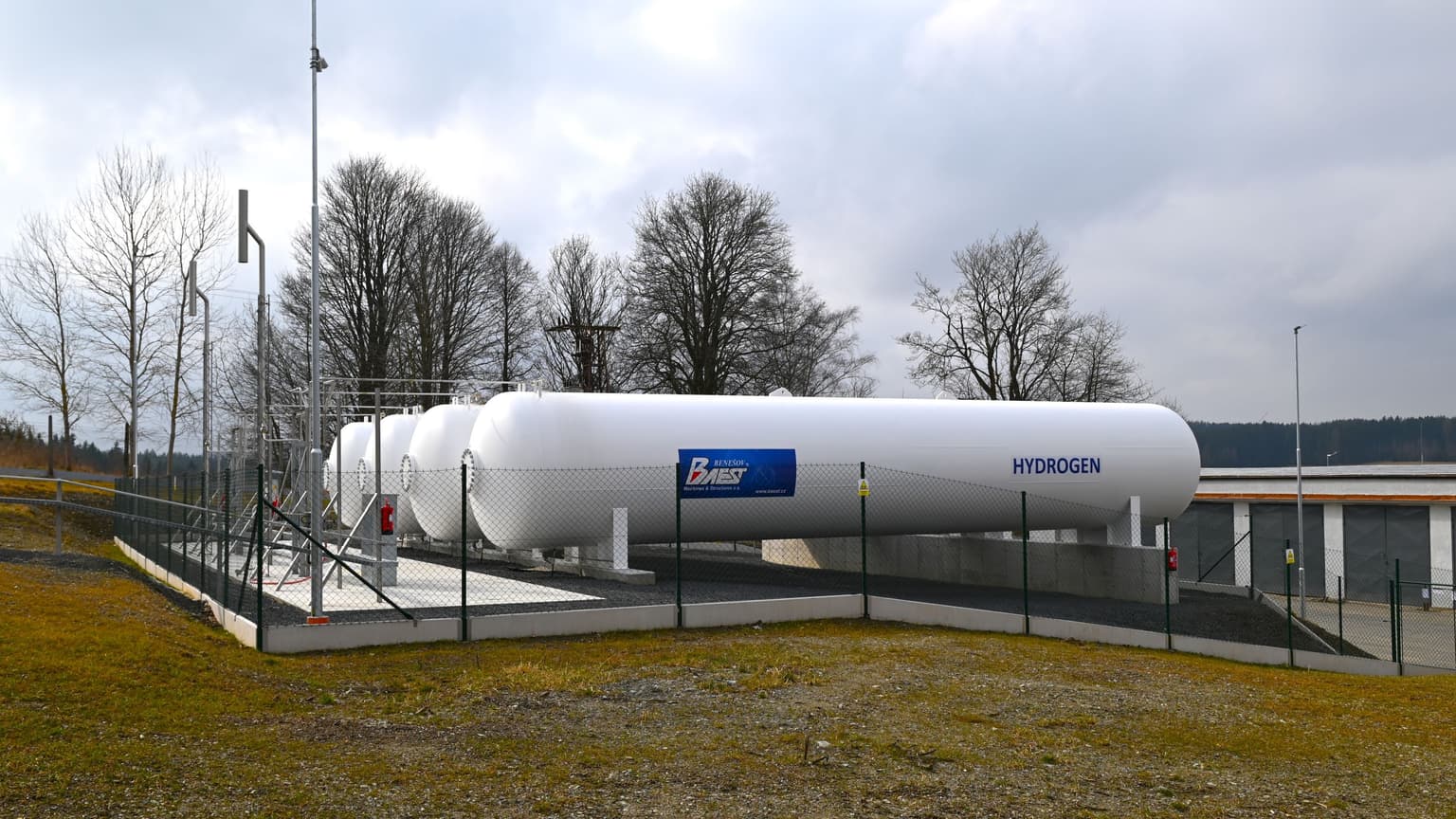
Hydrogen storage tanks
Gas pipelines and boilers are ready for the blend
Before the project was launched, GasNet, in cooperation with the Engineering Test Institute, the Czech Technical Inspection Authority and the Association for Chimney and Combustion Optimisation (APOKS), carried out extensive inspections of gas appliances and flue systems at all connection points in the town. The results confirmed that customers' equipment can use the blend without any issues. Gas equipment operated by GasNet also passed the same inspection with positive results. Materials and technologies enabling safe distribution of the blend had already been used when the local network was built.
The project was supported by the Czech Ministry of Industry and Trade (MPO ČR) and the Energy Regulatory Office (ERÚ). It also received support from the Karlovy Vary Region, which is among the leaders of the hydrogen transition in Czechia and also funded inspections of customers' flue systems. The project was also developed with support from the State Environmental Fund (SFŽP).
“The launch of regular distribution of a blend of natural gas and renewable hydrogen in the town of Hranice represents a significant milestone not only for Czech energy, but above all for the Karlovy Vary Region. This project brings the region a modern and sustainable energy source while opening up new opportunities for innovation and investment. The Karlovy Vary Region is thus becoming a pioneer in the use of hydrogen in gas infrastructure and confirming its role as a leader in the transition to cleaner, more environmentally friendly energy,” added Karlovy Vary Region Governor Petr Kubis.
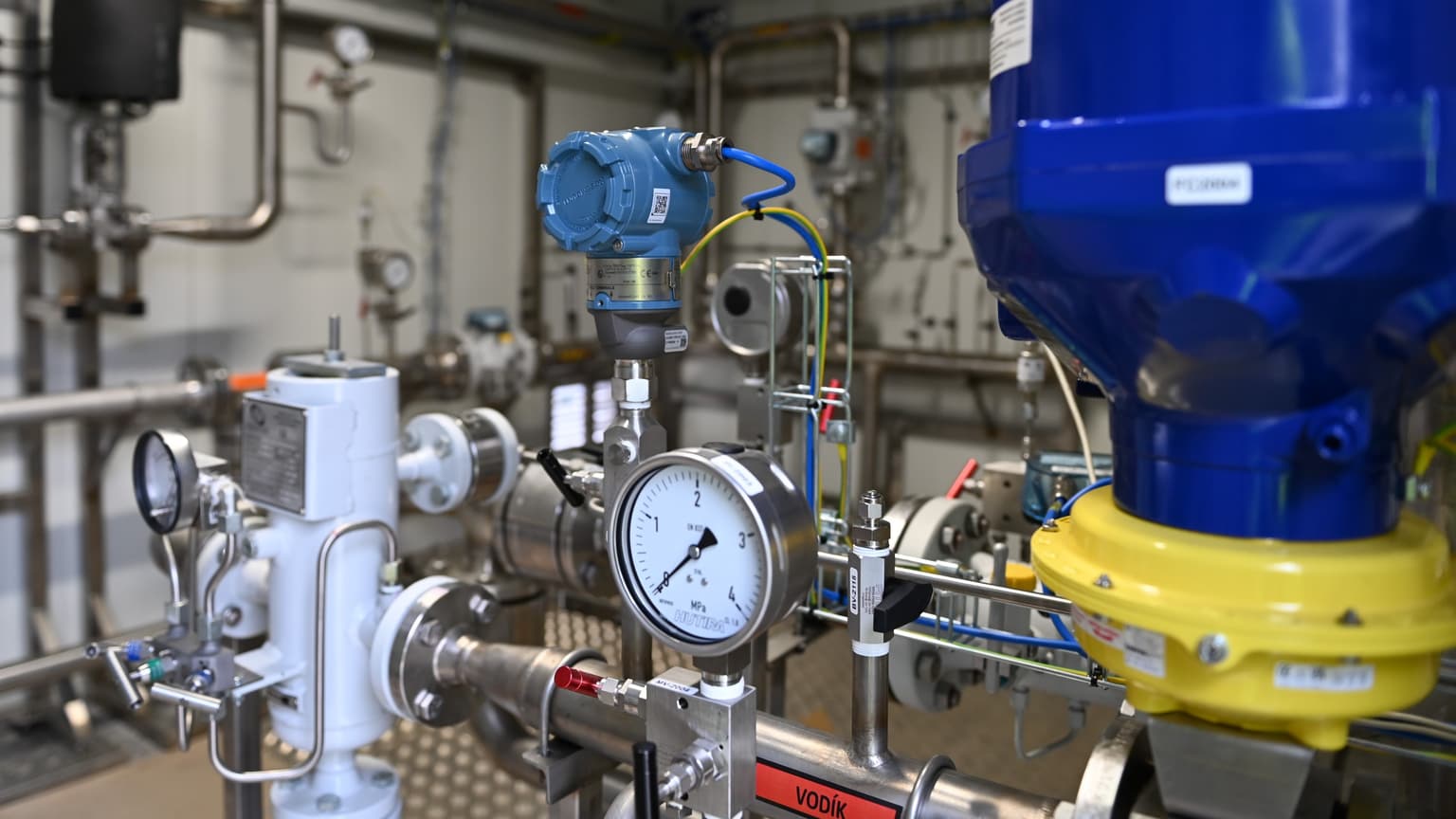
Interior of the blending facility
In addition to GasNet, other gas-sector experts were involved in the project. The tailor-made hydrogen and natural gas blending equipment was supplied by Hutira. Orise, a company specialising in the automation and digitalisation of industrial production, helped configure the control system for the entire facility. Gas equipment manufacturer Baxi supplied next-generation gas boilers for some of the inspection points.
Technicians from the Association for Chimney and Combustion Optimisation (APOKS) also carried out professional measurements of flue gas emissions from household gas boilers, in addition to inspecting flue systems.
The main contractor for construction of the hydrogen production facility was Unigranit Písek a.s., the electrolyser was manufactured by Enapter S.R.L., the hydrogen storage tanks by BAEST Machines & Structures, a.s. and the hydrogen pipelines were built by Charmont s.r.o.
Translation disclaimer
This article is a machine translation of the Czech original and has not yet been fully reviewed. In case of any doubt, please refer to the Czech version.
Sdílejte článek prostřednictvím:
You might also like
23 October 2026, 11:01
23 October 2026, 06:34