9 November 2026, 06:13
Loading...
Latvia is likely to cancel Skulte LNG terminal project, minister says it is no longer needed

Eduard Majling
30 August 2023, 11:06
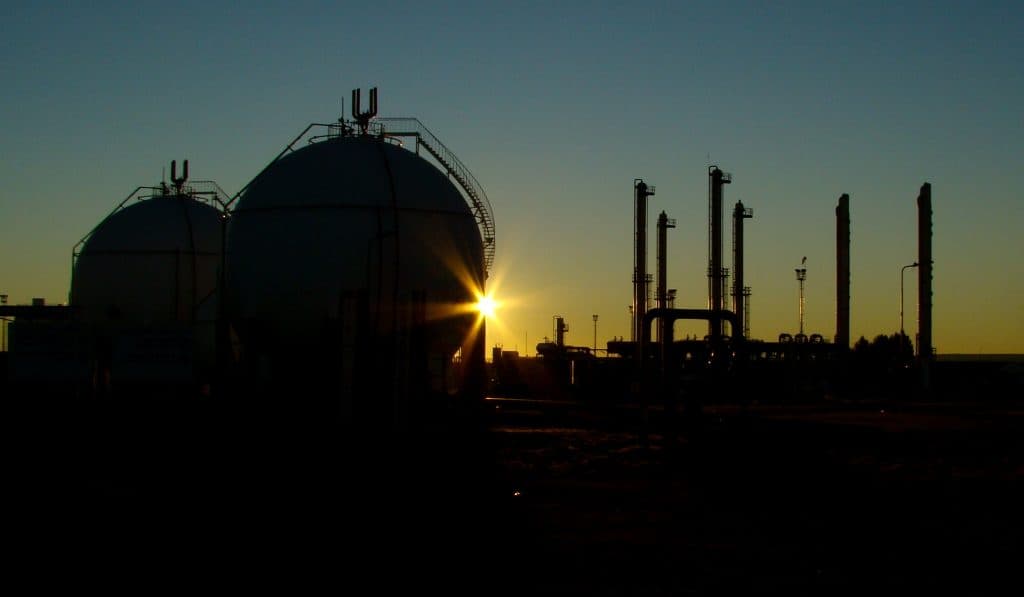
After a number of European countries focused intensively last year on increasing capacity to import liquefied natural gas (LNG), the situation is turning around this year. Some projects that were originally planned could therefore be halted, as import terminal capacity is currently more than sufficient. One such project could be the planned floating terminal near the Latvian port of Skulte.
Ensuring an adequate volume of natural gas supplies was one of the main priorities last year for the European Union’s institutions, as well as for individual member states and other European countries. The situation is more relaxed this year, however, as gas storage facilities remained at very high levels after the relatively mild winter. This has gradually affected prices for short-term contracts since the end of winter, and some storage facilities are already completely full.
In mid-May, Bloomberg warned that Europe could see a surplus of LNG import terminals in the coming years. This would negatively affect the returns on new projects, although excess capacity could serve as a safeguard in the event of unexpected pipeline supply disruptions or other unforeseen events.
The future of the planned LNG terminal in Latvia, which was to be built near the port of Skulte, is also uncertain. According to Latvian Energy Minister Raimonds Cudars, energy security is currently assured not only in Latvia itself, but also across the Baltic region.
The minister said the Inčukalns gas storage facility also contributes to energy security. It currently holds more than 18 TWh of gas (about 80% of its capacity), and all of its capacity for this year has been booked. Around 1.8 TWh of this volume is a strategic reserve that was not needed during the past winter.
"Our previous discussions about the Skulte terminal, or the need to build it, should be left in the past," Energy Minister Raimonds Cudars said, according to Argus Media.
In an emergency, Latvia could also turn to supplies through other LNG terminals in the region. The country could import more gas via Estonia’s Paldiski LNG terminal, the minister said, as the two countries signed an agreement in May on jointly using the terminal. More gas should also flow into the region through the new floating terminal in Finland, which began operations at the port of Inkoo early this year.
Infrastructure for the new terminal remains unused
According to Argus Media, the Latvian government designated the Skulte LNG terminal project as being in the national interest last September after deciding to ban natural gas imports from Russia from this year. Construction of the terminal was due to begin this spring, but the project remains stalled, partly because the developer’s terms were rejected.
In March this year, the government purchased part of the infrastructure needed to build the terminal, but it remains unused without a floating storage and regasification unit (FSRU). An auditors’ report in May found that using the pier could be difficult because of its legal status, stating that "there is no reason to believe that ships or gas suppliers could afford to risk operating their facilities in a port that is not legally authorised, even in a crisis situation".
Translation disclaimer
This article is a machine translation of the Czech original and has not yet been fully reviewed. In case of any doubt, please refer to the Czech version.
Sdílejte článek prostřednictvím:
You might also like

8 November 2026, 20:02

8 November 2026, 13:59

8 November 2026, 08:10