
23 October 2026, 14:38
Loading...
LNG imports to Europe reach record levels despite COVID-19

Martin Voříšek
23 April 2020, 07:47
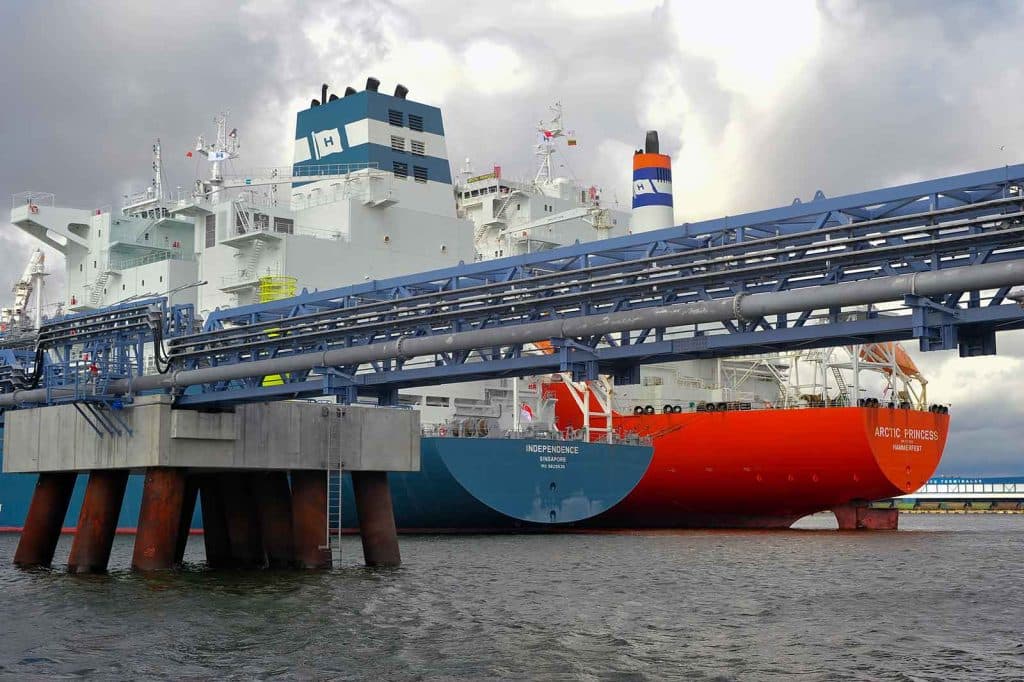
Record volumes of liquefied natural gas are being imported into Europe despite the crisis associated with the COVID-19 pandemic. Given generally lower energy consumption and relatively full gas storage facilities, further declines in natural gas prices can be expected. According to S&P Global, the only solution is to reduce natural gas production.
Imports of natural gas in liquefied form (LNG) have not slowed despite concerns related to the current pandemic, and Europe has even recorded a record quarter for LNG imports. During the first quarter, a total of 310 TWh of gas was delivered from LNG terminals into EU transmission systems.
Only the preceding first quarter of this year is comparable, when just 2 TWh less was delivered. Last November remained the record month, with 113 TWh of liquefied natural gas delivered to the EU.
Imports have not weakened during April either, with European terminals supplying an average of 3468 GWh/d into transmission systems, suggesting that monthly LNG deliveries will again be slightly above 100 TWh.
There is already a surplus of natural gas on the European market. Not only are new options for supplying Europe by pipeline opening up (such as TurkStream and TANAP), but LNG imports also rose exceptionally sharply during last year. Moreover, an agreement on gas transit through Ukraine was reached at the end of last year.
All these additional sources are contributing to falling gas prices in Europe. An ICIS analyst also commented on the outlook for natural gas prices, expecting gas consumption in the EU to remain lower (the video is available only in English).
Analysts expect the current pandemic to affect consumption as well, with a decline of several percentage points expected. The 2008 financial crisis may serve as at least an approximate example, when natural gas consumption fell by approximately 6.5%.
According to international website S&P Global, a recovery in demand is unlikely in the short term, and the only way out of the current crisis is to curb natural gas production and imports.
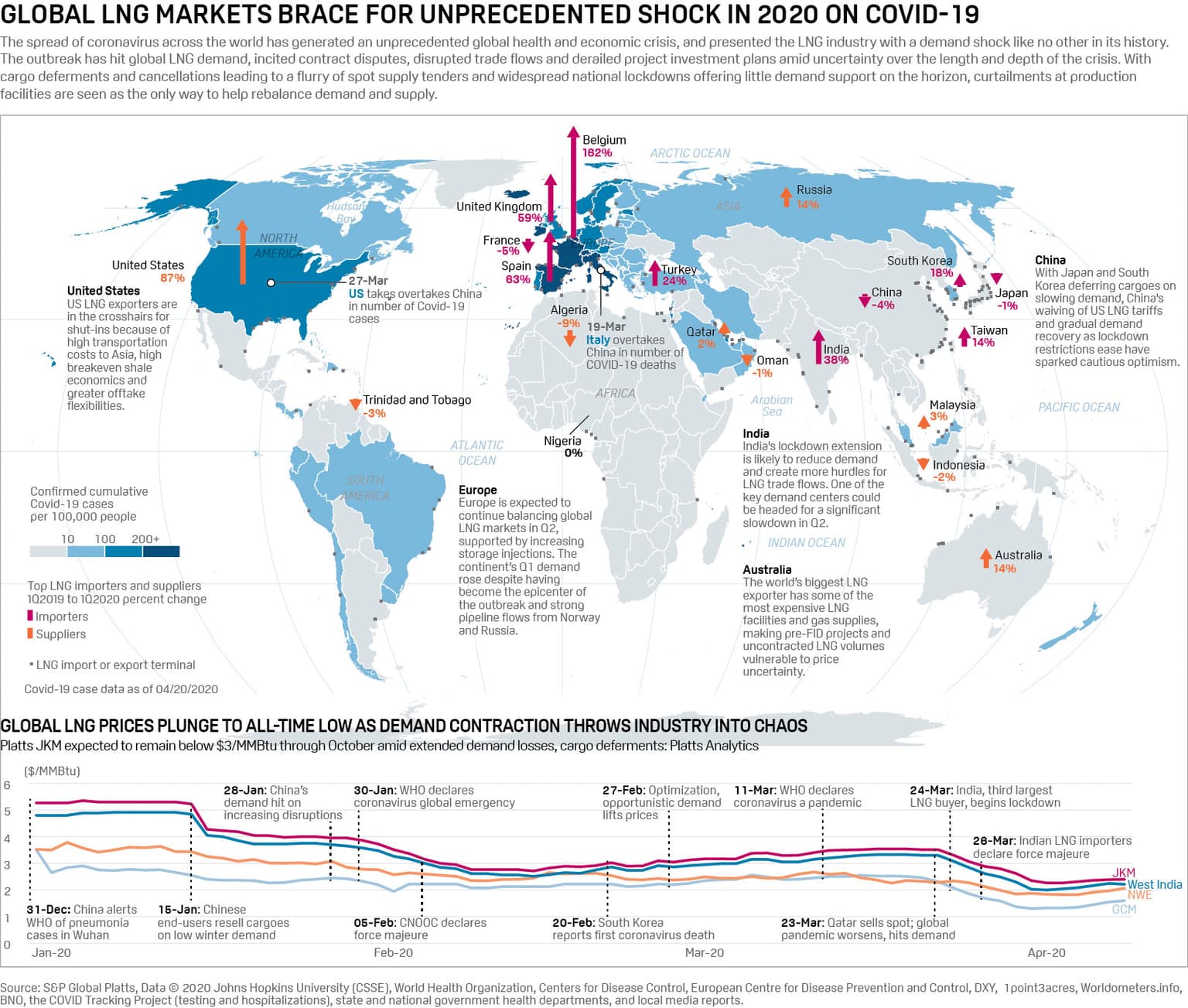
The full version of the infographic is available here.
The European market is currently also burdened by storage levels. Following a relatively warm winter, storage facilities remained record-high ahead of the injection season. They entered the injection season around 54% full – by comparison, in 2018 storage facilities were only 18% full at the same time.
The European market could therefore very soon face a situation in which there is nowhere to store natural gas and no actual use for it at that moment. The US oil market recently experienced a similar situation, when the futures contract for May oil delivery fell as low as -38 USD/barrel.
The reason was that the contract was approaching expiry and investors feared they would no longer be able to sell it to another buyer and would be forced to take physical delivery of the volume in question.
Translation disclaimer
This article is a machine translation of the Czech original and has not yet been fully reviewed. In case of any doubt, please refer to the Czech version.
Sdílejte článek prostřednictvím:
You might also like

23 October 2026, 11:01


23 October 2026, 06:34