3 October 2026, 13:01
Loading...
LNG stocks in tankers off Europe’s coast are dwindling as heating season starts

Martin Voříšek
21 November 2023, 06:23
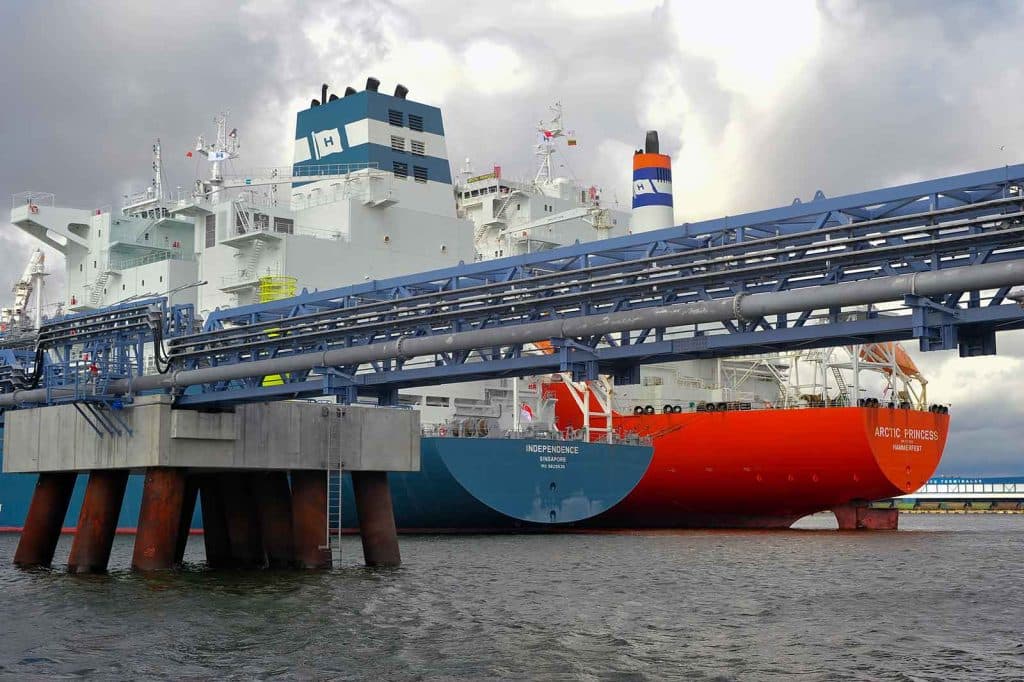
Liquefied natural gas stocks in tankers off Europe’s coast have declined. Traders who chartered them have decided to take advantage of the start of the heating season and deliver the gas to European gas networks and storage facilities via LNG terminals. They were apparently also prompted to do so by temporarily higher prices, the onset of winter and the associated heating season, as indicated by declining natural gas stocks in storage facilities.
The growing volume of trade in liquefied natural gas has another effect that is not entirely obvious at first glance. A number of tankers carrying substantial natural gas stocks are moving across the seas while waiting to deliver the gas to a specific terminal. They generally wait for more favourable price conditions. According to the latest information from SP Global, such tankers held a total of 27 bcm of natural gas at the beginning of November. Some of them were also operating in coastal waters near the European Union.
LNG stocks at sea
Tankers carrying liquefied natural gas do not always have a clearly specified delivery time or location. During the voyage, the gas delivery destination may therefore change, or delivery may be postponed until later in the expectation of a higher sales price. It is therefore not unusual for tankers at sea to hold off on selling and simply wait for a higher natural gas price on the market.
The condition for such a strategy is generally that the cost of storing LNG at sea is not higher than the expected return from selling the gas later. Traders may also opt for another natural gas delivery destination, for example if the price of natural gas rises in one region and the price difference covers the cost of transport to that region.
It is precisely because of currently higher prices and the assumption that gas prices will fall in the near future that gas stocks in tankers in European waters have apparently declined in recent weeks. Some traders used this brief price increase as their last opportunity to sell LNG, as they expect prices to fall over the winter.
According to experts, the decline in stocks is also linked to the start of the heating season, when total withdrawals from EU storage facilities exceeded the volumes injected by traders.
As for gas stocks in European storage facilities, the decline has so far been minimal. Gas stocks in European storage facilities have fallen only from 100% full to 99%. Nevertheless, this is primarily a signal that the heating season has begun in Europe. Gas stocks in European storage facilities are still the highest since at least 2011.
The price spread between LNG and gas at the TTF trading hub has widened
Higher deliveries from tankers off Europe’s coast into gas networks have also affected the price of liquefied natural gas delivered to north-west Europe (NWE LNG). Platts’ price assessment for December fell from 14,565 $/MMBtu to 14,076 $/MMBtu between 9 and 14 November this year.
As a result of the decline, the price spread between LNG and the benchmark contract at the TTF trading hub also widened significantly. As of 14 November, the price spread stood at 1,1 $/MMBtu, the widest since mid-September this year. In general, a wider price spread indicates higher LNG deliveries to European terminals and greater utilisation of those terminals.
Natural gas prices for the benchmark contract at the TTF trading hub gradually declined in October and November. From the short-term high of 56,3 EUR/MWh on 13 October this year, prices fell by around 20% to the current level of approximately 45 EUR/MWh.
Translation disclaimer
This article is a machine translation of the Czech original and has not yet been fully reviewed. In case of any doubt, please refer to the Czech version.
Sdílejte článek prostřednictvím:
You might also like
3 October 2026, 07:43
2 October 2026, 21:55

2 October 2026, 15:14