
28 October 2026, 15:10
Loading...
LNG vs. Czech coal: What is the emissions footprint of liquefied gas?

Jakub Malý
29 May 2024, 11:26
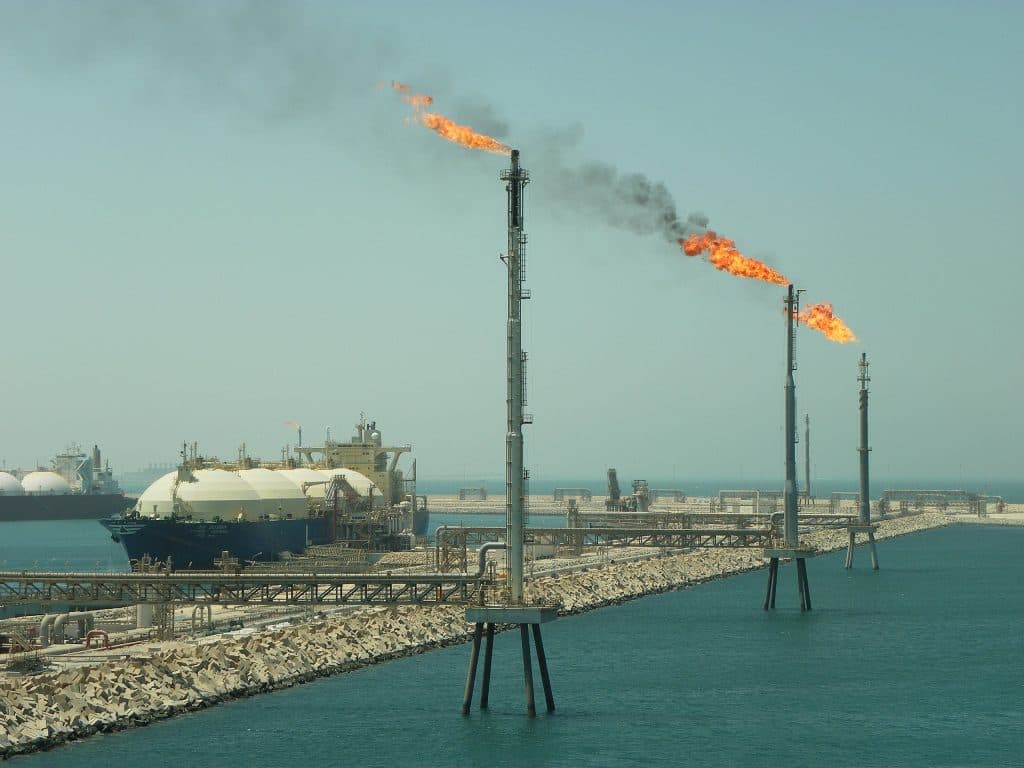
Ekonomický deník published an interview with Robert W. Howarth, who works at Cornell University, a member of the prestigious Ivy League (an elite group of private universities in the north-eastern United States). In this report, Howarth highlights the emissions footprint of liquefied natural gas (LNG) and compares it with that of other fossil energy sources.
The main problem with LNG is not the emissions produced when it is consumed, but above all the methane that escapes during its handling. Methane can leak during extraction and transport, and, in the case of LNG, during liquefaction and subsequent regasification. According to the Intergovernmental Panel on Climate Change (IPCC) of the United Nations, methane is responsible for around 30 per cent of all global warming observed since the mid-19th century.
Methane is the second most abundant anthropogenic greenhouse gas after carbon dioxide (CO2), accounting for around 16 per cent of global emissions. At the same time, it is more than 28 times as powerful as carbon dioxide at trapping heat in the atmosphere. The main problem with methane is therefore not its quantity, but its much greater impact on the climate.
Methane leaks are such a serious issue that the EU has approved another part of the Fit for 55 package, which specifically addresses methane emissions. This part is in line with the methane strategy presented back in 2020. The new regulation introduces a system for reporting methane emissions in the energy sector, which should be included in the emissions profile of each energy source. It will therefore be necessary to report how much methane was released during its extraction, processing and so on, which could become a particular problem for LNG in the future.
How LNG compares with conventional natural gas
Interest in emissions associated with LNG has been growing recently. In the US, President Biden even paused plans to build 16 LNG terminals. The pause was also prompted by a letter signed by more than 150 American scientists. It warns of possible methane emissions associated with LNG extraction and exports and calls for them to be examined further. The Biden administration has therefore decided to review the planned construction, although the US is already the world's largest LNG exporter.
The letter also refers to the study mentioned above, whose findings state that in some cases LNG can have up to 2.5 times the climate impact of, for example, coal extracted and burned locally over a 20-year period.
It is worth noting that the GWP (global warming potential) calculation, or PGO in Czech (potential for global warming), “compares the amount of heat trapped by a given mass of a particular gas with the amount of heat trapped by the same mass of carbon dioxide, and is expressed as a carbon dioxide equivalent (whose global warming potential is standardised at 1.” Under GWP20, methane therefore has a much greater impact on the climate than, for example, under the GWP100 calculation, which uses a 100-year time horizon, when its impact is significantly smaller.
A key assumption in the analysis is that tankers capable of burning LNG for propulsion do so, and effectively capture and use boil-off methane without any leaks. However, the authors of the analysis had only limited access to data on tankers used to transport LNG, with companies providing information mainly about newer vessels.
The analysis leads to a strong recommendation: ban the release of unburned methane from boil-off LNG on tankers and phase out older tankers that cannot capture and use boil-off methane. These older tankers, which burn heavy fuel oil, have a disproportionately large carbon footprint.
Howarth recommends moving away from LNG and halting the construction of new LNG infrastructure, a radical idea in today's rapidly expanding LNG market. It should be noted that the analysis examined only US LNG production, which has additional methane emissions because it comes from shale gas.
The study's findings have also faced criticism, particularly from the business community. It points to other studies that argue LNG still has a lower impact on global warming than, for example, coal. A debate is therefore currently underway across academia about emissions associated with LNG.
Translation disclaimer
This article is a machine translation of the Czech original and has not yet been fully reviewed. In case of any doubt, please refer to the Czech version.
Sdílejte článek prostřednictvím:
You might also like

28 October 2026, 13:08

28 October 2026, 11:10

28 October 2026, 09:08
