9 November 2026, 06:13
Loading...
Natural gas flows from EU to Ukraine strengthen, drawing western traders to spare underground storage capacity

Eduard Majling
10 August 2023, 06:29
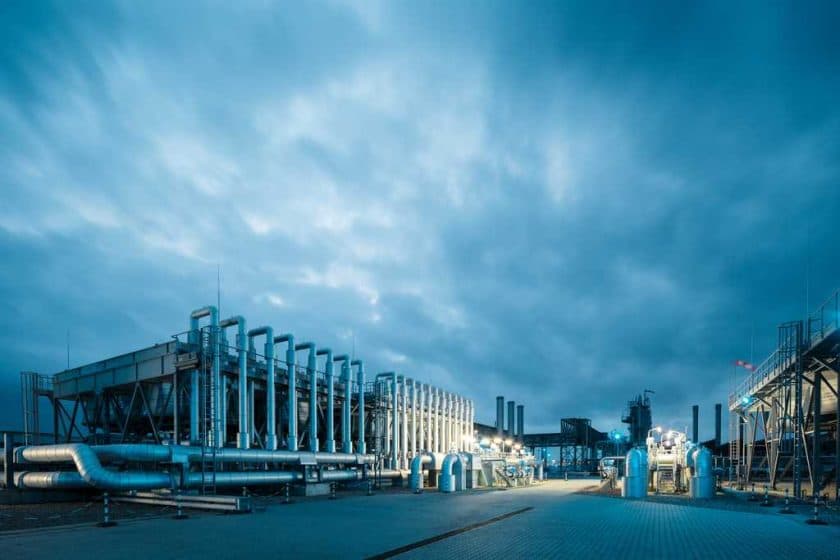
With European gas storage facilities at record levels, appetite is growing for spare storage capacity in Ukraine, which some European traders have begun using in recent months. Since the beginning of August, gas flows to Ukraine have increased further, primarily thanks to physical flows from Slovakia. Some traders used Ukrainian storage facilities last year, but for others, the level of risk may still be too high given the ongoing war.
Relatively mild weather last winter and strong natural gas supplies meant that European storage facilities remained unusually full at the end of the winter. Limited storage capacity is therefore one of the main reasons why short-term contracts are trading well below prices for next winter.
The price spread between short-term contracts and the following winter at the Dutch trading hub TTF has recently typically ranged from 15 to 20 EUR/MWh, which should be enough to cover the costs of transporting gas to Ukraine and the risks of storing it there. Given the risk that storage facilities elsewhere in Europe could fill up prematurely, potentially leading to a short-term collapse in spot prices before the start of the heating season, it is no surprise that Ukrainian gas storage facilities are already being used.
“EP Commodities transports natural gas to Ukraine and uses Ukrainian gas storage facilities. We believe in the reliability of Ukraine’s gas transmission system and its storage facilities, which have proved their worth even in such an extremely difficult wartime situation,”EP Commodities chairman Miroslav Hasko told Reuters.
While some companies are already actively using Ukrainian storage facilities, others are actively exploring this option. For others, however, the level of risk may be too high.
“We consider gas storage in Ukraine one of the interesting business opportunities we are currently evaluating,” representatives of Slovak state-owned company SPP told Reuters, adding that Slovak gas storage facilities are already more than 90% full.“Imagine a well-aimed missile hitting a compressor station or other infrastructure. That is a risk you have to take,” MND’s head of trading, Martin Pich, said of the potential risks of storing gas in Ukraine, without providing further details about the company’s trading activities, including whether it might store gas in Ukraine.
Ukraine has previously offered European traders up to 10 billion cubic metres of storage capacity, as the country has long had excess capacity in its storage facilities. “We are seeing a positive trend in foreign traders injecting gas into our storage facilities,” Ukrainian state-owned company Ukrtransgas said.
Gas flows from Slovakia increase significantly
Increased activity in gas storage in Ukraine is particularly evident in higher gas flows to Ukraine from Slovakia. The first virtual reverse flow through the Velké Kapušany interconnection point on the Slovak-Ukrainian border began appearing in June and continued to grow in July. Since the beginning of August, however, gas has also been flowing physically from Slovakia to Ukraine through the Budince point—with more than 180 GWh per day, this is the strongest flow through the point since summer 2020.
Translation disclaimer
This article is a machine translation of the Czech original and has not yet been fully reviewed. In case of any doubt, please refer to the Czech version.
Sdílejte článek prostřednictvím:
You might also like

8 November 2026, 20:02

8 November 2026, 13:59

8 November 2026, 08:10