23 October 2026, 14:38
Loading...
Nord Stream 2: ‘Sea storm’ subsides, battle now shifts to land in Czechia
Jan Žižka
5 July 2016, 19:20
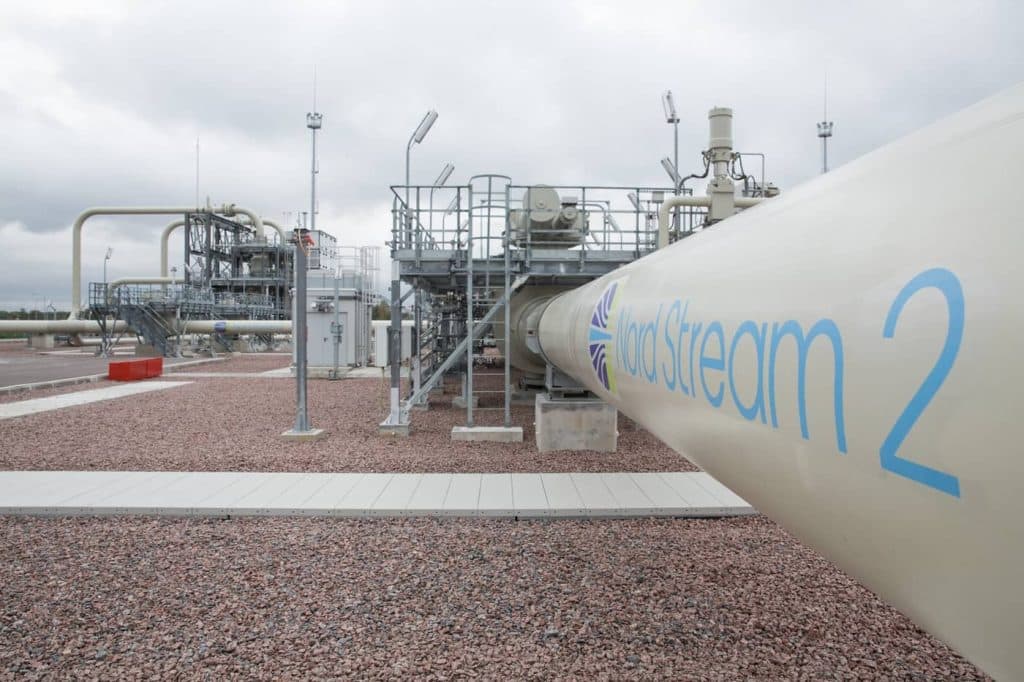
Anyone hoping that the Nord Stream 2 subsea gas pipeline would ultimately not be built has much greater reason for scepticism after Brexit.
German Finance Minister Wolfgang Schäuble said: If the European Commission does not address the problems, we must take matters into our own hands. By “we”, he means the member states. But everyone understands that Berlin is to play the leading role.
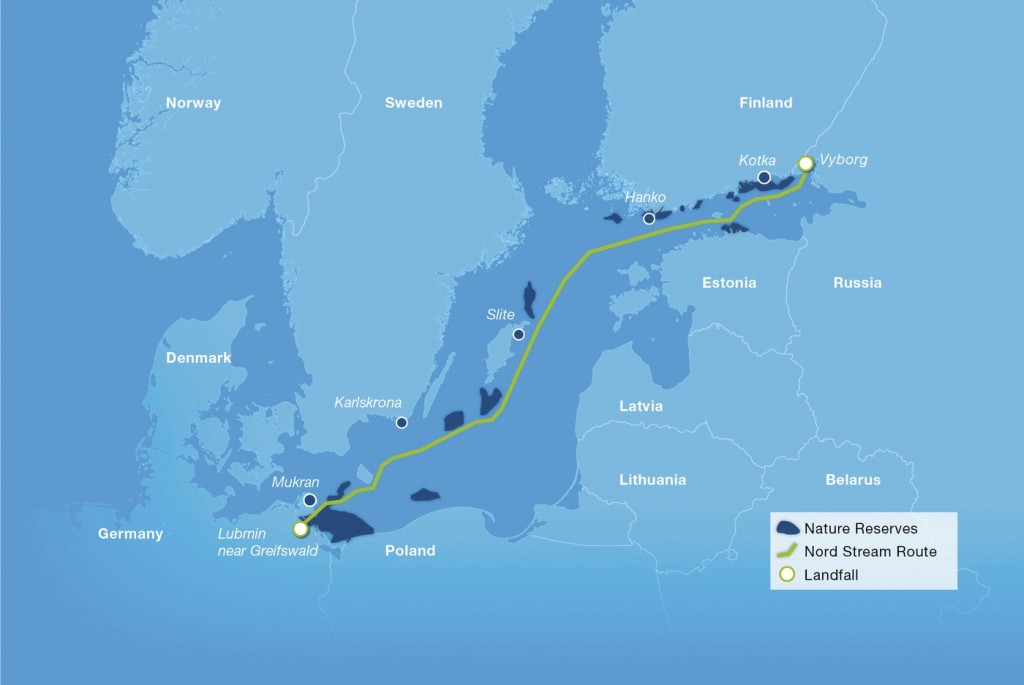
Schäuble’s statement is only seemingly unrelated to the Nord Stream 2 pipeline, which will directly connect Russia and Germany beneath the Baltic Sea. In reality, it shows that Berlin feels strong enough to see projects of this kind through to completion. Doubts voiced by the European Commission are playing an ever smaller role.
Much suggests that even before Brexit, many Europeans had begun to regard the construction of Nord Stream 2 as a highly likely outcome. Although some of them officially protested strongly against it, in reality they were already discussing how to live with the pipeline going forward. There also appears to be growing conviction that relying on transit through an ever-unreliable Ukraine offers no certainty.
The main question today is not actually the subsea pipeline itself. It will probably be here within a few years. The major battle is over what the “continuation” of Nord Stream 2 on land will look like – in other words, which pipelines will carry this strategic commodity onwards. Nobody wants to lose out.
Realism from Germany and Russia?
The chances of building the new pipeline, which is intended to double Nord Stream’s existing capacity to 110 billion cubic metres, are increased by the realistic stance of the German government, which is offering a compromise: gas transit through Ukraine must be retained to a certain extent, while the interests of Central and Eastern Europe must also be respected.
In recent times, Russia’s Gazprom has taken a similarly realistic approach – perhaps also under German influence. It is trying to offer various “incentives” to individual European countries. And it argues fairly credibly that, at a time of declining gas production in the EU (particularly in its north-western part), “Nord Stream 2” makes economic sense as the most advantageous link between Europe and gas fields in Yamal.
Nevertheless, it is clear that the “battle over pipelines on land” will remain tough. Gazprom executives speak of maintaining Ukrainian transit at 10-15 billion cubic metres per year, while calls from the EU are for a substantially higher level of at least 30-40 billion.
Reaching an agreement with individual EU countries that may connect to Nord Stream 2 in one way or another will be equally difficult.
Slovak brake, Polish gas
For a long time, Slovakia was the main instigator of protests against Nord Stream 2. That perception is changing, with Poland increasingly coming to the fore, although it too has in fact taken a hard line against the planned pipeline in the past.
There are two explanations for why the Slovaks have nevertheless eased off. Bratislava took over the presidency of the European Union in July, meaning its own interests must now take somewhat of a back seat. But the second reason may be far more fundamental – Slovakia is receiving assurances that it will remain a transit country after Nord Stream 2 is built and will not stop earning money from gas transport.
The Russians are signalling that they have reached an agreement with Bratislava, though the Slovak side is more cautious in its statements. The fact remains that a large share of Nord Stream 2 capacity could pass through the territory of both former Czechoslovak republics.
If this involves only transit from Lanžhot on the Czech-Slovak border across Slovak territory to the Austrian gas hub at Baumgarten, it will be a much shorter route than if gas travelled from the Ukrainian-Slovak border. Even so, the Slovaks need not lose out.
The Slovak pipeline operator Eustream will collect a significant share of the fees at the entry and exit points on the Czech and Austrian borders. Transit to Hungary and, ideally, onwards to the Balkans is also under consideration.
It should be recalled that Eustream’s shareholders – the Slovak state and Energetický a průmyslový holding (EPH), led by businessman Daniel Křetínský – have long advocated the Eastring pipeline project, which would run from Slovakia to the Bulgarian-Turkish border.
Czechia in the game
One way or another, if Slovakia earns money from gas transit from west to east, the same will apply to Czechia. Here, however, a somewhat different battle is traditionally under way.
Strengthening reverse gas flows (compared with the traditional east-to-west route of past decades) will require further investment by pipeline operator Net4Gas. However, it is controlled by private financial investors from Germany’s Allianz group and Canada’s Borealis fund. In the past, they faced criticism – particularly from the Czech Energy Regulatory Office – for seeking in similar situations to pass as large a share as possible of the costs onto Czech consumers. Things could therefore become lively on this “front” as well.
It must be added, however, that neither the Slovaks nor the Czechs hold all the trump cards in international negotiations. Other routes are also in play that could bypass former Czechoslovakia – particularly as a significant share of the gas is expected to head onwards to Italy, including from Austria’s Baumgarten.
Poles no longer want a contract
While the economic benefits of connecting to Nord Stream 2 are discussed fairly extensively in Czechia – albeit somewhat discreetly – persuading the Poles of anything similar is far more difficult, if not entirely impossible. Poland’s position combines its traditionally sharp anti-Russian edge with a degree of pragmatism.
All efforts to find alternative sources and routes in Poland – whether the LNG terminal in Świnoujście, attempts to produce domestic shale gas or a subsea pipeline connection with Norway – have in fact always been linked to efforts to push Russia’s Gazprom towards more favourable pricing terms.
Such an approach makes sense: prices that Poles had to pay the Russians were higher in the past than elsewhere. This was precisely because they had no genuine alternative available.
Warsaw’s current stance following the accession of the Law and Justice party to government nevertheless appears even more radical than before. Government plenipotentiary for strategic energy infrastructure Piotr Naimski said that Warsaw no longer wants to conclude any long-term contract with Gazprom. However, he does not rule out buying Russian gas on the spot market if it is economically advantageous.
Meanwhile, Gazprom deputy chairman of the management committee Alexander Medvedev said that the Poles had in fact already expressed interest in part of the gas from Nord Stream 2. Poland firmly denied this information.
The Balkan route
Potential directions for further compromises were outlined at the end of June by Klaus-Dieter Borchardt, the European Commission’s director for the internal energy market. Opposition to Nord Stream 2 could be eased, he said, if a new regional gas hub were created in the Balkans to serve as a gas supply centre for south-east Europe.
The Balkans have so far been most at risk whenever the taps on the Ukrainian transit pipeline were turned off. Gas could theoretically also reach Bulgaria from Nord Stream 2, but its price would probably rise to unacceptable levels after a long journey through a number of countries.
In any case, the Balkans – and Bulgaria in particular among the EU countries there – need diversification. This is, incidentally, another argument for the aforementioned Eastring pipeline.
It is symbolic that Borchardt presented his position at an event organised in Brussels by Italian company ENI. The Italians were previously regarded as Central and Eastern Europe’s biggest allies in the fight against Nord Stream 2. In their case too, however, this is likely to be about strengthening their own negotiating position. The Russians have already indicated, for example, that Italian company Saipem could win a major contract in the pipeline’s construction.
The author works as a consultant and energy project specialist at the HATcom agency.
Translation disclaimer
This article is a machine translation of the Czech original and has not yet been fully reviewed. In case of any doubt, please refer to the Czech version.
Sdílejte článek prostřednictvím:
You might also like

23 October 2026, 11:01
23 October 2026, 06:34