Overwhelming majority of gas imported late in the year flowed into Czechia from the east

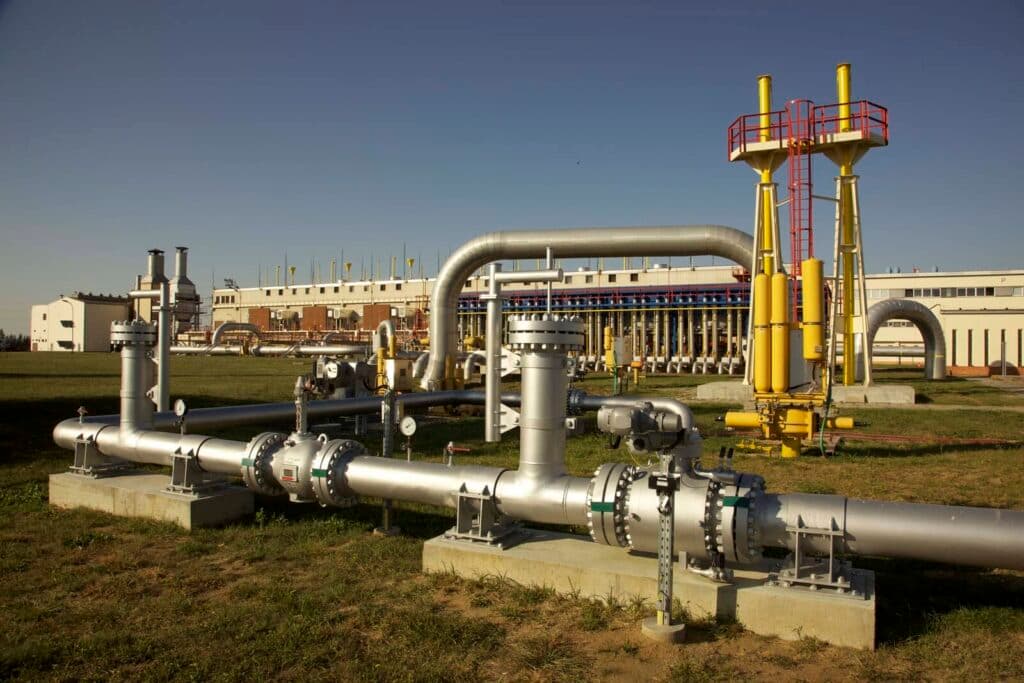
The overwhelming majority of gas imported into Czechia at the end of this year flowed from the east, primarily from Russia. While most supplies to the Czech Republic came from the west for much of the year, deliveries from Slovakia surged from the start of November, accounting for around 95 percent over the past two months. Experts say that much of the gas flowing from there is Russian. This is according to transmission statistics from Net4Gas, which the Czech News Agency (ČTK) has obtained. Czech gas storage facilities are currently 65 percent full, less than at the same time last year.
The trend from the previous month, when the share of supplies from the east rose sharply, has continued in December. According to Trinity Bank economist Lukáš Kovanda, gas imports from Russia to the Czech Republic have increased by around 530 percent year on year.
Analysts say the main reason is that Russian gas is currently cheaper on the market, while transit fees make imports via Germany more expensive. Germany is expected to abolish the fees from next year; its Bundestag approved the move ten days ago. The gas transit fee was introduced in 2022 and currently stands at 2.5 euros per megawatt-hour.
Industry and Trade Minister Lukáš Vlček (STAN) has already said that he expects Czech traders to buy more gas from the west again once Germany abolishes its gas transit fee. The minister has repeatedly stressed that the Czech Republic is no longer dependent on Russian gas, as it has secured supplies from Norway and liquefied natural gas (LNG) from a terminal in the Netherlands. Gas supplies should therefore not be at risk even if the transit of the commodity through Ukraine is halted.
Experts also expect supplies from the west to increase. „Abolishing the obligation to pay the fee will automatically reduce the cost of importing gas via Germany by approximately seven percent. This will make buying gas on the European market or importing LNG or Norwegian gas directly more attractive to traders than supplies of Russian gas,“ said Michal Kocůrek, managing partner of consulting firm EGÚ Brno. However, analysts say this will not significantly affect gas prices in the Czech Republic.
According to Net4Gas statistics, this year the share of gas transported from individual sources has changed fairly regularly from day to day. Until November, the overall split was 55 percent of gas supplies from Germany and about 45 percent from Slovakia. Over the past two months, however, the balance has shifted completely, with 95 percent coming from the eastern route. „Although the origin of the gas cannot be determined with certainty, there is a high degree of confidence that it is Russian gas,“ said Jiří Tyleček, an analyst at XTB.
According to Friday’s data from the Ministry of Industry and Trade, Czech gas storage facilities are 65 percent full. They contain more than 2,27 billion cubic metres of gas, less than at the same time last year. At that point, the facilities held more than three billion cubic metres of gas and were 88 percent full.
Translation disclaimer
This article is a machine translation of the Czech original and has not yet been fully reviewed. In case of any doubt, please refer to the Czech version.