Record volumes of gas flowed to US LNG export terminals at year-end

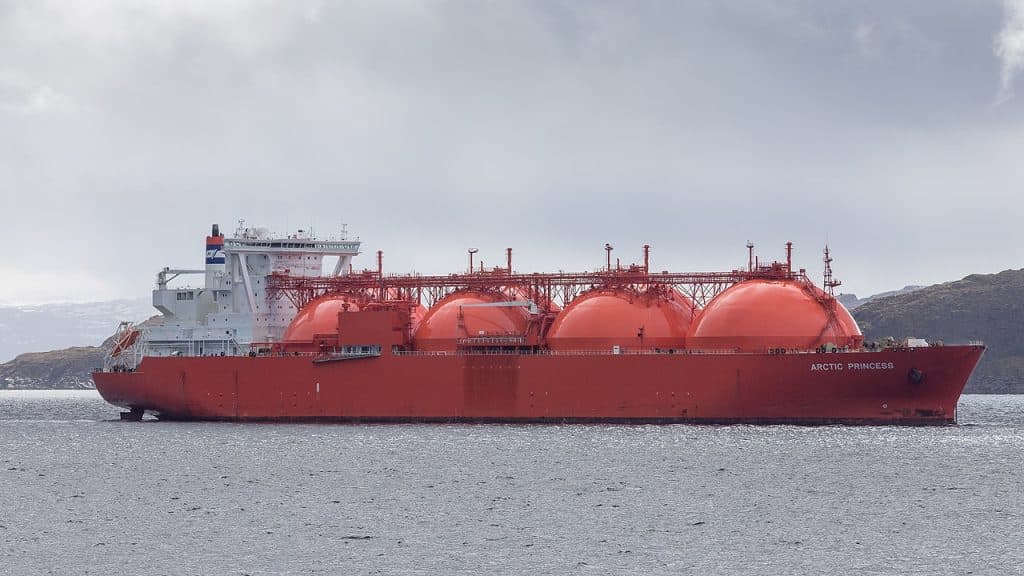
The global liquefied natural gas (LNG) market has become more important to European markets in recent years than ever before. With Russian gas supplies to Europe declining—a trend accelerated by the halt in gas transit through Ukraine—Europe will rely even more on LNG imports. But alongside demand, supply is just as crucial to prices on the global market, and it is expected to keep growing. Export capacity is also set to expand further in the United States, where new liquefaction trains are gradually coming online. At the end of last year, a record volume of gas was flowing to US terminals.
LNG supplies have been crucial in recent years to meeting Europe’s energy demand. The United States has recently become the world’s largest LNG supplier, even though it exported no significant volumes before 2016. However, as domestic oil and gas production grew through hydraulic fracturing of shale formations, US gas exports began to rise sharply.
On Tuesday, the final day of last year, gas flows to US LNG terminals hit an all-time high, according to Reuters. Around 15.2 billion cubic feet of gas—roughly 430 million cubic metres—was flowing to US terminals. For comparison, Norway, Europe’s largest natural gas supplier, exports about 350 million cubic metres a day through pipelines at peak levels. However, in the case of LNG exports, some of the gas is typically consumed at terminals during liquefaction, with another portion used for transport.
US strengthens its position as the world’s largest LNG exporter
Demand from exporters in the US is expected to continue growing in the coming months and years as new terminals come online. According to Reuters, it could rise to as much as 17.8 billion cubic feet a day this year, an increase of 17%. Export growth will be driven by the new Plaquemines terminal and the addition of more trains at the Corpus Christi terminal. Together, these terminals are expected to export up to 30 million tonnes of LNG a year, or just over 40 billion cubic metres of gas.
In 2026, demand from US export terminals is expected to exceed 20 billion cubic feet a day, or roughly 570 million cubic metres. By the end of 2028, it is then expected to rise by a further fifth as more terminals come online.
Translation disclaimer
This article is a machine translation of the Czech original and has not yet been fully reviewed. In case of any doubt, please refer to the Czech version.




