
28 October 2026, 15:10
Loading...
The state and future of the EU LNG market

Jakub Malý
25 April 2024, 06:54
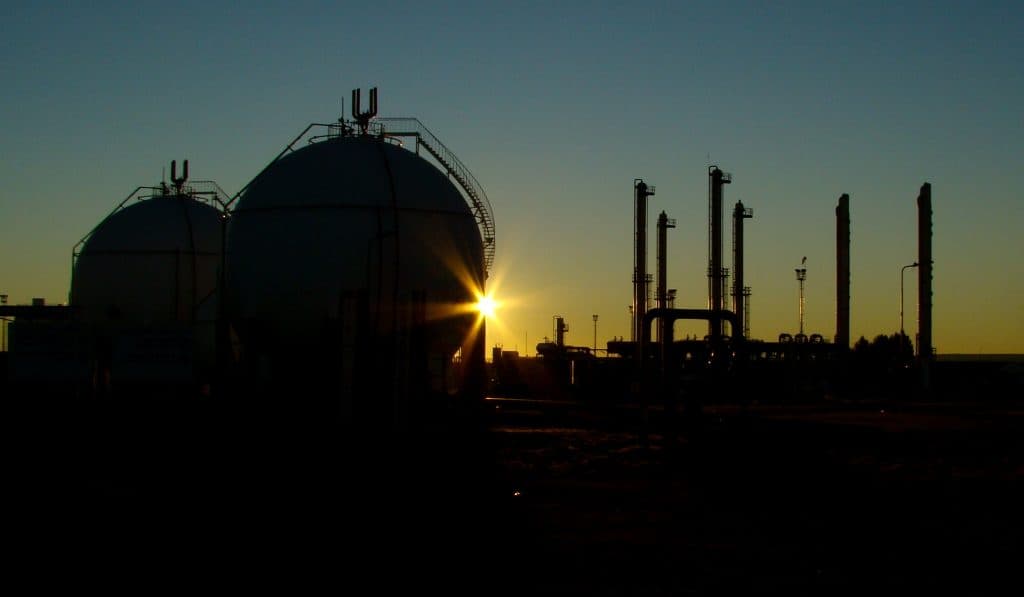
The Agency for the Cooperation of Energy Regulators (ACER) has published its first report on the state of the liquefied natural gas (LNG) market in the European Union. Following Russia’s invasion of Ukraine, Europe became the world’s largest LNG import market, overtaking traditional giants such as China and Japan. The United States also surpassed Qatar and Australia to become the world’s largest LNG exporter.
Since February 2022, the EU has seen significant growth in LNG import capacity, which has increased by 50 billion cubic metres (bcm) per year. Floating terminals account for 75% of this capacity; the Czech Republic has also secured supply capacity at a floating terminal.
In 2023, EU member states imported 134 bcm of LNG, accounting for 42% of total EU gas imports. LNG imports varied from country to country, with France the largest importer at 30 bcm, although some of that gas could also have been transported to other countries.

Diagram of the global liquefied natural gas market. Source: ACER
Future development of the LNG market
Production capacity is being expanded significantly in the global LNG market, with forecasts indicating growth of more than 200 million tonnes by 2030. This volume is equivalent to half of current annual LNG trade. The United States is leading this capacity expansion, which will not be affected in the near term by the recent pause in issuing new LNG export permits.
The targeted scenario for reducing gas demand under the REPowerEU plan, if achieved by 2030, could change the EU’s reliance on the LNG spot market. In 2023, 49 bcm was purchased outside long-term contracts, leaving buyers exposed to short-term market volatility. The situation could change between 2027 and 2030, when supplies under long-term contracts could exceed demand by 30 to 40 bcm. A surplus of long-term contracts should not pose a problem thanks to the flexibility of FOB (free-on-board) contracts, which allow surplus LNG to be sold on the spot market or redirected elsewhere.
Fundamental market factors continue to support a downward price trend, with gas prices returning to pre-invasion levels in the first quarter of 2024. Against this backdrop, the Agency for the Cooperation of Energy Regulators (ACER) has issued a series of recommendations to further improve the efficiency and transparency of the LNG market:
- Improving operational flexibility: ACER calls on LNG system operators to optimise operational flexibility for terminal users, ensuring smooth and efficient operations.
- Allocating capacity on a market basis: Regulators are encouraged to prioritise market-based mechanisms for allocating capacity, such as auctions, particularly during periods when demand is high and exceeds available capacity.
- Improving transparency: ACER supports regular reporting by LNG system operators to improve transparency and regulatory oversight, helping to build confidence and improve efficiency in the LNG market.
The EU’s coordinated efforts to build new LNG capacity, combined with the transformative impact of the REPowerEU plan, play a key role in strengthening Europe’s energy resilience amid geopolitical uncertainty. The EU’s ability to switch from Russian gas to LNG supplies in a short time, and the rapid development of the global LNG market, are things many experts would have said were practically impossible before Russia’s invasion of Ukraine. Further development of this market remains crucial to diversifying supplies and strengthening the EU’s energy security.
Translation disclaimer
This article is a machine translation of the Czech original and has not yet been fully reviewed. In case of any doubt, please refer to the Czech version.
Sdílejte článek prostřednictvím:
You might also like

28 October 2026, 13:08

28 October 2026, 11:10

28 October 2026, 09:08
