14 October 2026, 18:45
Loading...
Ukraine faces critically low gas stocks for next winter
Veronika Jurcová
16 July 2025, 06:43
Ukraine could face "critically low" gas stocks during the coming winter if it continues replenishing them at the current rate. It is therefore essential not only to speed up the filling of storage facilities, but also to boost domestic production and actively develop alternative energy sources that could help cover any supply shortfalls, reports Montel News.
Although gas stocks in Ukraine's underground storage facilities have risen from record lows of below 3% in May to 13% of capacity, they remain significantly below last year's level of 20% for the same period, according to data from Gas Infrastructure Europe. By comparison, gas storage facilities in the Czech Republic are currently almost 70% full.
At the current injection rate of around 582 GWh per day and imports of 300 GWh per day, Ukraine could fill its storage facilities to around 8.5 billion m³ of gas by 1 November, equivalent to 29% of total capacity.
Even this level would not be enough and would still be considered critically low.
Boosting production and seeking alternatives
One solution is to increase domestic production. Naftogaz announced last week that it had launched a new well with a daily capacity of 0.38 million m³.
However, production growth remains slow—in 2024, output rose by just 2%, noted energy analyst and former head of Ukraine's gas transmission system operator GTSOU, Sergiy Makogon.
The gap between domestic production and consumption therefore remains around 2 billion m³. Last year, domestic production reached 19.1 billion m³, while consumption was estimated at 22 billion m³.
"The main potential for a significant increase in production lies in offshore fields in the Black Sea, but developing them will take years and could realistically begin only after the war ends," Makogon added.
In the short term, winter stocks could be jeopardised both by a prolonged cold spell and by possible wartime disruption—for example, Russian attacks on production infrastructure.
In April 2025, the European Bank for Reconstruction and Development (EBRD) provided state-owned Naftogaz with a loan of 270 million euros to secure emergency gas supplies for the next two heating seasons.
The loan, backed by a state guarantee, will be supplemented by a 139 million euro grant from Norway, financed through a special EBRD crisis fund.
Poland remains an important partner for gas imports. The transmission system operators of Poland and Ukraine announced in June plans to almost double gas transmission capacity between the two countries. The upgrade of the Hermanowice metering station near the Polish-Ukrainian border is expected to be completed around the turn of this year and next. Expanding the station is key to ensuring higher transmission capacity on a stable, long-term basis.
At the same time, Ukraine's transmission system operator GTSOU signed a memorandum of understanding with Italian company Snam aimed at strengthening links between the Ukrainian and Italian gas markets. The main areas of cooperation focus on analysing options for transporting liquefied natural gas (LNG) and pipeline gas between the two countries, including the possible use of Ukrainian gas storage facilities, establishing a platform for cooperation on network maintenance and setting up a research platform for the transport of renewable gases.
The recovery of Ukraine's energy sector is focused not only on repairing damaged infrastructure, but also on building a modern, decentralised and resilient system.
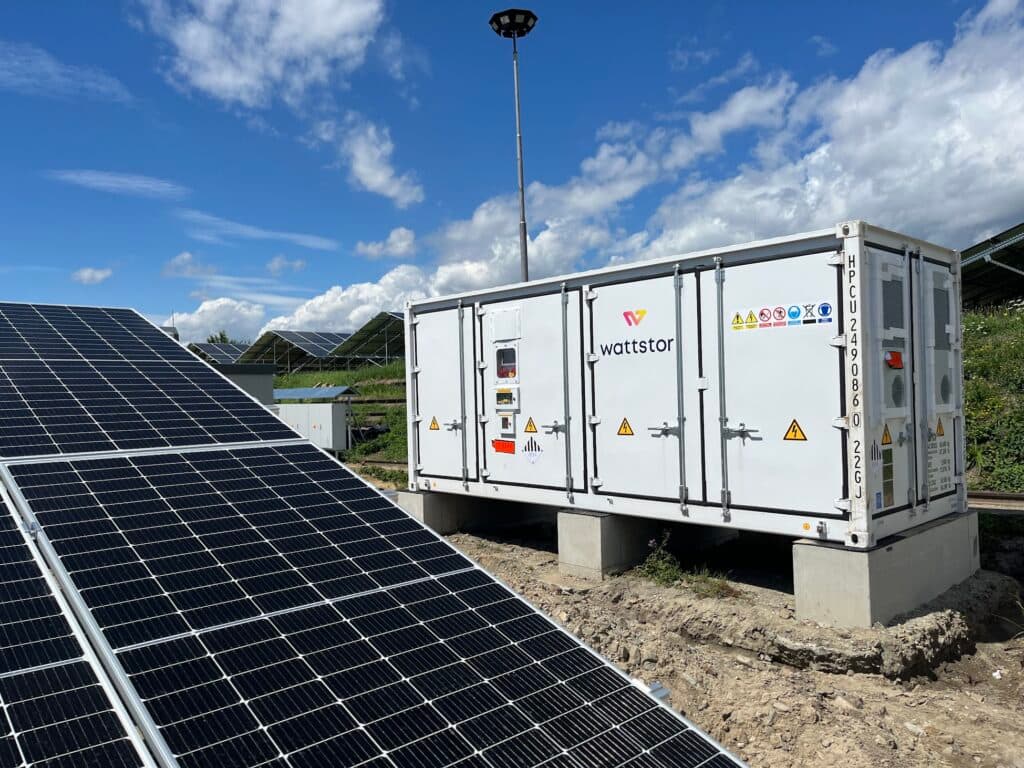
Battery storage is becoming an important element of energy security. The country's largest facility of this kind, with a capacity of 200 MW, recently began trial operations. The project by Ukrainian energy company DTEK, in cooperation with Fluence Energy Inc, comprises six facilities with capacities of 20–50 MW, which are now undergoing testing. Together, they contain 698 Fluence Gridstack battery units. Commercial operations are planned for October.
Whether and how Ukraine manages the coming heating season will depend above all on the weather and the intensity of Russian attacks on energy infrastructure.
Translation disclaimer
This article is a machine translation of the Czech original and has not yet been fully reviewed. In case of any doubt, please refer to the Czech version.
Sdílejte článek prostřednictvím:
You might also like
14 October 2026, 15:00
14 October 2026, 11:20
14 October 2026, 09:58