14 October 2026, 11:20
Loading...
EU faces a challenging summit in Brussels: energy prices, budget and pressure on Russia

oEnergetice.cz, ČTK
14 October 2026, 09:58
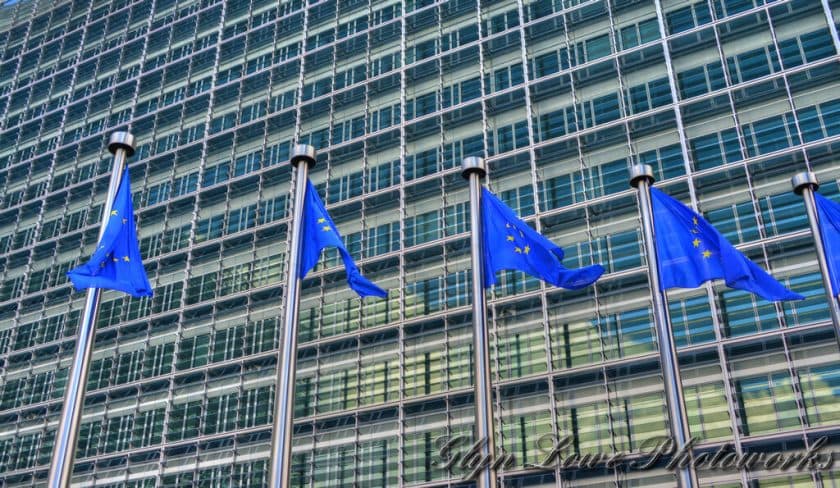
Brussels, 14 October (CTK correspondent) - At the two-day European Union summit beginning in Brussels on Thursday, the leaders of member states will discuss the EU's competitiveness, high energy prices, the next long-term EU budget, the situation in Ukraine, Russian hybrid threats and migration. Andrej Babiš will represent the Czech Republic.
The Czech prime minister will arrive in the Belgian capital this afternoon. In Brussels, he will attend a meeting of the European Parliament's Patriots for Europe group, of which his governing ANO party is also a member. A meeting of the leaders of the Visegrad Group (the Czech Republic, Slovakia, Poland and Hungary) will also take place. On Thursday, before the summit, Babiš is due to attend a meeting of the Friends of Cohesion, a group of countries advocating the preservation of a strong cohesion policy in the EU's multiannual budget. On Friday, before the meeting, the Czech prime minister will take part in the so-called migration breakfast, an event for countries that share similar positions on tightening EU migration policy.
The meeting will begin at 10:00 CEST on Thursday and, according to CTK sources, will be very demanding and lengthy given the number of topics. According to the preliminary programme, it is due to end on Friday afternoon. The first item will be competitiveness and energy prices. In a letter inviting the leaders a few days ago, European Council President António Costa stressed that the summit would address the issues of greatest concern to EU citizens: affordability, security and stability.
"In the short term, we need to provide the European Commission with guidance on targeted and temporary measures to mitigate the impact of high energy prices on our citizens and businesses, while continuing our strategy of reducing Europe's dependence on fossil fuels," the head of the EU summits said.
According to the draft conclusions, the European Council is expected to call on the European Commission to present further short-term measures to tackle the sharp rise in energy prices.
The Czech prime minister is one of the leading critics of the ETS emissions trading system and is calling for it to be revised. The European Commission has already proposed several changes, but representatives of the Czech government say they are still insufficient. Italy takes a similar position to the Czech Republic, and the two countries want to discuss the issue at the summit. One paragraph of the draft summit conclusions also addresses emissions allowances.
"In the context of the ongoing review of the EU Emissions Trading System (ETS), the European Council stresses the need to ensure a well-functioning, transparent and predictable carbon market, support the competitiveness of European industry, provide effective protection against carbon leakage and preserve the ETS's essential role in the climate and energy transition," the text says; it may still be changed.
According to CTK sources, the Czech Republic has an issue with this wording and would like to expand it.
Carbon leakage occurs when companies move production from the EU to countries with less stringent climate rules and lower costs for reducing emissions.
Over lunch on Thursday, EU leaders will discuss global macroeconomic imbalances, particularly in relation to China. France and Germany recently proposed that the European Union strengthen its position by introducing a new trade measure. This could be activated quickly to respond to actions by countries that harm the EU economically. According to the Financial Times (FT), the instrument would make it possible to immediately restrict access to the EU single market if necessary. European Commissioner for Trade Maroš Šefčovič visited China last week and subsequently announced that China had agreed to limit the flow of hybrid and plug-in hybrid cars onto the European market.
The afternoon session will focus on a new proposal for the EU's long-term budget. Over the weekend, the Irish presidency proposed reducing the EU's next seven-year budget to 1,622 trillion euros (about 39.5 trillion Kč), according to the relevant document. Last July, the European Commission proposed a budget of 1,763 trillion euros (about 42.9 trillion Kč), also in 2025 prices. The Irish proposal is therefore about eight per cent lower than the Commission's original proposal.
Sweden was among the first to react to the new proposal, calling it unacceptable. German Chancellor Friedrich Merz later expressed a similar view, saying the cuts were insufficient. Sweden, along with Germany, the Netherlands and Austria, is a net contributor to the EU budget; these countries had called for cuts of several hundred billion euros.
By contrast, a group of 17 countries known as the Friends of Cohesion opposes budget cuts. Its members include Italy, Spain, Poland and the Czech Republic. The President of the European Council hopes a budget agreement can be reached by the end of this year. According to CTK sources, no major progress is expected at this summit. More significant will be the extraordinary EU summit planned for November, followed by the December summit, which could last several days.
The final topic of discussion on the first day of the EU summit will be enlargement of the European Union and its possible implications, over dinner.
On Friday, the European Council is again due to begin at 10:00 CEST, with presidents and prime ministers first discussing the situation in Ukraine. Costa has invited Ukrainian President Volodymyr Zelenskyy. He is expected to attend in person, although officials have not yet officially confirmed this for security reasons.
The summit is expected to discuss further increasing pressure on Russia, as well as efforts to combat the so-called shadow fleet, which Moscow uses to secretly export oil and thus circumvent sanctions. The countries will also discuss Ukraine's further financial needs. Sweden, Poland, the Netherlands and Spain recently raised again the issue of using frozen Russian assets to help Kyiv in a letter to EU executive officials. Belgium, where most of these assets are held, has not changed its opposition to releasing them.
Leaders are also expected to discuss the actions of US President Donald Trump, who last week reached an agreement with Russian President Vladimir Putin on supplying more than 300.000 tonnes of Russian diesel to the US and global markets, with further deliveries to follow in the coming months. Trump's decision drew criticism in Ukraine and many other European countries. "The European Council regrets the decision by the United States to temporarily suspend sanctions on Russian diesel," reads the latest version of the conclusions, seen by CTK.
The final topics of Friday's meeting will be migration, followed by defence and security. The recent migration crisis in the Spanish exclave of Ceuta is expected to feature prominently in leaders' discussions.
Translation disclaimer
This article is a machine translation of the Czech original and has not yet been fully reviewed. In case of any doubt, please refer to the Czech version.
Sdílejte článek prostřednictvím:
You might also like
14 October 2026, 09:58

13 October 2026, 20:19
13 October 2026, 16:07