21 October 2026, 17:52
Loading...
Who will sideline Slovakia? Czechs will not be the main culprit
Jan Žižka
27 April 2016, 15:53
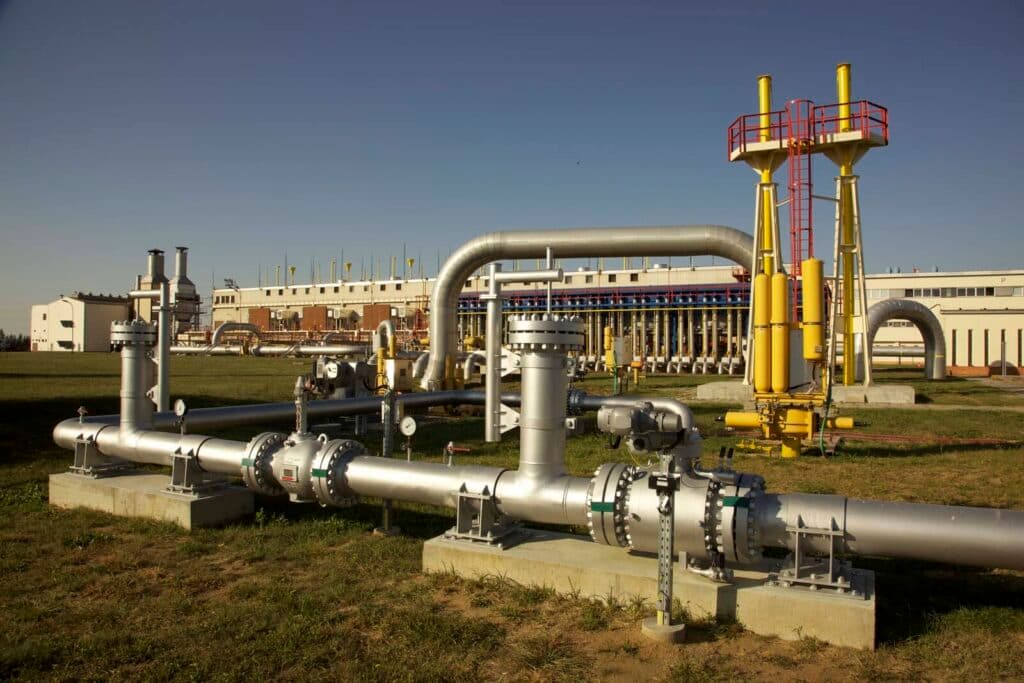
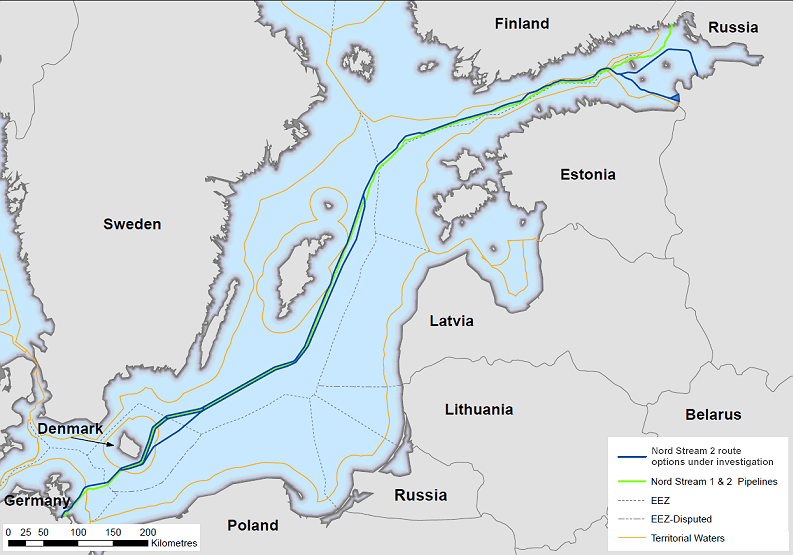
A strong warning has been coming from Bratislava for quite some time: Czechs could be involved in some kind of gas “conspiracy” against Slovakia. Slovak ambassador for energy security Pavol Hamžík recently revived these concerns in an interview with the daily Pravda. The interview headline was clear: Germany, Czechia and Austria want to sideline Slovakia. By jointly building a giant gas pipeline connected to the future offshore Nord Stream 2 route from Russia to Germany and bypassing Slovakia entirely.
One can speculate about the extent to which the headline was exaggerated. But the following sentence shows that Hamžík does not underestimate the perceived threat: “If they (the Czechs) were to betray us like this, what would all the declared closeness and cooperation between Slovakia and Czechia amount to?”
The OEnergetice website had previously pointed to a certain “clash” in talks between Prague and Bratislava at the end of last year. Slovaks were alarmed by the possibility that Czech gas pipeline operator Net4Gas (with foreign owners) could build a major interconnection with Austria in Czechia, through which up to 50 billion cubic metres of gas a year would flow from Nord Stream to the gas “hub” at Baumgarten.
Slovaks received assurances from the Czech side that nothing so “grandiose” was being planned and that the planned Czech-Austrian interconnection should not exceed a capacity of 5-6 billion cubic metres a year. That would still leave plenty for onward transit through Slovakia – whether to Baumgarten or further to the Balkans, for example.
What can the Czechs promise?
The question now is how strong and definitive such a Czech assurance can be. And whether Prague intends to play any active role in this game at all. Everything indicates that the Czechs will certainly not be the primary ones to sideline the Slovaks. On the other hand, it would also be questionable to assume that Slovaks can count on strong Czech support under all circumstances.
Above all, the decision on connecting Czech gas pipelines with Austria must be made by Net4Gas. The Czech state has no stake in the company – unlike Slovakia’s Eustream, in which Bratislava holds slightly more than half. Net4Gas is owned by financiers from German insurer Allianz and Canadian fund Borealis Infrastructure. However, the Germans will undoubtedly have the final say, and will most likely proceed in line with German proponents of building Nord Stream 2 and extending the pipeline through Czechia (and possibly Slovakia) further into Austria.
Within the Czech-Austrian gas pipeline interconnection, known by the acronym BACI (Bidirectional Austrian-Czech Interconnection), Austrians will bear the main burden of investment decisions. The planned length of the BACI route on Czech territory is only 12 kilometres. The Czech Energy Regulatory Office would only enter the picture if investors sought to pass part of BACI’s costs on to domestic consumers. The Czech state could theoretically throw various obstacles in the project’s way, but it cannot ban it.
The main conclusion is therefore as follows: if Russia, together with Germany and Austria, decides to sideline the Slovaks, Czech options for preventing it will be limited.
Are we on the Slovaks’ side?
But the question is also whether Czech interests are actually aligned with Slovak ones – starting with the view of the construction of the Nord Stream 2 gas pipeline itself. And here it is clear that views within Prague itself differ considerably.
First, there is the economic dimension. There is no doubt that building a pipeline with a huge capacity of up to 50 billion cubic metres a year would be an attractive financial opportunity for Czechia – after all, Net4Gas pays taxes in the country. Ambassador Hamžík is certainly right that “some people in Czechia have probably calculated that they will profit from it and do not care about the others.”
The political dimension is much more complex, which is why Czechia also “coldly” joined Slovakia and other eastern EU countries in their negative stance towards Nord Stream 2. Supporting the project looks absurd in light of Europe’s overall support for Ukraine. On the one hand, the European Union promises Kyiv economic assistance; on the other, it would support a gas pipeline that bypasses Ukraine and deprives it of transit revenue. Moreover, expanding Nord Stream means strengthening dependence on a single source and a single route for Russian gas.

However, there is another view. Many Czechs undoubtedly also realise that the Germans are not foolish to see Nord Stream 2 as a guarantee of stronger “energy security”. Interruptions to gas supplies via Ukraine in the past occurred because of disputes between Moscow and Kyiv. Naturally, nothing like that threatens the offshore Nord Stream route. Moreover, the conviction is growing in the West that Ukrainians themselves are to blame for the overall chaos in their country and cannot be relied upon. Regardless of how we assess this argument, it is certain to be reflected in Czech politics one way or another.
Will it turn out differently?
Despite all this, it may not turn out badly for the Slovaks after all. This is because, under Eustream’s current contract with Gazprom, Russia will pay for the agreed transit of gas through Slovakia for more than another ten years – even if it does not actually send a single cubic metre of gas there.
One theory says that the whole matter surrounding the possibility of creating a “giant” Czech-Austrian interconnection is intended to serve Gazprom as a strong bargaining chip in talks with the Slovaks over future prices. The fact is that not only the Russians, but all players try to use various similar trump cards when negotiating future gas flows. The more options – real and potential – a given participant in the negotiations has available for transporting gas, the better for them.
The above-mentioned Russian-Slovak commercial agreement nevertheless suggests that it will still make sense to reach an agreement with Bratislava. After all, it can be assumed that even Slovaks as opponents of Nord Stream 2 are realists who must take into account the highly likely prospect that the pipeline will be built. It would be strange if they were not already holding the relevant talks on what the Central European gas chessboard will look like afterwards. And it cannot be ruled out that, in the end, Austria and domestic Net4Gas will find it more worthwhile to route gas to Baumgarten via Slovakia rather than build new pipelines through Czechia.
The author works as a consultant and energy projects specialist for the HATcom agency.
Lead photo author: Alan Levine
Translation disclaimer
This article is a machine translation of the Czech original and has not yet been fully reviewed. In case of any doubt, please refer to the Czech version.
Sdílejte článek prostřednictvím:
You might also like
21 October 2026, 14:08
21 October 2026, 14:00