Will Europe turn to its own gas? New projects aim to rein in prices and import dependence
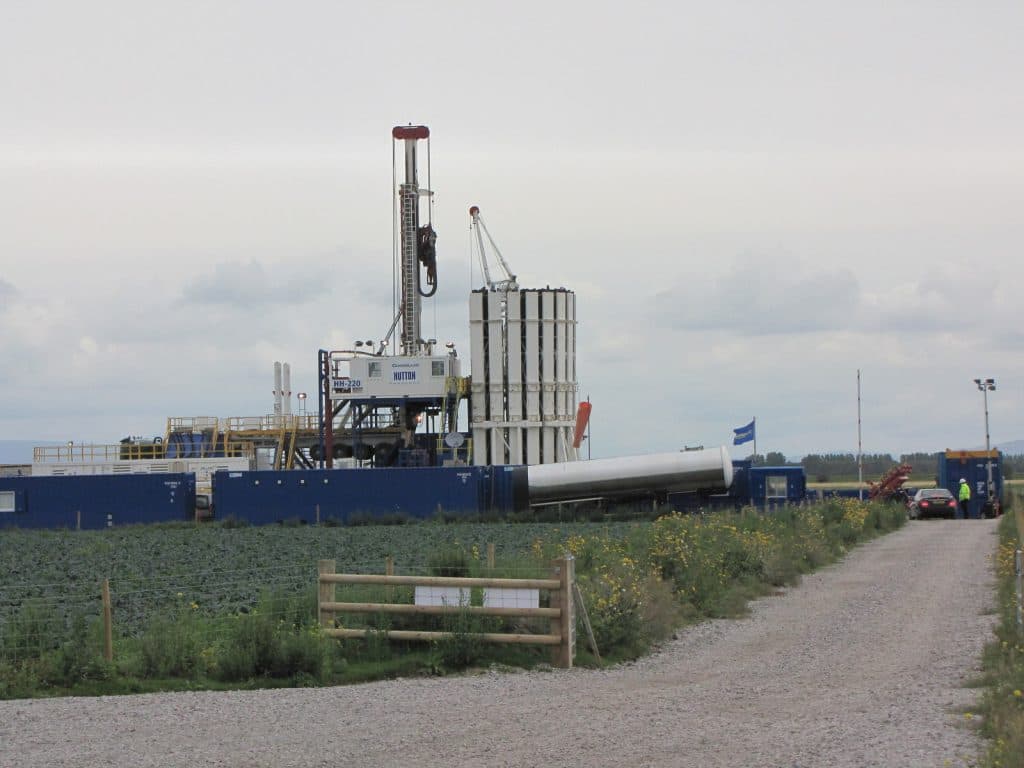
Natural gas prices are rising this year, the global LNG market is becoming less predictable, and the European Union is looking for its own answer. At an informal summit of energy ministers in Nicosia this May, a fundamental question was raised: can domestic gas production stabilise the European market? The answer may lie beneath the Black Sea, in the depths of the Ionian Sea or under the Cypriot shelf.
The European Union continues to face heightened uncertainty in the natural gas market. Natural gas in Europe is still trading at three to five times the price in the United States. Since 2022, the EU has significantly accelerated the diversification of its gas sources following restrictions on Russian gas imports to European markets. The bloc has managed to reduce its dependence on Russian gas from 45 % to approximately 12 %. However, this transformation has brought a new vulnerability: the EU has become heavily dependent on the global market for liquefied natural gas (LNG), whose volatility has deepened significantly as a result of conflicts in the Middle East.
Higher energy prices have already increased costs by an estimated 24 billion euros compared with energy commodity prices before the outbreak of the conflict in the Persian Gulf. At the informal meeting of energy ministers in Nicosia on 13 May 2026, the Cypriot Presidency of the Council of the EU raised a key question: what role can domestic gas resources play in making the European market more stable?
EU production potential and specific projects
Although the EU's climate ambitions remain a stated priority, an increasing number of member states are showing interest in expanding domestic natural gas production. A document for discussion at the meeting identifies several specific projects.
The most significant is Romania's Neptun Deep project in the Black Sea. It is Romania's largest deepwater gas project, being developed by OMV Petrom and Romgaz with a joint investment of up to 4 billion euros.
Recoverable reserves are estimated at approximately 100 billion cubic metres (bcm) of natural gas. Once it reaches full production capacity, the project could supply approximately 8 billion cubic metres of gas per year, with production expected to begin in 2027. Drilling began in March 2025, with work underway on ten planned wells.
In Greece, a consortium comprising ExxonMobil, Energean and HELLENiQ Energy is beginning exploration in the northwestern Ionian Sea.
This will be the first exploratory deepwater drilling in Greece since 1981. Block 2 is one of the largest unexplored offshore structures in the Mediterranean. Drilling is scheduled to begin in February 2027 using a modern deepwater drilling vessel operated by Stena Drilling.
Cyprus has significant, as-yet undeveloped natural gas deposits in the eastern Mediterranean. Geological estimates put the potential at around 324 bcm, equivalent to approximately one year's EU consumption at current demand levels. Italy is also considering restarting offshore projects suspended in 2019. Poland is developing research into the potential of the Baltic shelf.
The role of gas during the transition
Industry associations and the energy commissioner agree that natural gas will be a necessary part of Europe's energy mix in the short and medium term. Energy Commissioner Dan Jørgensen stated in March 2026 that the need to diversify gas sources had grown further in connection with the plan to completely phase out imports of Russian gas.
"Ensuring Europe's strategic autonomy will require a diversified energy mix, including domestic natural gas production alongside the accelerated expansion of both domestic and imported renewable and low-carbon gases, such as biomethane and hydrogen," said Andreas Guth, Secretary General of Eurogas.
Environmental organisations, by contrast, are calling for a binding annual target to reduce gas consumption by 7 %. The debate thus reflects a deeper dilemma in EU energy policy: how to ensure immediate security of supply without jeopardising long-term climate neutrality.
Translation disclaimer
This article is a machine translation of the Czech original and has not yet been fully reviewed. In case of any doubt, please refer to the Czech version.