
23 October 2026, 14:38
Loading...
Analysts divided on whether KHNP will ultimately build at Dukovany in Czechia

oEnergetice.cz, ČTK
5 June 2025, 11:42
Analysts approached by the Czech News Agency (CTK) disagree on whether, despite today’s signing of the contract, South Korea’s KHNP will ultimately build the new nuclear units at Dukovany. Datarun platform data economist Petr Bartoň believes there is still a significant chance the Koreans will not take part in the project after all, while Finlord analyst Boris Tomčiak considers it more likely that the contract will be carried out as agreed. Both experts told CTK this evening.
Elektrárna Dukovany II (EDU II) signed final contracts with KHNP this afternoon for the construction of two nuclear units at Dukovany. KHNP won last year’s nuclear tender, with the government preferring its bid to those from EDF and Westinghouse. The first new Dukovany unit is expected to be completed in 2036.
According to Bartoň, several factors could complicate what is the largest contract ever awarded in Czechia, despite the signing of the contract. The European Commission is currently investigating whether KHNP’s bid was illegally supported by the South Korean government. South Korea elected a new president this week, which could mean the country’s direction has changed since agreements on Dukovany were being drawn up between South Korea and Czechia, he said. The contract will also remain before the Regional Court in Brno, even after the Supreme Administrative Court’s ruling, he noted.

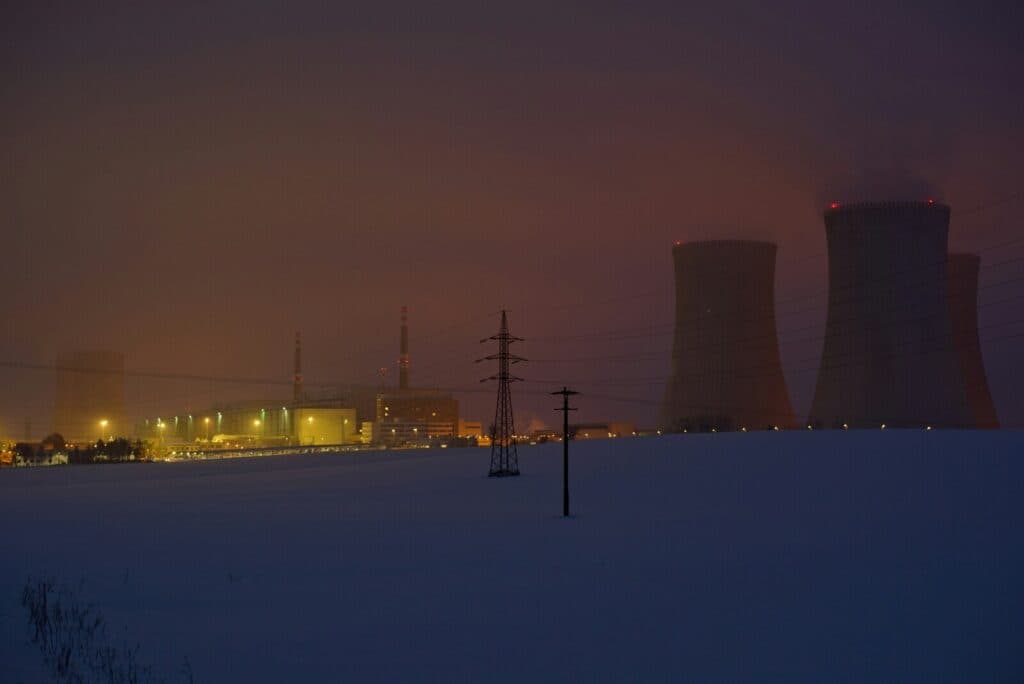
Illustrative photo
He said Czechia’s authorization from the European Union, without which the state cannot release public aid for construction, has also expired. “From leaked information, we know that unresolved technological aspects remain in the bid, for which the Korean side does not currently have the technology,” Bartoň added. In view of these factors, he considers today’s decision to sign the contract very bold.
Tomčiak, by contrast, believes the agreement with KHNP will ultimately go ahead under the signed terms. “The Czech government is willing to continue with the project. The whole case arose because of a lawsuit filed by EDF. The company can of course take the matter to court, but that is not in Czechia’s interest. Legal shortcomings have to be expected in projects of this scale. The important thing is to avoid delays to construction and unplanned cost increases. At the same time, it is important for the Czech energy sector to build additional capacity—not only generation sources, but also, for example, electricity storage,” he told CTK.
The two analysts also disagree in their assessment of South Korea’s new political direction. Tomčiak said the new South Korean president, Lee Jae-myung, is not planning major changes to the country’s economic direction, making it unlikely he will seek to change the contract for the supply of reactors. But Bartoň said that, in the past few hours, the Asian country had elected a president who opposes the expansion of conventional nuclear power plants around the world, even when they are built by South Korean companies. He also said it was unclear whether the state-owned South Korean company KHNP had managed to consult the contract signing with the new president. According to Bartoň, the new president is also opposed to large nuclear power plants and sees the future in small modular reactors instead.
Translation disclaimer
This article is a machine translation of the Czech original and has not yet been fully reviewed. In case of any doubt, please refer to the Czech version.
Sdílejte článek prostřednictvím:
You might also like


23 October 2026, 11:01


23 October 2026, 06:34