Belgian reactor Tihange 3 gets green light to restart and extend operations

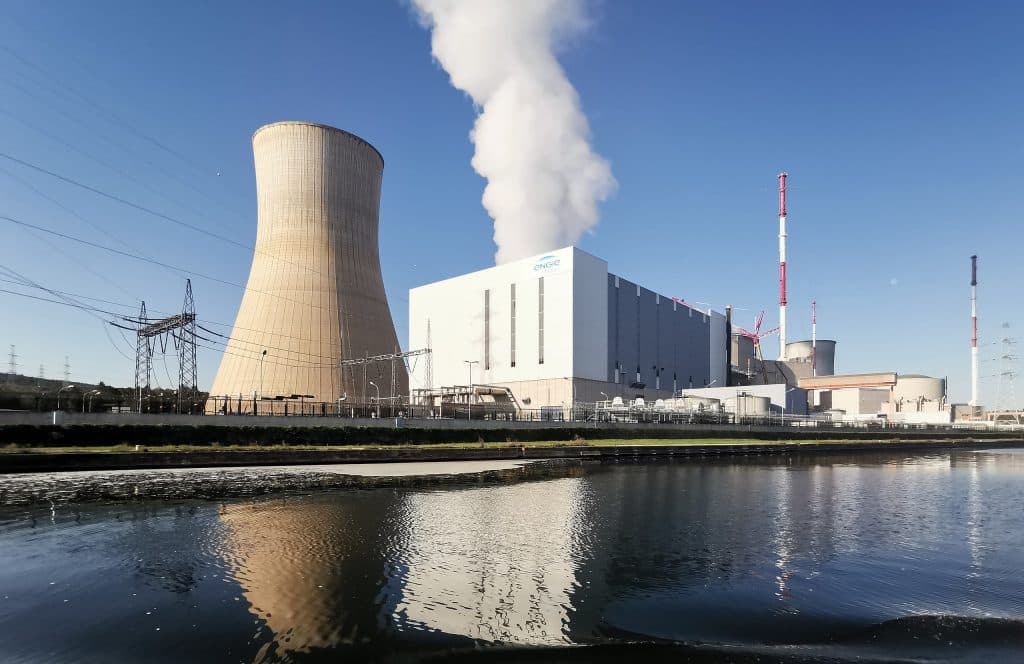
Belgium’s nuclear regulator has approved the restart of Unit 3 at the Tihange nuclear power plant after an outage of more than three months. During the outage, the unit underwent an extensive inspection and maintenance programme to ensure the conditions were in place for extending the technology’s service life by at least 10 years. All of Belgium’s nuclear units were originally due to cease operations this year, but the country revised its target following Russia’s invasion of Ukraine. In addition to Tihange 3, the extension of operations until at least 2035 also applies to Doel 4. Together, the two units have an installed capacity of more than 2 GW.
Belgium’s nuclear regulator (Federal Agency for Nuclear Control - FANC) announced that it had given the green light to restart the Tihange 3 nuclear unit. The 1046 MW PWR unit was taken offline by its operator at the beginning of April this year to prepare it for another 10 years of operation. To continue operating the unit, Electrabel, which runs the nuclear power plant, had to submit comprehensive documentation for long-term operation, including safety studies and an action plan for further improving safety.
"This documentation was submitted in December 2024 for both nuclear units, Doel 4 and Tihange 3. FANC also requested several changes to the action plan, including additional studies, clarification of certain action points and accelerated implementation of some of the planned measures. The action plan for Tihange 3 has since been completed and approved," the Belgian nuclear regulator said in a press release.
Tihange 3 can now generate electricity until 2035, on condition that the remaining measures in the action plan are completed within three years, by September 2028 at the latest.
Extending operating life beyond 2035
Belgium’s original plans called for all nuclear power sources to be shut down in 2035, under a 2003 law. The turning point came after the invasion of Ukraine in 2022, amid concerns about the country’s energy security and independence. The Belgian federal government soon reached an agreement with the operator to work together on extending the operating lives of Tihange 3 and Doel 4. In May this year, the Belgian parliament completely repealed the law on phasing out nuclear power, and there has also been talk of the possibility of building a new nuclear power source.
"FANC notes that preparations for continued operation took place under considerable time pressure as a result of delayed political decisions. FANC therefore calls for clarification during the current parliamentary term on the possible extension of operations at Doel 4 and Tihange 3 beyond 2035. This will allow the necessary safety analyses and preparatory steps to begin in good time," the nuclear regulator urged politicians.
Belgium had a total of 7 units with an installed capacity of nearly 6 GW at the Tihange and Doel nuclear power plants. The country shut down three nuclear units—Doel 1 and 3, along with Tihange 2—over the past three years. It plans to end operations at two more units, Doel 2 and Tihange 1, at the end of this year. The country’s installed nuclear capacity will thus fall to one-third.
The operator took Doel 4 offline at the end of June this year and expects to restart it in early November, subject to a positive opinion from FANC, as was the case with Tihange 3.
Translation disclaimer
This article is a machine translation of the Czech original and has not yet been fully reviewed. In case of any doubt, please refer to the Czech version.




