
23 October 2026, 14:38
Loading...
Budapest explores district heating from Paks nuclear power plant

Jiří Salavec
11 August 2026, 10:59
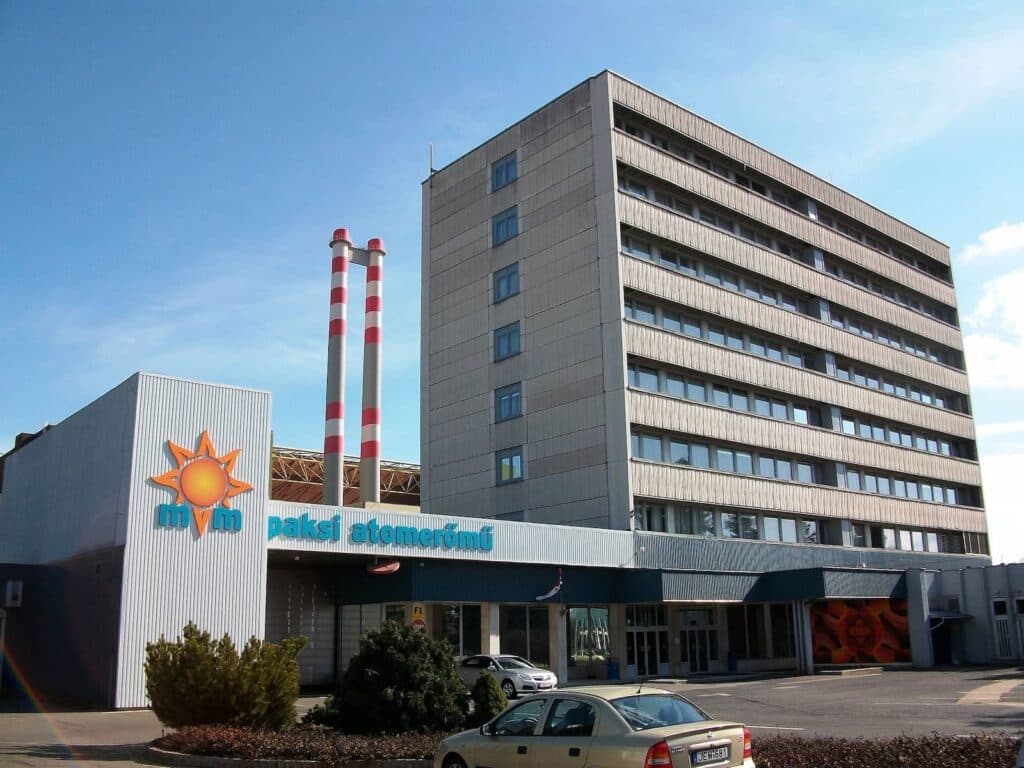
Hungary’s Paks nuclear power plant could in future supply heat to the capital. The city of Budapest has launched a feasibility study into a project to connect it to the plant via a roughly 125 km-long hot-water pipeline. The pipeline could help the plant, which relies on cooling water from the Danube, particularly during summer heatwaves. Last week, the plant completely halted operations for the first time in 44 years due to record-low water levels in the river.
Budapest Public Utilities (Budapesti Közművek - BKM) announced that it has launched a feasibility study on the city’s district heating system together with the Budapest University of Technology and Economics. The aim of the study is to examine the technical and economic conditions for supplying thermal energy from Hungary’s Paks nuclear power plant. The plant is located roughly 100 km from the capital. Heat demand in the metropolis’s current district heating system ranges from 100 MWt in summer to 1000 MWt at the winter peak.
“The investment could significantly reduce the thermal load on the Danube’s water and, in addition to a substantial reduction in CO₂ emissions, would further reduce the country’s dependence on natural gas imports,” BKM said in a press release.
The nuclear power plant currently supplies thermal energy to the nearby town of Paks. The issue of using waste heat for the capital is not new, but new technologies and the climate situation may favour implementation of the project in the near future. BKM expects that the new hot-water pipeline could follow the course of the Danube, which would facilitate both administrative and construction processes.
“District heating systems and industrial consumers near the route could also be connected to the heating supply between the Paks plant and Budapest, further improving energy and economic efficiency,” BKM added.
The future of nuclear power on the Danube
Hungary’s only nuclear power plant, Paks, currently has four VVER-440 reactors with a combined installed capacity of 1916 MWe. The current four units, commissioned between 1983 and 1987, are expected to generate electricity at least until the mid-2050s.
Two new VVER-1200 units will also be built at the Paks site, with Hungary starting construction this February. A source of thermal energy capable of supplying Budapest will therefore be available at Paks at least until the turn of the next century.
The plant relies on water from the adjacent Danube for cooling, which poses an operational risk amid rising summer temperatures. Last week, the plant had to be completely shut down after the river’s water level reached record lows.
Using thermal energy in Budapest could partly help the plant in such a situation. District heating is also used by the Czech Temelín nuclear power plant, which has supplied heat to České Budějovice since 2023. Construction of a hot-water pipeline from the Dukovany nuclear power plant to Brno is due to begin next year.
Translation disclaimer
This article is a machine translation of the Czech original and has not yet been fully reviewed. In case of any doubt, please refer to the Czech version.
Sdílejte článek prostřednictvím:
You might also like
23 October 2026, 11:01

23 October 2026, 06:34