
23 October 2026, 14:38
Loading...
ČEZ plans to double spent nuclear fuel storage capacity at the Temelín plant in Czechia

oEnergetice.cz, ČTK
6 February 2025, 18:09
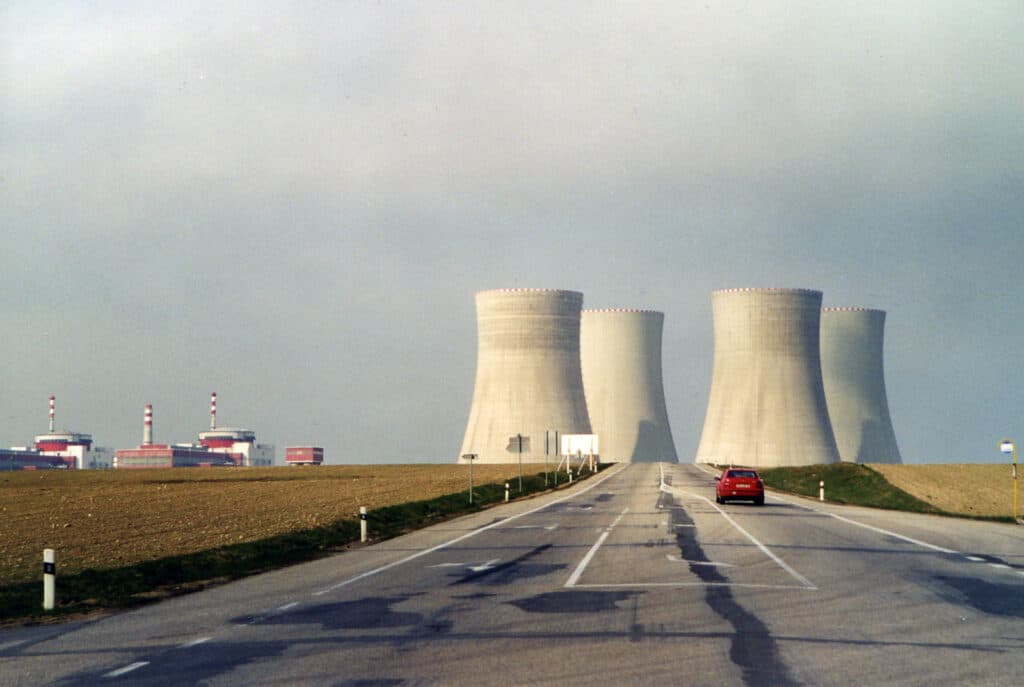
ČEZ ČEZ plans to double the capacity of the spent nuclear fuel storage facility at the Temelín power plant. Its current capacity is 1370 tonnes; it is currently less than half full and is expected to reach capacity in the second half of the 2030s. The construction is subject to an environmental impact assessment (EIA), which is expected to take place this year, Marek Sviták, spokesperson for the Temelín nuclear power plant, told the Czech News Agency (ČTK). ČEZ expects construction to begin in 2029 and be completed in 2034.
„In practice, this is an expansion of a storage facility that has been operating at the power plant site for more than ten years. We planned from the outset to increase its capacity in line with the plant’s operation, which is why the original project was designed to allow for expansion. The facility’s operation to date has confirmed that it has had no impact on the surrounding area,” Sviták said. The project is still at an early stage, and the company has not disclosed the investment amount.
The future capacity will therefore be doubled, allowing 2740 tonnes of spent nuclear fuel to be stored in 304 storage casks. This should be sufficient for 60 years of operation of the two units at the Temelín power plant. According to the documentation, the two buildings were not constructed at the same time because the second building would otherwise have gone unused for 30 years.
The project is also subject to a transboundary assessment. In addition to Czech associations, Austrian organisations submitted comments, making more than 40 submissions. They called, for example, for the EIA process to explain which international requirements would govern the construction of the storage capacity and how long-term safety would be ensured. They also wanted additional tests to be included to guarantee the safety of the containers.
A consultation was held last week on the matter, attended by an Austrian delegation, ČEZ representatives, the EIA documentation team, representatives of the State Office for Nuclear Safety, and representatives of the ministries of industry and trade and the environment.
„The Austrian side was primarily interested in possible alternatives for storing spent nuclear fuel and alternative designs for the technical solution for the interim storage facility. Another topic of discussion was the type of storage facility and the storage casks, including their service life. Given the nature of the consultation, possible transboundary impacts were also discussed. All the topics and questions raised by representatives of the Republic of Austria were discussed and answered during the consultation,” Veronika Krejčí, spokesperson for the Ministry of the Environment, told the Czech News Agency.
The Czech organisation Calla – Association for the Preservation of the Environment wanted to know how resistant the facility would be to external impacts, such as a plane crash or gunfire. „The project notice merely mentions that it should withstand the crash of a design-basis aircraft, but this is not described anywhere,” said the association’s energy consultant Edvard Sequens. It also wanted to know how the storage casks for spent nuclear fuel, or their contaminated parts, would be handled, and whether containers for reprocessing spent fuel would be stored there.
ČEZ supplemented its responses to the submissions. For example, in the event of a plane crash, it is using a Boeing B747-400 aircraft as the reference, as it did in the analysis for the construction of the first storage facility. The construction of the spent nuclear fuel storage facility will now undergo further assessment as part of the EIA.
The state aims to select the most suitable site for a deep geological repository for radioactive waste by 2030. According to the Radioactive Waste Repository Authority, this is intended to be the final solution for the lifecycle of radioactive waste. Four sites are currently under consideration: Březový potok in the Pošumaví region, Janoch near Temelín in the České Budějovice region, Horka in the Třebíč region, and Hrádek in the Jihlava region.
Translation disclaimer
This article is a machine translation of the Czech original and has not yet been fully reviewed. In case of any doubt, please refer to the Czech version.
Sdílejte článek prostřednictvím:
You might also like


23 October 2026, 11:01


23 October 2026, 06:34