28 October 2026, 15:10
Loading...
China is accelerating nuclear power development and is on track to become a global leader

Jakub Malý
21 March 2024, 07:20
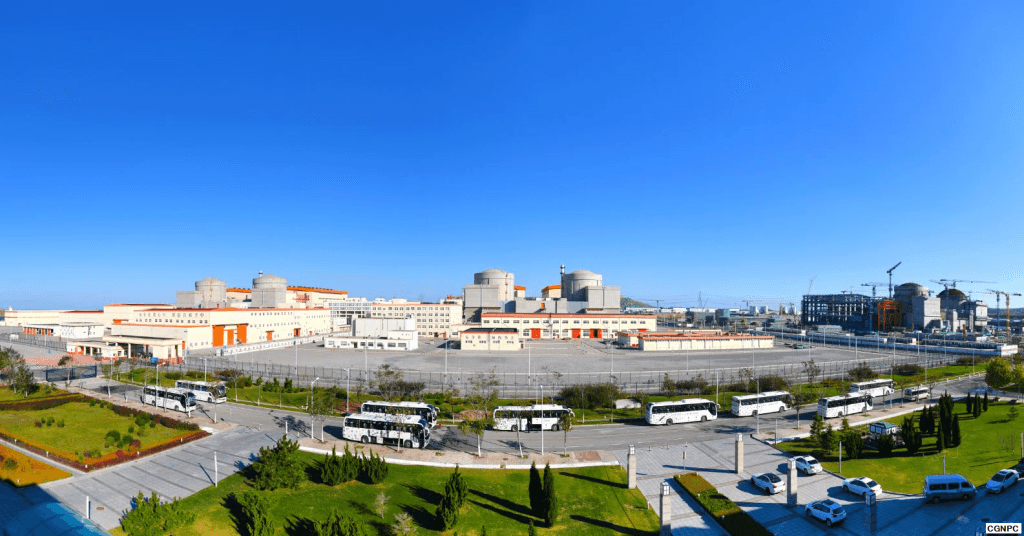
In a global comparison of installed nuclear capacity, China ranks third, with nearly 54 GW across 55 operating reactors. China has held the top spot for several years in the number of newly constructed units. China is also performing relatively well in building nuclear power plants abroad.
China’s Hualong One project in Pakistan is highly regarded for its construction speed and smooth execution. Hualong One reactors are among China’s strongest nuclear technology exports. According to China, the country can provide a complete supply chain for their construction.
"China can approve the construction of 10 new reactors a year to accelerate its transition to low-emissions energy. In 2024, it plans to connect 3-4 reactors to the grid, raising installed nuclear capacity to 60.8 GW,"said Lu Tie Zhong, chairman of the China National Nuclear Corporation (CNNC).
Hualong One uses independently developed CF3 fuel assemblies, has an 18-month refuelling cycle and incorporates advanced design features, such as double-layer containment structures able to withstand impacts from large aircraft, meeting the highest international safety standards. It is set to be followed by Hualong Two reactors, whose main advantage is expected to be a reduction in construction time from five years to four.
This is a competitive third-generation reactor technology. Its use is even being considered in Europe, with plans to build two such reactors at the Bradwell B site in the UK, with a combined capacity of 2.2 GW. The reactors have also been certified for use under European conditions. In the Czech Republic, China was excluded from bidding to complete the Dukovany nuclear power plant for security reasons. China appealed the decision, but its appeal was rejected. Under the current circumstances, there is therefore no need to consider the possibility of building a Chinese reactor in Czechia.
China, by contrast, is active around the world, successfully offering its reactors through the Belt and Road Initiative. Pakistan has already been mentioned; further negotiations are under way with Argentina, countries in the Middle East and African states that want to build nuclear reactors by 2030: Algeria, Ghana, Kenya, Morocco, Nigeria, Sudan and Tunisia.
However, it is important to bear in mind the potential pitfalls of Chinese construction projects. In addition to security risks such as espionage, jeopardising cooperation in the event of military conflict, buying influence and shaping public opinion, other unfavourable terms may also arise. These may include unfavourable loans from the Chinese government to fund projects, leases on terms favourable to China—for example, for equipment lasting 100 years—and maintenance contracts awarded exclusively to Chinese companies.
China is doing well in developing nuclear know-how
Construction of Linglong One, a multi-purpose small modular pressurised water reactor developed by CNNC, began on 13 July 2021 in the southern Chinese province of Hainan. It is the first land-based commercial small modular reactor under construction anywhere in the world, indicating that China is at the forefront of small modular reactor technology. The chairman said that many countries, including Saudi Arabia, the United Arab Emirates, Jordan, Indonesia and Thailand, have expressed strong interest in small reactors.
China is also developing fourth-generation high-temperature reactors. At the end of 2023, it became the first country in the world to put the Huaneng Shandong Shidao HTR-PM reactor into commercial operation. It is a gas-cooled reactor, using helium, with pebble-shaped fuel. Each pebble has a diameter of 60 mm and an outer graphite layer. Each contains approximately 12 000 four-layer ceramic-coated uranium fuel particles (7 g in total), enriched to 8.5% and embedded in a graphite matrix. Any relatively new technology brought into commercial operation gives its operator valuable experience that can be applied to further development.
Another area of China’s involvement is the development of fusion reactors. In addition to its own research, it is participating in the international ITER project (International Thermonuclear Experimental Reactor). At the end of February, CNNC signed a contract to install a vacuum chamber module at the centre of the reactor. Chairman Lu believes that “this embodies China’s active efforts to build a global community for the development of nuclear energy through international cooperation”.
Alongside its massive expansion of renewable energy, China is also betting on nuclear power. If it continues at its current pace, it is likely to overtake the United States in installed nuclear capacity within 10 years; US capacity is nearly 100 GW.
Translation disclaimer
This article is a machine translation of the Czech original and has not yet been fully reviewed. In case of any doubt, please refer to the Czech version.
Sdílejte článek prostřednictvím:
You might also like
28 October 2026, 13:08
28 October 2026, 11:10
28 October 2026, 09:08