
23 October 2026, 14:38
Loading...
Czech anti-corrosion coating for nuclear fuel receives US patent

Jiří Puchnar
26 February 2021, 08:50
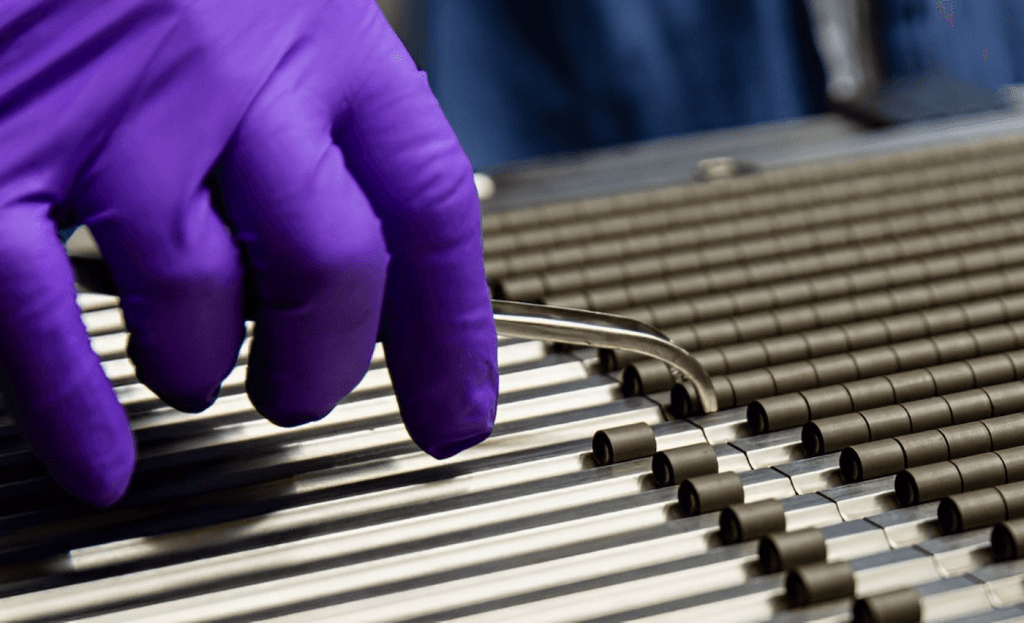
Czech scientists have received a US patent for their discovery of a polycrystalline diamond coating, which can provide significant protection for fuel rods against corrosion during both normal and accident reactor operation. Researchers from the Czech Institute of Informatics, Robotics and Cybernetics at the Czech Technical University in Prague (CIIRC CTU) and the Institute of Physics of the Czech Academy of Sciences had already received a European patent for the technology in April last year.
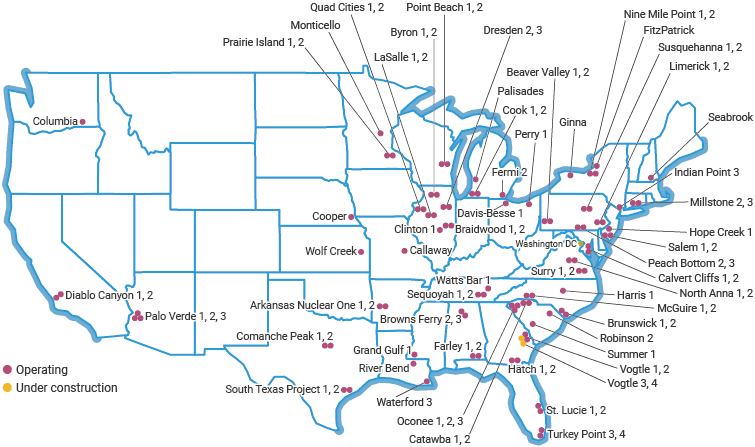
The US patent means that “we now have access to the market with the largest number of nuclear reactors in the world”, CIIRC said. “All 94 operating reactors in the USA and another two currently under construction can use this patented method of protecting fuel rods against corrosion, which will extend the rods’ lifetime under both normal and accident operating conditions,” CIIRC added.
Cooperation between CTU and the Academy of Sciences
The technical solution was patented in the Czech Republic in 2015 by a group of researchers from both institutes: Radek Škoda and Jan Škarohlíd, then from the Faculty of Mechanical Engineering at CTU, as well as Irena Kratochvílová, František Fendrych and Andy Taylor from the Czech Academy of Sciences.
“The unique solution is based on coating the surface of fuel rods with a thin polycrystalline diamond layer. The very thin layer of diamond nanocrystals significantly reduces the conditions for corrosion to develop on the zirconium substrate, by as much as tens of percent,” said Irena Kratochvílová.
The anti-corrosion effect of the polycrystalline diamond coating is highly specific. In addition to limiting direct contact between the metal surface of the fuel rods and the surrounding environment, carbon penetrates the diamond layer as the temperature rises, changing its physical and chemical properties. This reduces the likelihood of corrosion of the zirconium cladding and of water entering the hermetically sealed interior of the fuel rod.
Improved characteristics of zirconium fuel cladding under accident conditions
The patent was supported by further research and expanded testing under a project of the Czech Technology Agency, in cooperation with US company Westinghouse. The researchers applied for the US patent as early as 2016 and received confirmation of its approval from the US Patent Office this month (February 2021).
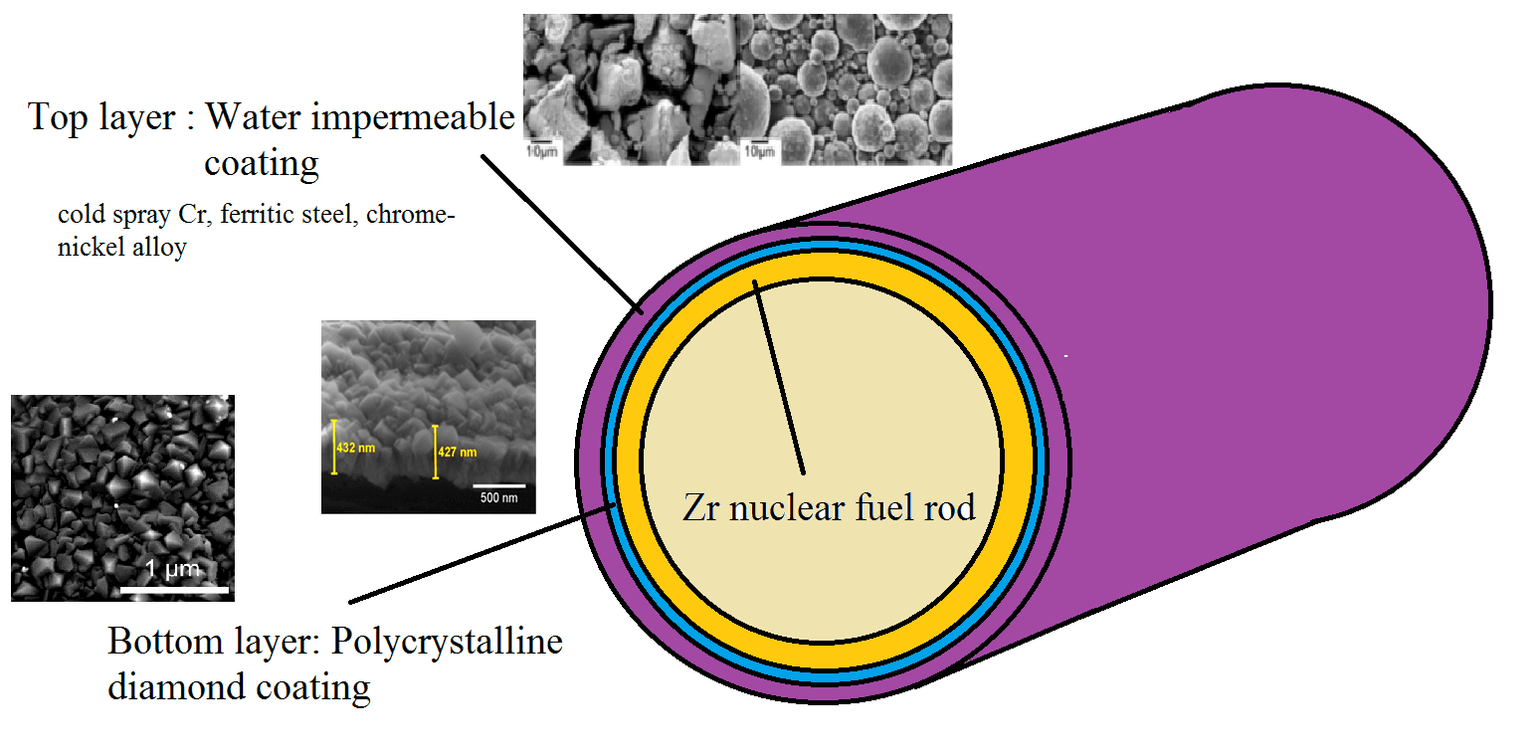
The main objective of this research was to prevent zirconium oxidation at high temperatures in accident situations where cladding temperatures exceed 800 °C. During this exothermic reaction, substantial amounts of heat as well as hydrogen are released, which can form an explosive mixture. Corroding zirconium fuel rods can rupture and release radioactive isotopes into the plant’s primary circuit. The heat release subsequently complicates cooling of the reactor core and promotes further oxidation of the zirconium alloy, further driving this chemical process. The polycrystalline diamond layer reduces the likelihood of corrosion developing on the outer surface of the zirconium cladding of nuclear fuel.
More durable fuel rods with a longer lifetime
Further research confirmed the potential of this solution at normal reactor operating temperatures as well. In some cases, a fuel assembly may have to be removed prematurely from the reactor core to prevent fuel rod damage caused by thermal stress and corrosion. This patented solution can extend the lifetime of fuel rods, with a positive environmental impact.
Source of lead photograph: CIIRC CTU
Translation disclaimer
This article is a machine translation of the Czech original and has not yet been fully reviewed. In case of any doubt, please refer to the Czech version.
Sdílejte článek prostřednictvím:
You might also like
23 October 2026, 11:01


23 October 2026, 06:34